Walking has its benefits

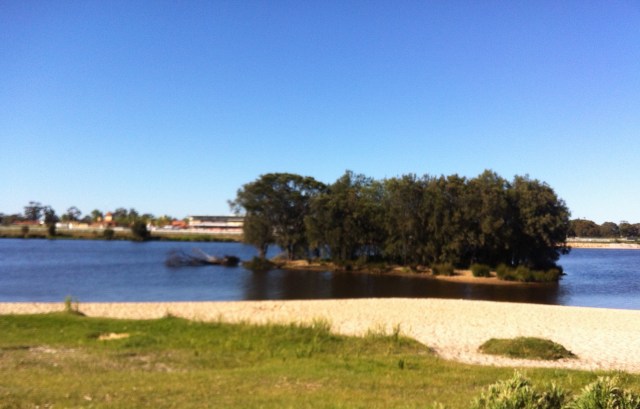
If I have to take my ageing legs for a walk I figure I might as well go somewhere interesting.  My current favourite destination right now  is the Bayswater wetlands, not far from my place.The wetlands are under threat from private developers but I hope soon that the State Government will wake up and protect them.  There is, after all, an election early next year.

As I walk I search the ground for fallen pieces of dye goodness.  Agonis flexuosa, lots of different eucalypts and unknown casuarina species are currently my flotsam of choice.

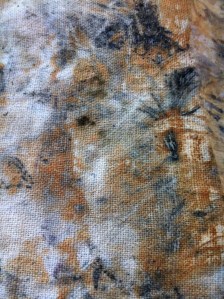
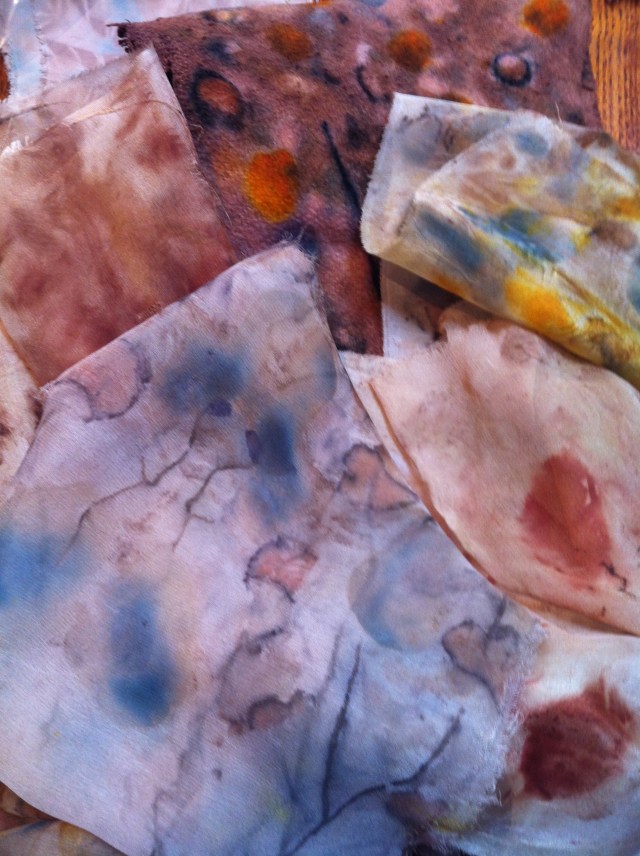
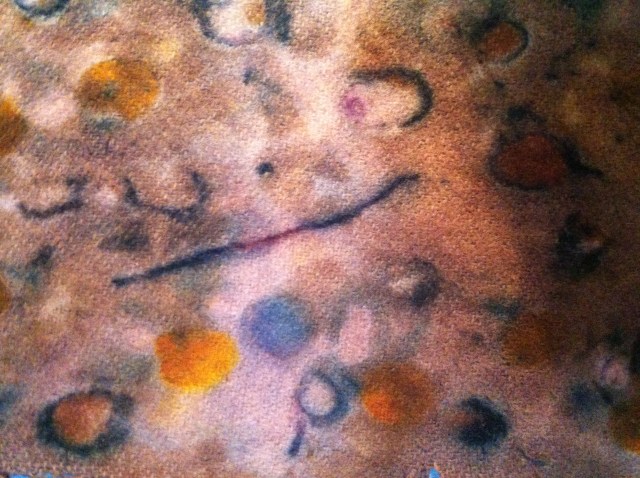
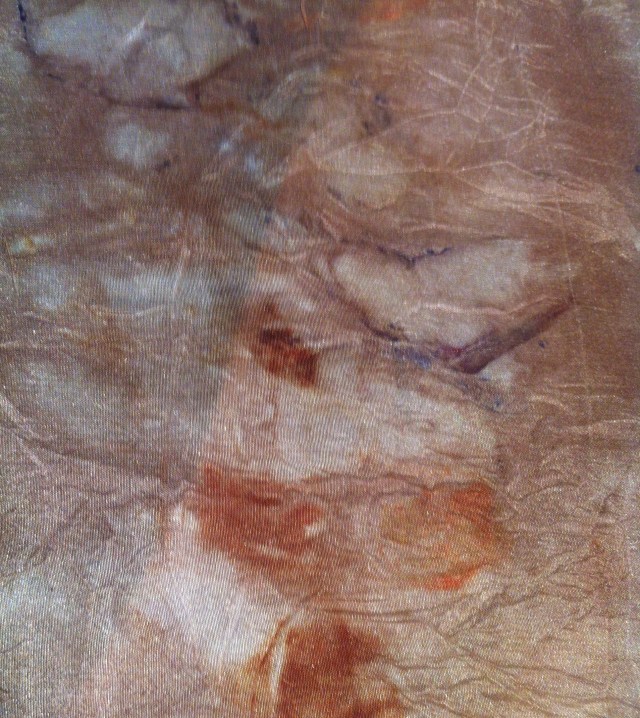
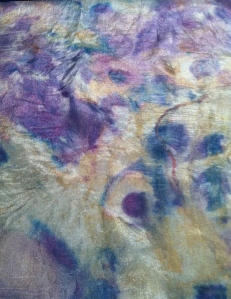
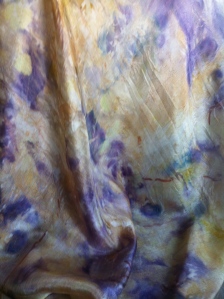
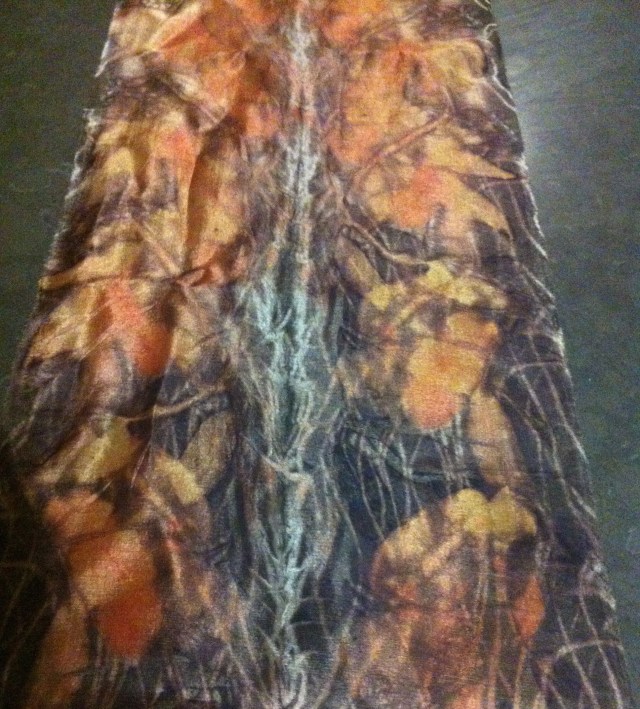
Long story short, my legs might weigh heavily on me  but my soul is in alt as I look at the results of steaming my “finds” in various weights of woven silk. A lovely record of my walk!

Posted in Eucalyptus sp as dye, Iron mordant, Natural dyeing | 2 Comments

Natural dyeing with local material

In her book Eco Colour, India Flint argues for collecting only fallen plant material for dyeing and using local plants as a record of “place”.

img_5750

My view as I walked along the Swan River , with Belmont Racecourse on the other side

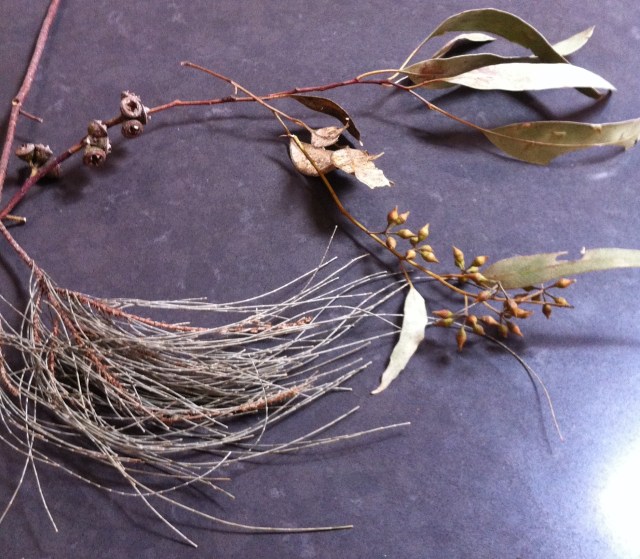
On my walk today in the local wetland and riverside park  I picked up a handful of fallen plant material from the ground.  Crispy and brown.

img_5752

Three kinds of eucalyptus and some casuarina leaves, all fallen to the ground and dried

I soaked three pieces of silk in my iron water (undiluted white vinegar and lumps of scrap iron with a lovely three week old “crust”). I then laid the various found materials from today’s walk on each and bound them tightly around wooden rods with bandages and string.

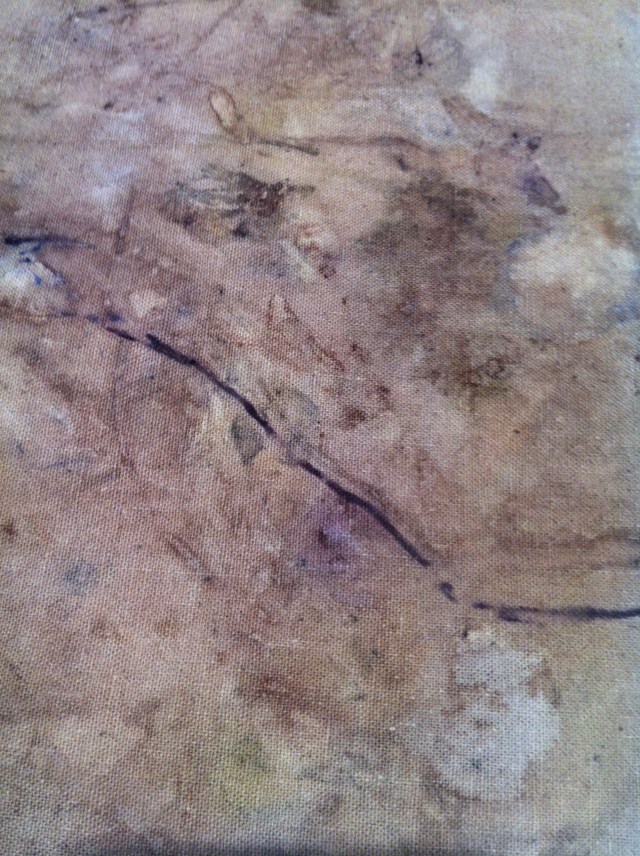
img_5754

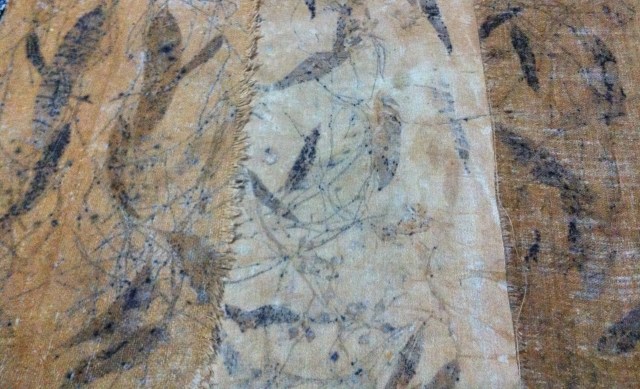
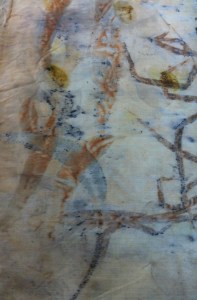
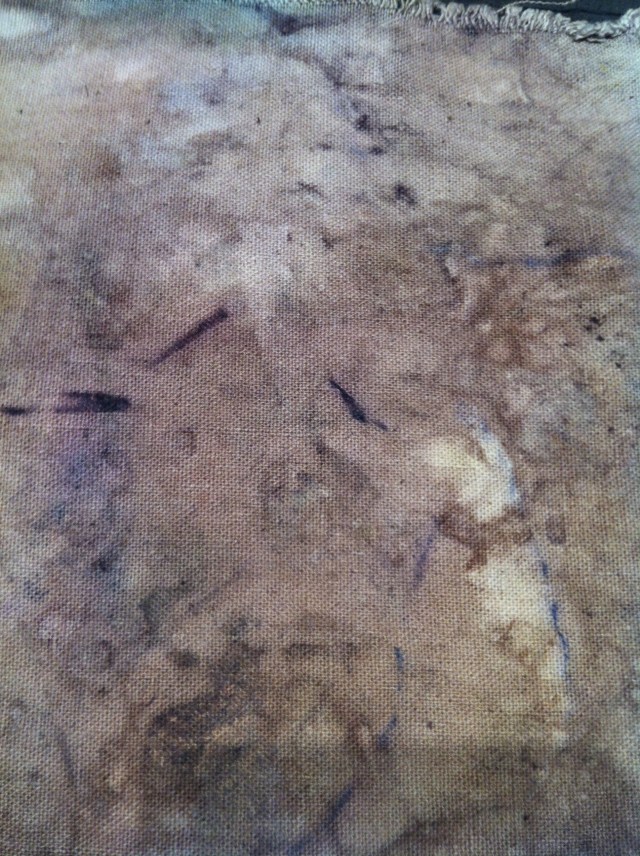
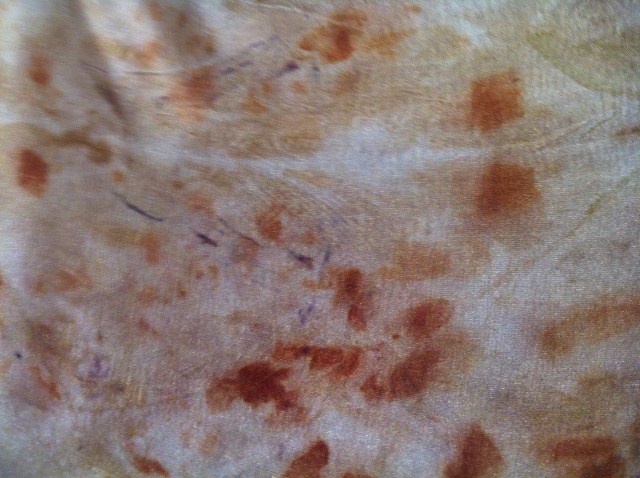
Fine closely woven silk showing the tracery of casuarina leaves , two of the eucalyptus leaves and some faint gumnuts

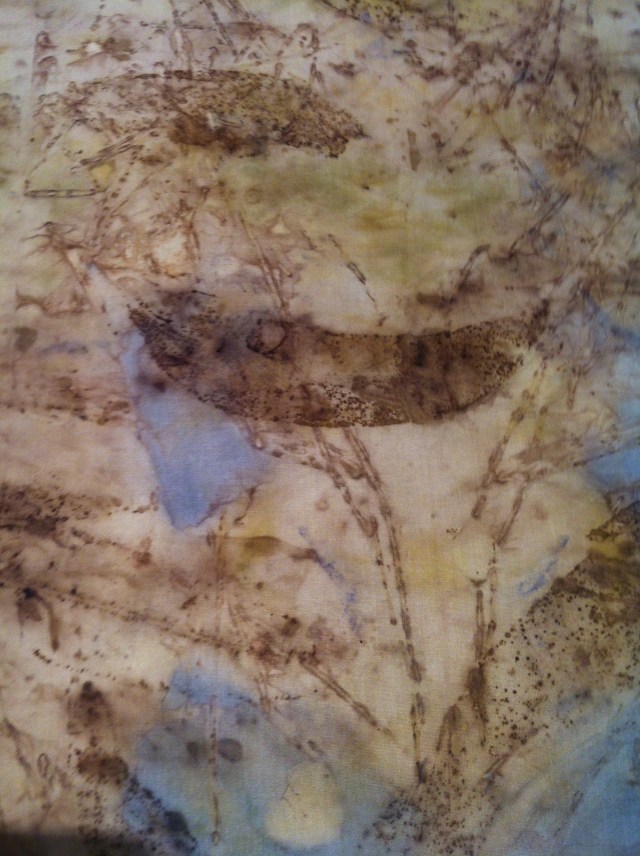
img_5753

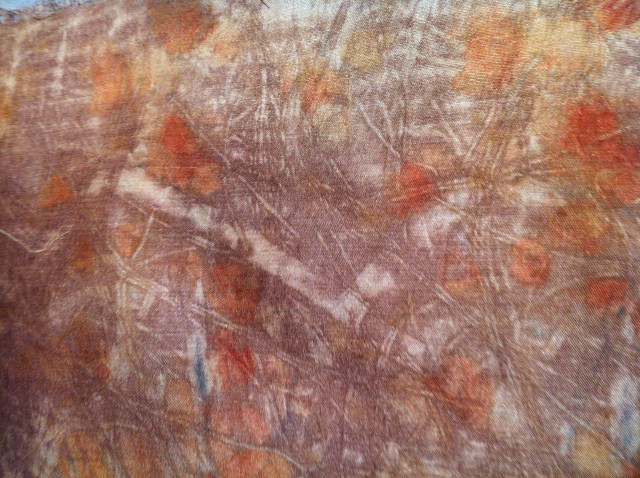
All three silk pieces soaked in iron water and steamed for two hours with today’s locally collected material

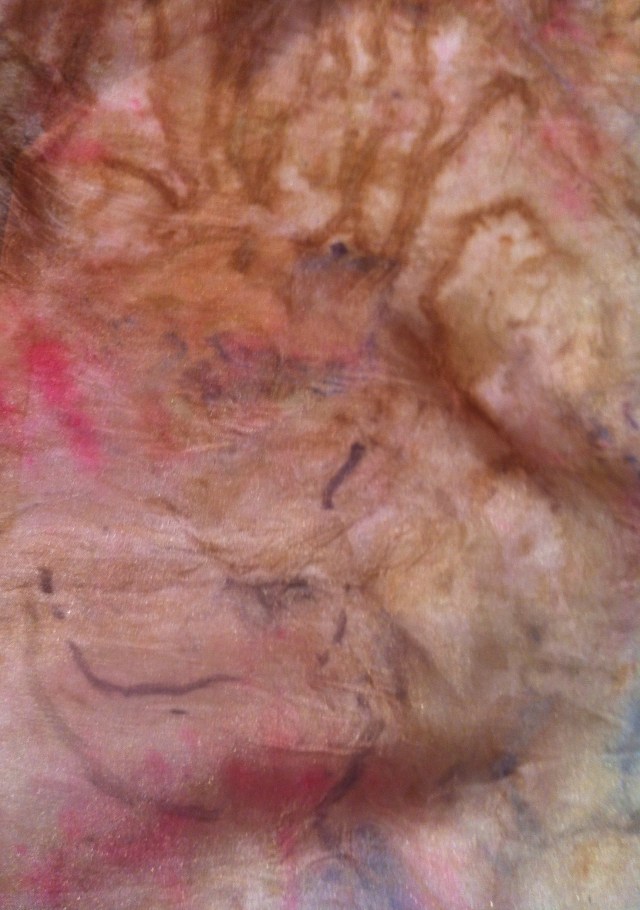
img_5755

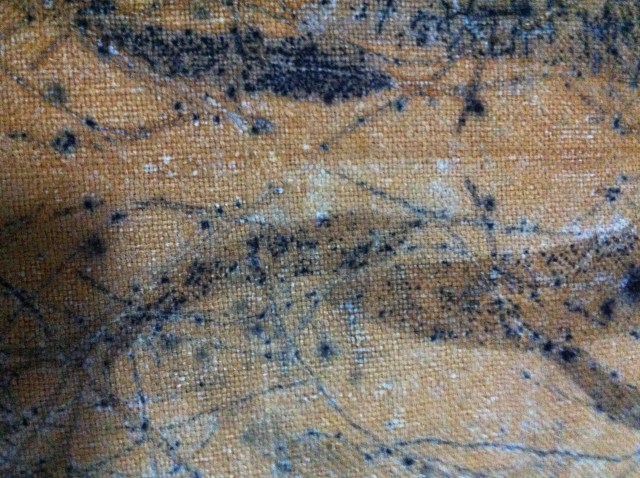
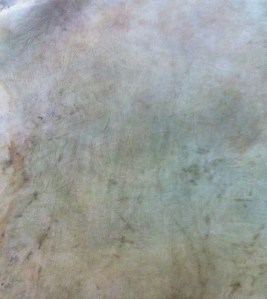
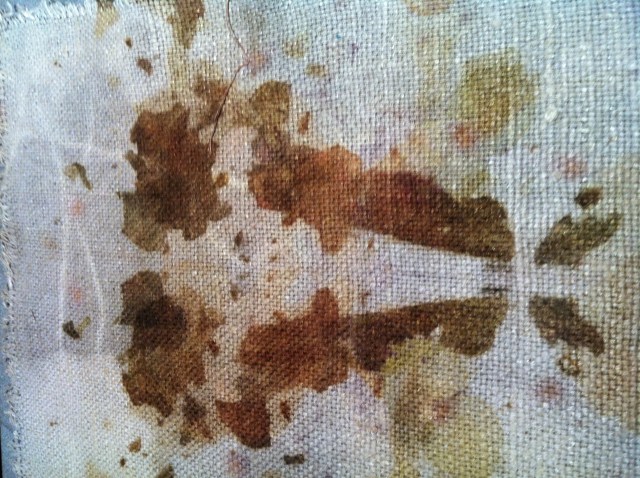
Heavier woven silk patchily soaked in iron water with foraged eucalyptus leaves and casuarina needles 


Posted in casuarina dyeing, Eucalyptus sp as dye, Natural dyeing, Uncategorized | 3 Comments

More systematic natural dyeing

img_5718

I love undoing bundles!


I am still going through Eco Colour by India Flint, finding I am open to so much more of her advice now that I have done a bit of bundling.This time I chose to look at two possible mordants.

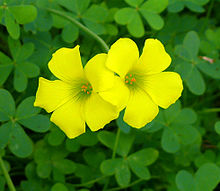
The first was soursob (Oxalis pes-caprae) ++++ which I picked fresh and steeped in boiling water for fifteen minutes.

++++

oxalsi-soursob

Soursob

The second was my own iron water .  Young at five days old, it was made from a lump of rusty iron and neat white vinegar. It had a lovely orangey crust on it.

I resolved not to boil in a dye bath this time; instead I steamed the bundles for two hours.

Skipping straight to the results,  I found that the iron water substantially enhanced the printing of the eucalypts, the peppermint (Agonis flexuosa), the lavender and the rosemary compared with the oxalis steeped samples.  The latter were in fact a bit “bleh”. I’m wondering if this is the fault of the way I made the oxalis bath or if it is just that the oxalic acid levels in the soursob are low relative to those in rhubarb leaves.

None of this blog deals with the steaming of wool and plant material.  Those specimens are still drying.  Iron water considerably enhanced the printing of rosemary, however.


img_5719

Previously dyed silk fabric rinsed in iron water and wrapped with peppermint, Euc. wandoo and unknown Euc. species leaves.

img_5720

Previously dyed silk now steeped in fresh oxalis tea and wrapped with lavender- still uninteresting.


img_5721

Previously dyed silk now steeped in oxalis tea and wrapped with fresh oxalis – still boring.

img_5722

Previously dyed silk now rinsed in iron water and wrapped in peppermint leaves. Lovely strong design.

img_5723

The outermost of three previously dyed silk pieces rinsed in iron water and wrapped in peppermint, lavender, oxalis and rosemary leaves.

img_5724

The middle layer of a three piece bundle.

img_5725

The innermost layer.  This is the darkest, suggesting that the iron migrates into the middle during steaming.

Posted in Iron mordant, Natural dyeing, Soursob mordant | Leave a comment

Natural and Local Dyeing

img_5701

The recent WAFTA (www.wafta.com.au) workshop given by Jane Flower (https://foliosandfibre.wordpress.com) revitalised my interest in dyeing with locally available plants.  I was lucky enough to be the facilitator for the workshop (not participating, just helping) and to have Jane stay with me.

One of the things Jane hammered home to us was safely.  The importance of good ventilation was key.

Anther principle was to experiment.  Don’t expect your tutor to have all the answers or to give them to you wrapped in a bow!  You have to experiment yourself to truly learn.

A third “pronouncement” was to pay attention to the advice of India Flint in her book Eco Colour.  According to Jane, if you really read it, everything is there for you.

So, armed with turmeric root from my local market, purple carrots and red cabbage from another greengrocer close to me, and other stuff, including kangaroo paw roots that no longer produce leaves in my own garden, I got stuck in to another round of boiling up.

I am lucky to have a few metres of various types, weights and weaves of silk fabric I bought in India earlier this year. I also have an old pink wool blanket.

My basic dye pot was tap water and avocado skins. Initially, bundles of silk and plant material were simmered for two hours in this.  Then I boosted the pH with some soda ash and ran more bundles through.The fabrics were otherwise not mordanted.

img_5693

Wool blanket wrapped in kangaroo paw roots and tuber, turmeric root and purple carrot.

img_5695

Silk bundled with purple carrot, and kangaroo tuber and roots

IMG_5699.JPG

Murraya leaves clamped in silk and boiled in an avocado skin dye bath.

India Flint’s book is repaying my closer reading.  I am now going to explore some of the more prosaic plants in the garden. More importantly, I have found that boiling in pots of avocado skins with iron thrown in can be very deleterious to old wool blanket material. Post edit 27/9: India Flint points out that a ph greater than 8 is very harmful to wool.  The handful of soda ash I threw into the avocado skin pot will undoubtedly have made the pH way higher than 8 (after all, neutral is a pH of 7!)

My next blog will be about whether steaming might be a better way to treat wool.  It might even be a better way to get colour out of garden herbs!

Posted in kangaroo paw as dye, Natural dyeing, purple carrots as dyes, Turmeric as dye | 3 Comments

Scissor Humbug

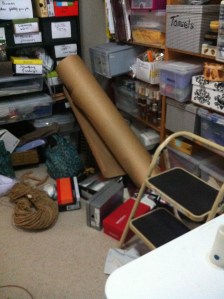
In preparation for the start of the build of my studio, I have been cleaning up the little room that is so stuffed with “stuff” that I haven’t been able to  make anything in it for years.

IMG_5609

A “before” photo

An upcoming “Garage Sale” event to raise money for WAFTA’s ( wafta.com.au) artist in residence program has encouraged me to donate things that were too good to throw away and thus might otherwise have been kept. One such  treasure is a box marked “Small Kits”. Tonight I got it down from the shelves and before putting it into the “WAFTA” pile just had a peek……it is full of  little kits that I’ve bought on the spur of the moment, convinced that they are so gorgeous that I would be making them up as soon as I got home….

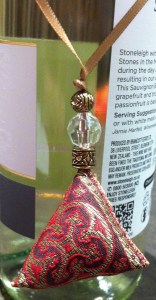
Of course, I never did.  But wait, this little Scissor Humbug by Helen Dafter is going to be quick to make.  I’ll just do it while waiting for the chilli jam to set.

IMG_5613

Celtic Scissor Humbug with Emery Powder by Helen Dafter

Don’t worry, there are plenty more untouched and complete kits in the box and I’m definitely putting them in the sale….

IMG_5616

A selection of the scabbard, tassel, trapunto and other whimsical kits for the WAFTA garage sale


Posted in Kits, Studio planning and construction, WAFTA | Leave a comment

Juried exhibition: Twenty-one +

I was lucky enough to be included in the judges’ selection of works for Twenty-one Plus, the juried exhibition organised by WAFTA for its 21st anniversary.  See http://wafta.com.au/event/21-exhibition-2/

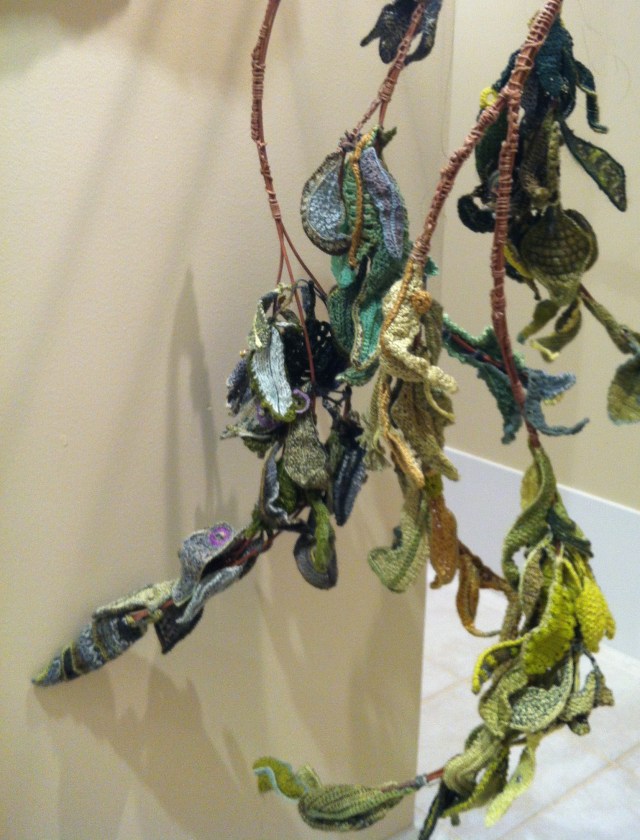
I have to deliver my work, Family Tree, to the gallery tomorrow morning so I’m finalising its mounting  tonight. Tricky.  It’s a 3D work, designed to rotate from a central point and to show five “branches” of a family.  The WAFTA website has my explanation so I won’t repeat it here.  Suffice to say, after a consultation with the very friendly staff at http://www.tackleworld.com.au/wa/morley.html, I have been threading several weights of fishing line and a swivel onto my work.  The wonderfully sympathetic guy at Tackleworld also gave me some clear plastic tubing to thread the fishing line through as he was worried that my perspex framework might have had rough edges that would chew through the fishing line.  How service oriented is that?

Anyway, here it is in my hallway.  Hope it looks as good in the gallery!

IMG_5561


Posted in exhibiting, freeform crocheting, freeform knitting | 2 Comments

Plant Dyeing Again

Well, fellow MELD member Louise Wells has  said that if I’m on a good thing I should stick to it.

So here goes with my record of the latest natural dyeing efforts.

IMG_5502

Op shop woollen blanket dyed first in rhubarb leaves (that’s why it’s yellow) and then rinsed in iron water and steamed with sage leaves and Euc. cinerea leaves.  That’s a sage leaf!

IMG_5507

Oxford linen previously dyed in avocado skins, now pre-soaked in iron water, wrapped with plant material from a previous boil up, and boiled 2 hours in a Euc. wandoo dye bath.  Nothing terribly noticeable here but I love the look and it’s not so easy to get prints on linen as it is to get them on silk or wool!

f

IMG_5506

As above: Oxford linen bundled in the same way.  The purple line is a kangaroo paw root.

IMG_5508

Cotton fabric previously wrapped with Euc. wandoo leaves and boiled in a solution of Euc. wandoo leaves, now wrapped with recycled “mix” of kangaroo paw, purple carrot, casuarina and Euc. cinerea leaves with some fresh Euc. cinerea leaves and some rehydrated casuarina leaves added.  Boiled in Euc. wandoo bark bath for two hours.  The casuarina and the purple carrot, both “recycled”, are nonetheless the most prominent additions to the fabric. and, notwithstanding that the carrot was added after the Euc leaf, it appears to recede!

IMG_5511

Piece of paj silk previously dyed in an avocado skin dye bath, now wrapped with recycled mix of kangaroo paw leaves, roots  and tuber, and steamed for two hours over a Euc. wandoo bath.  The kangaroo paw roots are the most obvious additions to the fabric.

IMG_5515

Paj silk (6mm) wrapped with kangaroo paw leaves and tuber and chopped up stems and some leaves of Euc. cinerea then steamed over a Euc. wandoo bath for two hours.  The Euc. cinerea stems have gone missing.

IMG_5517

Paj silk (6mm) bundled with rehydrated casuarina leaves, some dubious (as in “I’ve never had a result from them”) eucalyptus leaves (species unknown), and some sage and red onion leaves. Red onion wins!

IMG_5520

Piece of woollen blanket previously sun dyed in avocado pip with high pH (hence the pink background), now wrapped with recycled plant waste (kangaroo paw leaves, roots and tuber, Euc. cinerea, casuarina leaves) and boiled in Euc. wandoo bath for two hours.  Kangaroo paw roots win here.

IMG_5523

The same blanket piece as above, but the inner part of the roll where the dye bath penetrated less.Casuarina leaves are more obvious here.

Might take break now while I think over the long weekend what I can do with the fabrics.  Our long weekend has been renamed Western Australian Day.  This is not as obvious a cause for celebration as its original name of Foundation Day.   It plays, misleadingly, to the confused understanding of political correctness that afflicts our politicians, however, so they renamed it.

I am thinking of pairing the dyed fabrics  with cable ties and grommets.  Or is that toooooo…much of a transgression of traditional textile techniques ? (Gotta get that alliteration in!)

Posted in casuarina dyeing, dyeing with red onion, Eucalyptus cinerea as dye, kangaroo paw as dye, Natural dyeing, rhubarb dyeing and mordant | 1 Comment

More plant dyeing

This a post that is more for documenting my experiments of today than to arouse responses like “Oh, gorgeous” or “You are so clever!”.

When “you’re on a good thing , stick to it”, comes to mind. I had  a day off and some dye pots already on the go.  Plenty of silk of different weights purchased in India.  Some  good dyeing material plus some unknown quantities, eg rosemary and sage from my garden.

Not much need for text here; let the captions tell the story.

IMG_5476

Scrap of silk paj (6mm) steamed with Euc. cinerea and kangaroo paw roots

IMG_5472

Heavier woven silk steamed with Euc. cinerea and red onion skin.  Euc. cinerea leaves seem to go green in the presence of onion skin despite being red in other circumstances.

IMG_5487

A crisp but fine silk I bought in India (Delhi) steamed for two hours with kangaroo paw roots and Euc. cinerea leaves

IMG_5462

Heavy woven silk steamed with kangaroo paw tuber and roots


Posted in dyeing with red onion, Eucalyptus cinerea as dye, kangaroo paw as dye, Natural dyeing | 1 Comment

Margaret or Monet?

I had a lovely day with friends here yesterday.  It was like a group studio with Liz in the laundry dyeing yarn with fibre reactive dyes; Louise at the table designing  an entry into a brooch exhibition; and Julie outside with dye pots full of leaves and flowers  over hotplates!  I made a lot of  coffee and tea but did get plenty of time to experiment with some bits and pieces.

Some very old purple carrots came along with Julie and she was willing to share so I quickly bundled some slices up with other stuff.  I like the “Monet” effect!

IMG_5441

Paj silk wrapped in purple carrot, kangaroo paw roots and tuber slices, various Eucalyptus species’ leaves and then steamed for two hours

IMG_5440

A close up of paj silk and purple carrot showing the varying shades of blue and purple that emerged.

IMG_5448

Another, larger, piece of paj with Euc. cinerea and purple carrot

Julie had given me a large bunch of Eucalyptus cinerea leaves for my birthday and I thoroughly enjoyed using them too.

IMG_5442

Raw silk steamed for two hours with Euc. cinerea and kangaroo paw cuttings.

IMG_5444

As above but pre-soaked in iron water

IMG_5446

As above but with purple carrots instead of kangaroo paw

All of these pieces and others not shown have been washed and dried and ironed so the colours seem so far to be fixed.

Posted in Eucalyptus cinerea as dye, kangaroo paw as dye, Natural dyeing, purple carrots as dyes | 6 Comments

Eco-dyeing with Jane Flower

IMG_5428

When I met Jane Flower (https://foliosandfibre.wordpress.com) at the Craft and Quilt Fair in May last year I thought her fabrics were exquisite.  So much crisper and more intense than anything I had managed to produce on a piece of silk.

So when a fellow Designing Women member, Rae Poon, invited me to join a group of textile practitioners in a four day workshop with Jane down at Evedon  Park Bush Retreat  (http://www.evedonpark.com.au) in Burekup, WA, I jumped at the chance.
 

IMG_5420

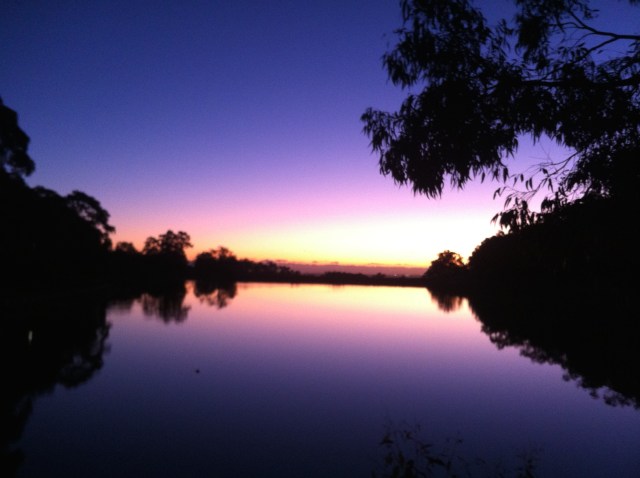
Sunset from my balcony at Evedon Park Bush Retreat

Nine of us met at Dome in Mandurah (because the toilets are reliable….) and proceeded in some kind of convoy to Burekup.  That (the convoy) didn’t stop me being about an hour and a half behind everyone else in arriving.  The absence of that  vital bit of DNA that governs directional sense had me diverting for  nearly a hundred kilometres  on the way.  On the bright side, I saw a lot of the new roadworks through to Collie and waved to a lot of road workers!

Anyway, once we’d settled into our accommodation (spacious and well-equipped two bedroom units) we established one as “cookhouse central” and throughout the workshop used the facilities there to prepare some very extravagant meals, leaving all the other, identical, facilities in each unit untouched.  I hope the facility’s managers  appreciated the pristine nature of the fully- equipped kitchens in all the other units! The environment of the Retreat is superb, on  a lake,  with water and other birds, fish, native trees, little skinks, etc, etc…..


IMG_5426

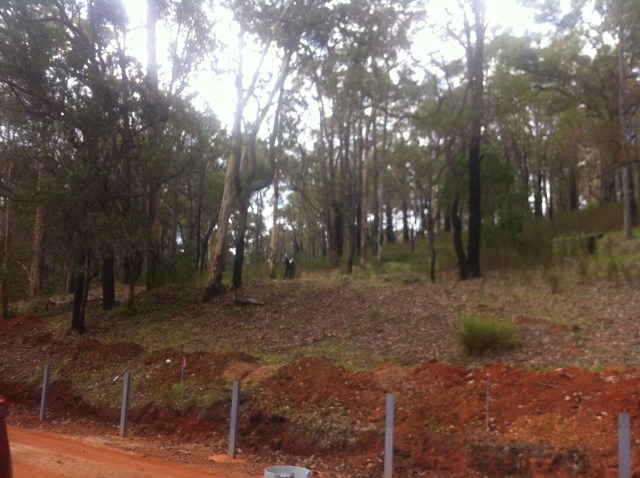
We discovered that the trees with the lighter trunks were a species of Euc. wandoo….and developed a dye bath accordingly!

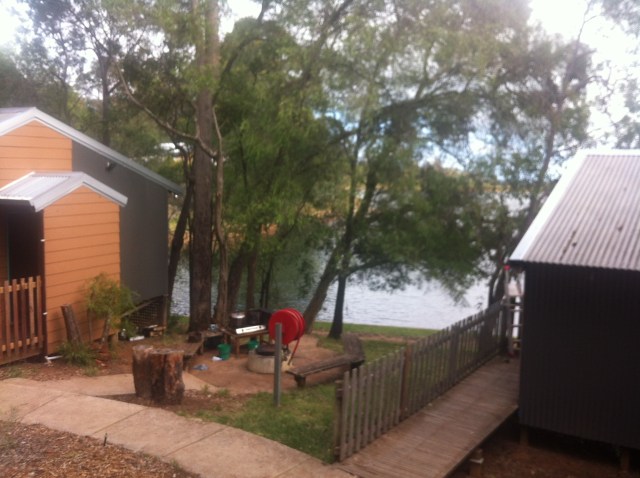
The Retreat was ideally set up for us to make up dye pots….
IMG_5425

Our hotplates were located between “cookhouse central” and the other participants’ accommodation, with lots of seating so that we could get comfortable while we unwrapped our “bundles”. That’s the lake behind…

Those managers/owners were fantastic.  On hearing that we were there to learn techniques for transferring colour from plants to fabrics such as silk and wool, they went off and cut some olive branches for us to try.  We got some beautiful greens from that experiment.  When they learned that none of us had packed a much needed iron, they gave us exclusive use of the iron and an ironing board, from the Resort’s laundry,  driven to us by the owner.  Then, when we had a bit of a bottleneck in terms of the demands on the iron, the owners’ own home iron was delivered to us.  What a sacrifice and soooo…. appreciated!!!  On the last night (Friday) we descended on the Retreat’s cafe and over-dosed on local wine, gourmet pizzas ( including my personal favourite, the braised lamb) and a host of other delicacies!

Five days seems to me a long time to be away from home and the internet.  It proved, however,  to be  a good period for learning some of Jane’s tips for bundling local flora into fabric and either steaming or boiling it up to get wonderful prints on our fabric.
IMG_5429

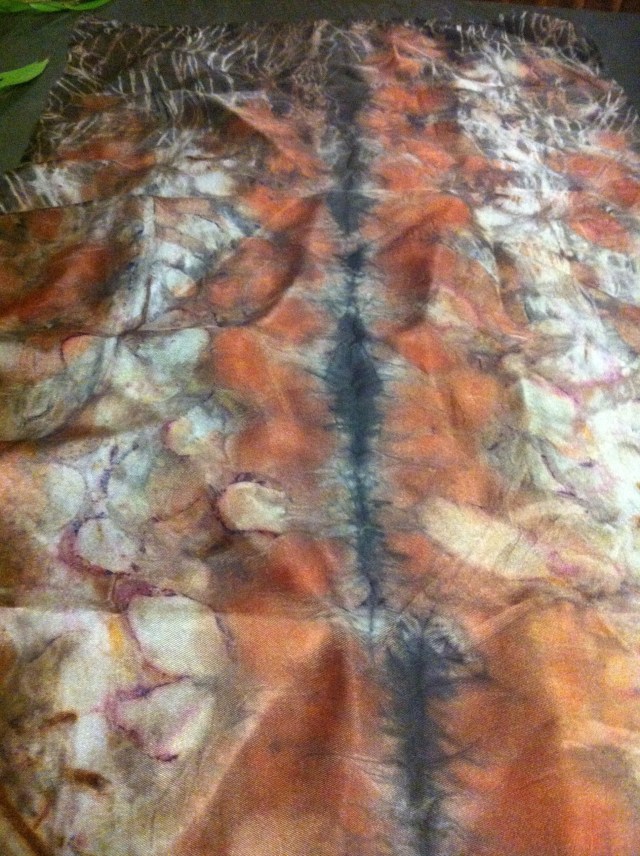
Paj silk bundled with Euc. cinerea leaves and kangaroo paw roots and put in a Euc. cinerea and iron bath.

We explored stamping with an iron based print paste; methods for reducing “shadow prints”; when you can boil up a “bundle” and when you can’t, based on the temperature that can be tolerated by different plants in a bath; and several other common situations that can spell either success or failure in eco-dyeing.
IMG_5423

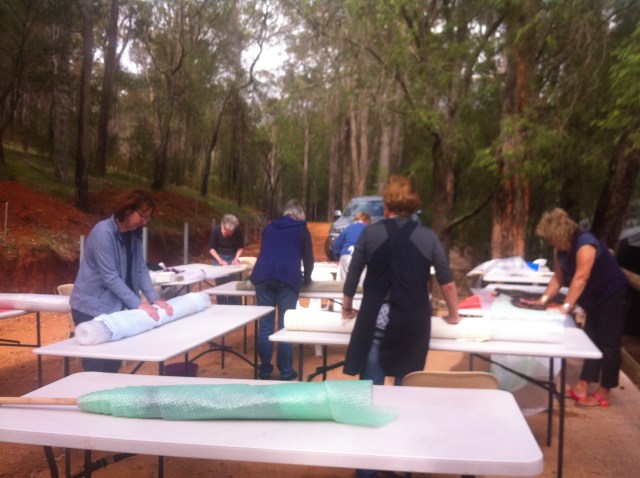
Several of us rolling our batts with our eco-dyed silks and wools to produce what we hoped would be works of art…

Jane then got us to take  our various samples of eco-dyeing and printing and apply them to wool batts.  Some of us used wool batts processed in  Australia from the coloured wool of WA artist and WAFTA member Val Hornibrook. These were marvellously fine merino fibres which felted easily. Essentially , we were felting our dyed fabrics into these batts to produce art cloth which is wool felt with a face of textured eco-dyed wool or silk fabric.  This was “slow art” at its best and most enjoyable.  Admittedly , we were outside and the wind was pretty fresh, but the rain stayed away until the point on the very last day, Friday, when the tarps were finally tied onto Jane’s trailer.

The downpour after that was very well-timed and very welcome, as we were already ensconced in “cookhouse central” with sparkling wine and a huge piece of brie and home-made persimmon paste, all courtesy of Jane, who in fact should have been the recipient of OUR gifts rather than showering them on us!
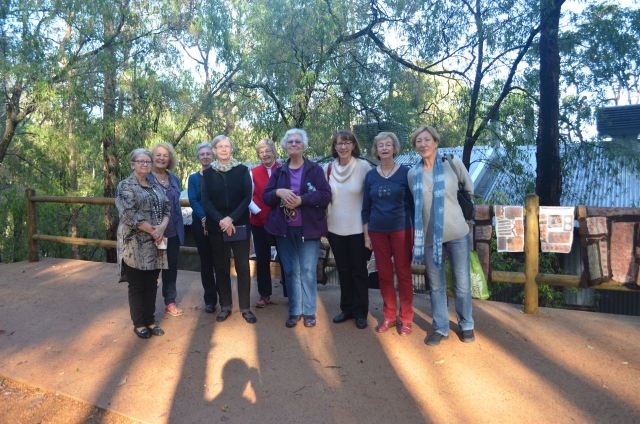
Jane Flower workshop group photo

From L-R: Me; Anne; Donna; Rae; Margaret; Lesley; Jenny; Julie and Cathy.  Photo: Jane Flower.


What a wonderful week!! Jane is giving WAFTA a natural eco-dyeing workshop in September of this year which booked out soon after it was advertised.


Posted in Natural dyeing, nuno felting | 3 Comments