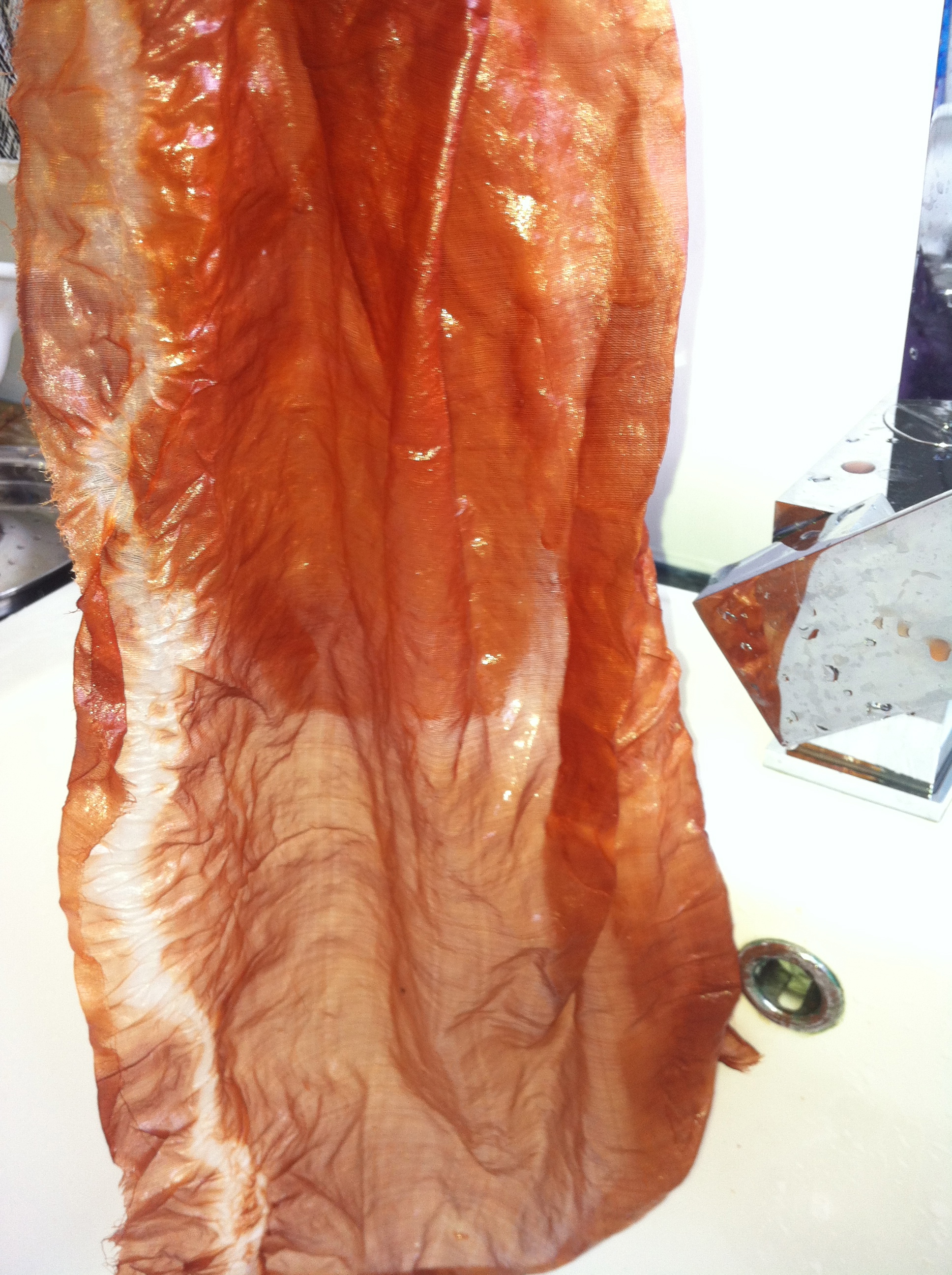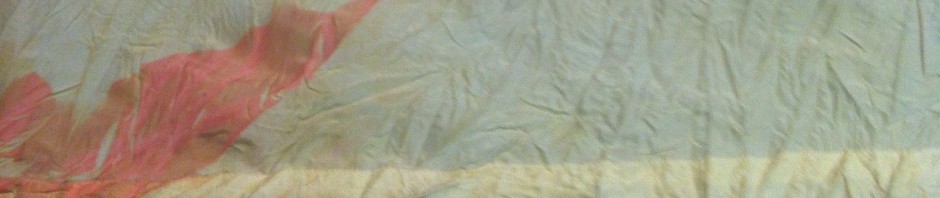
Mudcloth completed.

Earlier this year (April 2014) as a member of the Western Australian Fibre and Textile Association (www.wafta.com.au) I had the chance to learn Judy Dominic’s version of bogolanfini. Participants in the workshops brought mud to share from the breadth of WA, including Broome (very red) Kalgoorlie and further east (more yellow) and Denmark and beyond (black, from someone’s dam).

Judy gave us tips and methods for fixing the colours of the mud immediately and they worked.  However, she also encouraged us to think about applying some patience, as the traditional African practitioners do,  and just waiting a few months before we washed  our fabrics  out to see how well the pigments in our mud fixed to the cloth.  The specific time mentioned was six months.

So today when I was looking for something else I found my samples of cotton cloth with its mud still on it.  Seemed like a good time to wash it.  Took a before photo then popped it into the washing machine without any detergent and washed it for 30 minutes.  Ironed it dry.

The results:

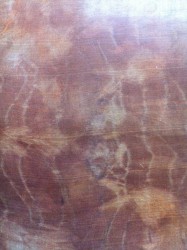
Straight out of the cupboard after six months and before washing

Straight out of the cupboard after six months and before washing


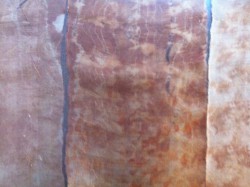
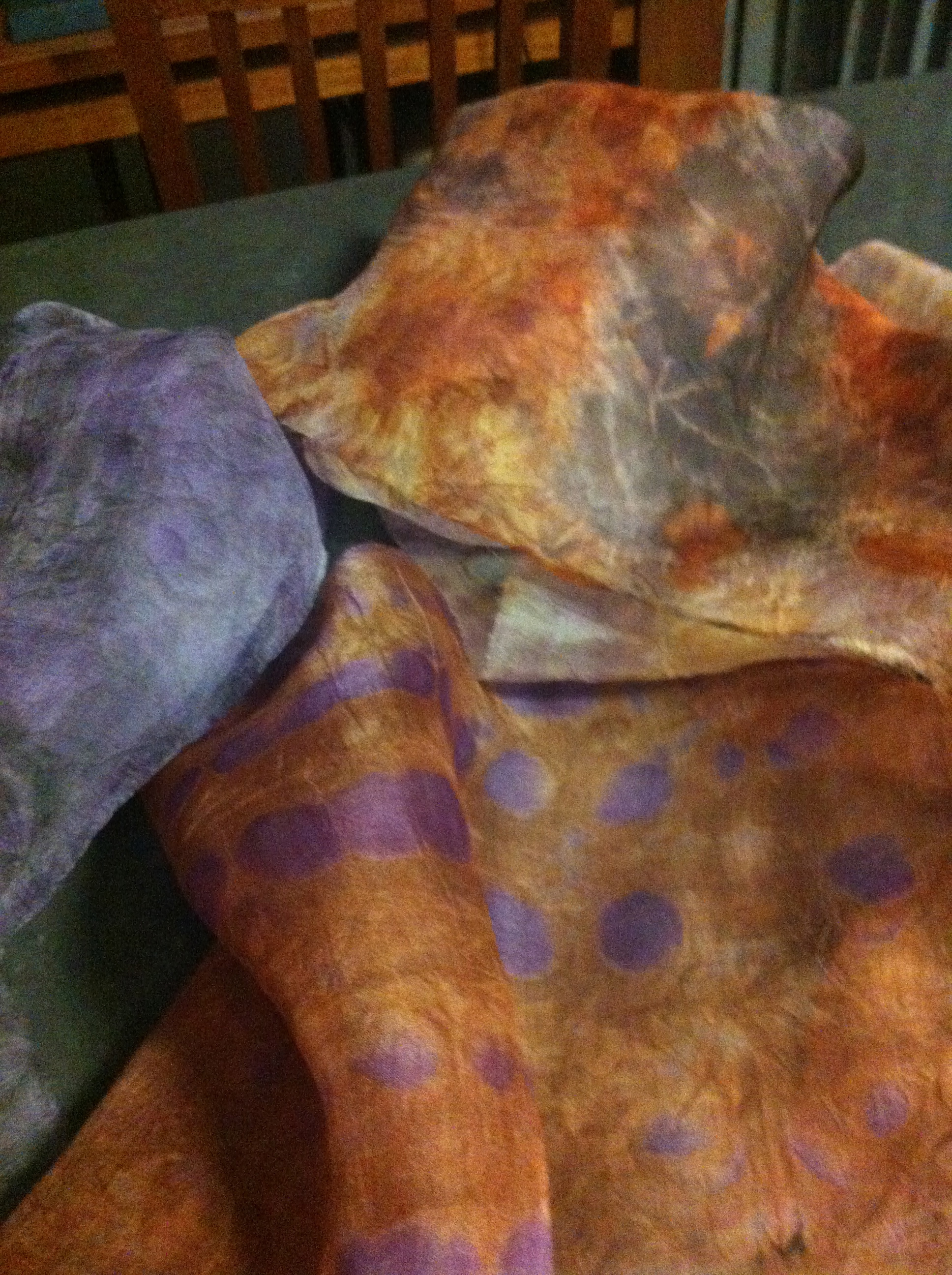
Same lighting conditions but after 30 minutes of machine washing and then being ironed dry.

Same lighting conditions but after 30 minutes of machine washing and then being ironed dry.


The washed pieces are clearly lighter but I like them.  They feel soft and look subtle.  The other interesting difference between these pieces and those I washed immediately six months ago without treating them with any fixative is that these pieces didn’t have colour bleeding into the background.  It has remained quite white.

I love that this exercise has captured Western Australia’s colours in a unique way.  I don’t know what I’ll do with these fabrics but something will suggest itself! In the meantime the workshop added to my repertoire of natural dyeing techniques.
Posted in Design, Natural dyeing | 1 Comment

Natural dyeing with a purpose

I’ve spent a few days doing some more dyeing so that I can actually make something.

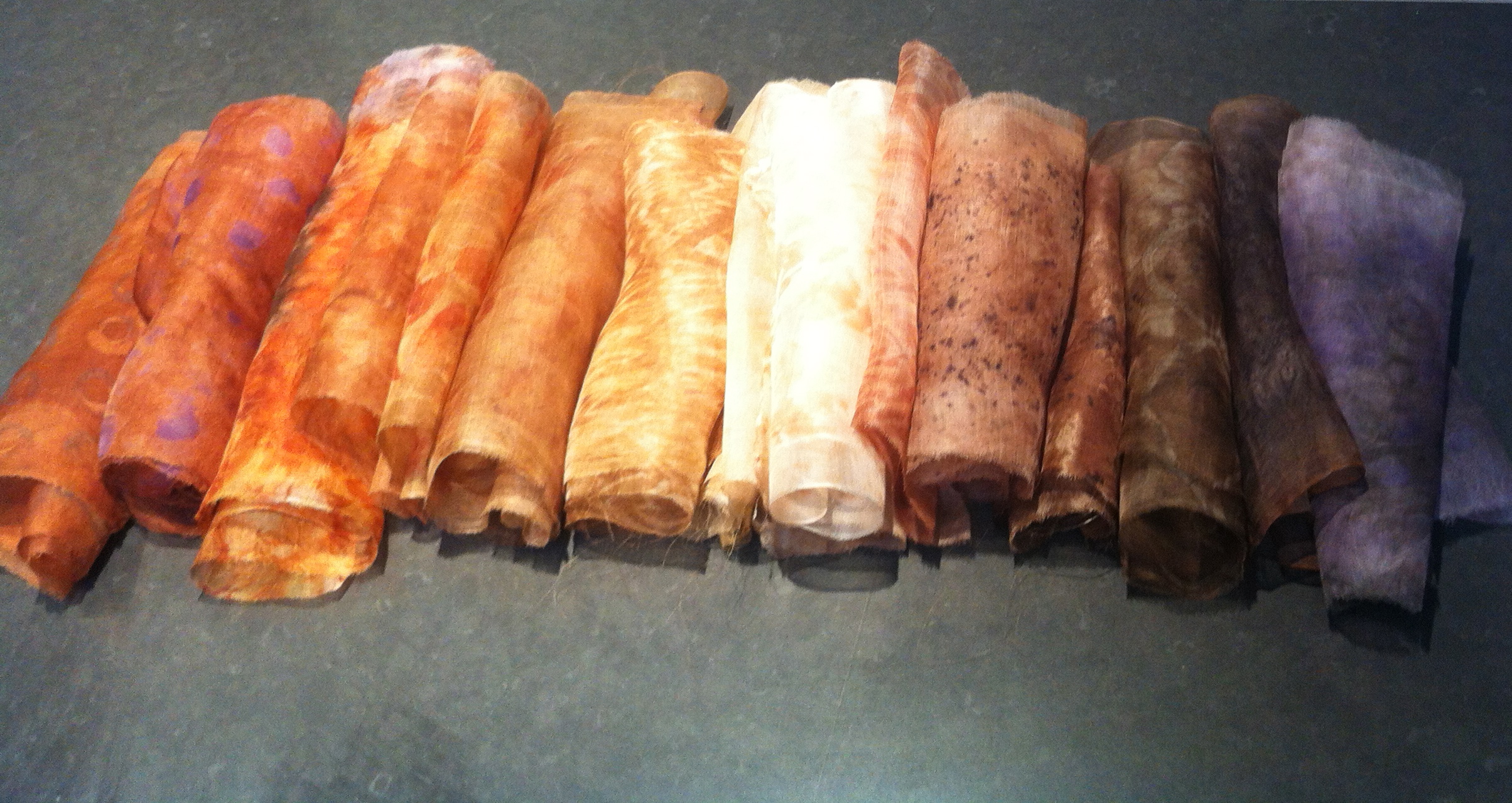
I now have a good spectrum of fine silk organza dyed with avocado skins, red and brown onions, casuarina leaves, purple carrots, pomegranate and some rust and tea.

I should be able to do something with these!

I should be able to do something with these!

Another group I belong to, Designing Women, is having an exhibition starting on Thursday 23 October, almost a week after the MELD one, Hidden Revealed Transformed, which opens on Friday 17 October.  I’ve done all the work I want to for MELD so have designed something for the DW exhibition, Seams and Layers.

The silk needs to be sheer and it certainly is.  It’s the hand woven silk I get from Pollard Designs, which is supporting a Cambodian weaving community.  The trick is going to be stitching bojagi seams into it.  Fingers crossed and toilet paper ready.  [For the seams😃]

Posted in Design, Natural dyeing | 2 Comments

Don’t waste that tea!

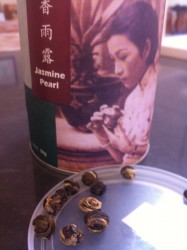
My sister had a clean out of her tea drawer.  So I got some of those large tea flower type things that open up in boiling water,  as well as some small hard lumps of tea shoots.

Of course, using tea in any form in the solution is going to produce some colour (brown) and it contains tannin, a natural mordant, so it should promote colour in the silk.

The tea flowers as they came out of the packet

The tea flowers as they came out of the packet


What I call the tea "balls".

What I call the tea “balls”.

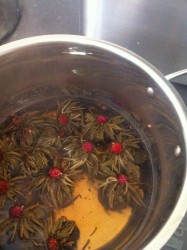
Tea flowers opened in boiling water.

Tea flowers opened in boiling water.


I made a solution of water and the tea flowers.  Lovely reddish brown water.


Three pieces of silk were tightly wrapped with, respectively, brown onion. the tea flowers, and the tea “balls”.  Then simmered in tea flower solution for 30 minutes.

Silk wrapped tightly around tea flowers and boiled in tea flower solution.

Silk wrapped tightly around tea flowers and boiled in tea flower solution.

Silk wrapped tightly around small tea "balls" and boiled for 30 minutes in tea flower solution.

Silk wrapped tightly around small tea “balls” and boiled for 30 minutes in tea flower solution

Silk wrapped tightly with brown onion skin and boiled for 30 minutes in tea flower solution.

Silk wrapped tightly with brown onion skin and boiled for 30 minutes in tea flower solution.


The three samples are in fact different colours! L to R: tea flowers, brown onion, tea "balls".

The three samples are in fact different colours! L to R: tea flowers, brown onion, tea “balls”.


The colour is limited by my technology so this is not the most exciting post I’ve made.

Posted in Natural dyeing | 1 Comment

More natural dyeing…

I’m in a dyeing mood, so I’ll just get those four ancient purple carrots out of the crisper.  And that pile of brown onion skins from the slow cooked lamb shanks of last night.  Oh, and the slab of frozen pomegranate skins that Liz gave me last year.  While I’m at it, it’s time I used those frozen avocado skins too.

I was lucky enough to secure four metres of handwoven Cambodian silk organza from Trudi Pollard two nights ago.  Trudi was the guest speaker at the WAFTA meeting but still managed to find time to bring me some silk.

I didn’t do anything to the silk other than rip it into four strips each about 25cm wide and dampen them.

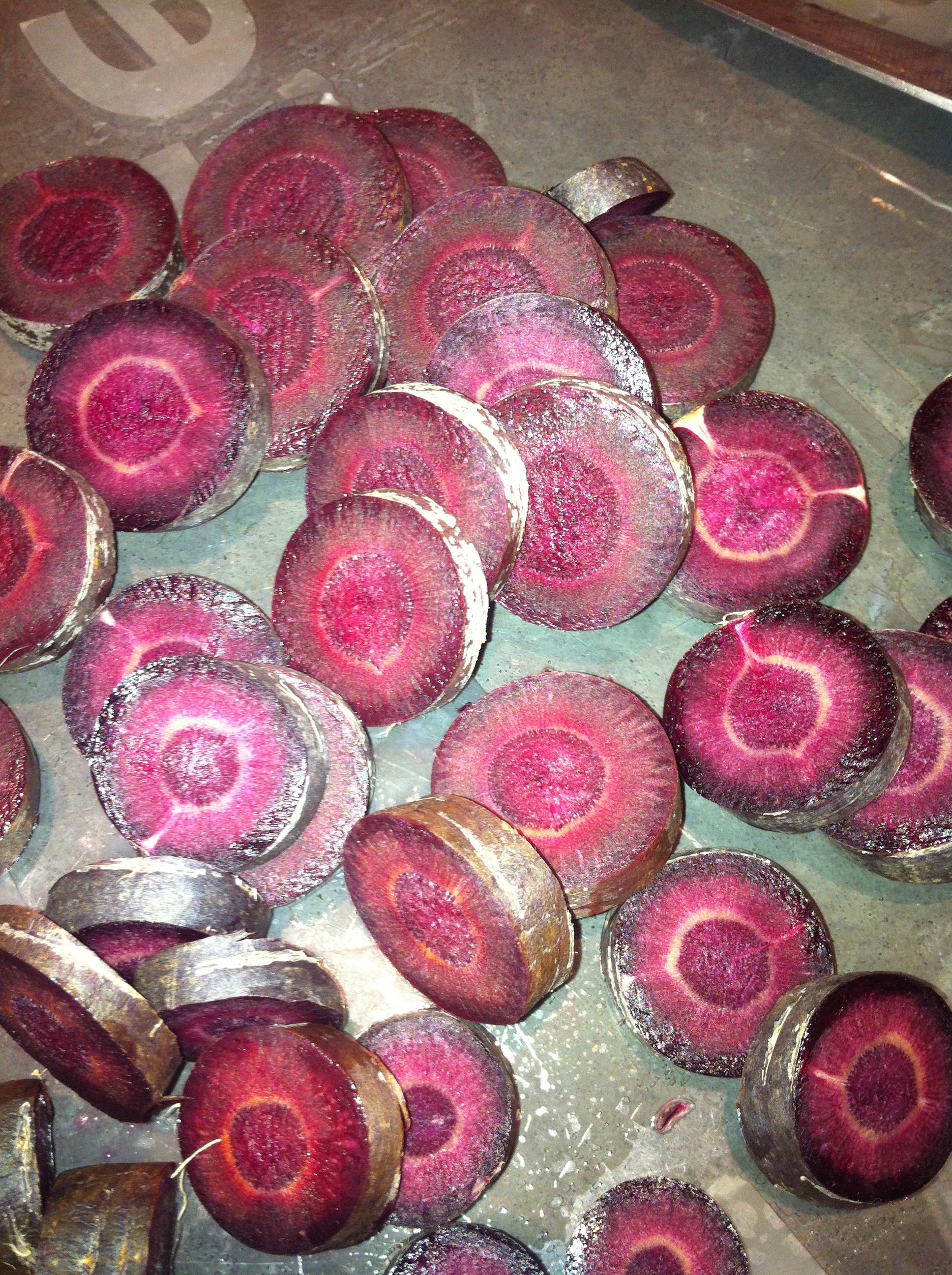
Sliced purple carrot in water before boiling

Sliced purple carrot in water before boiling

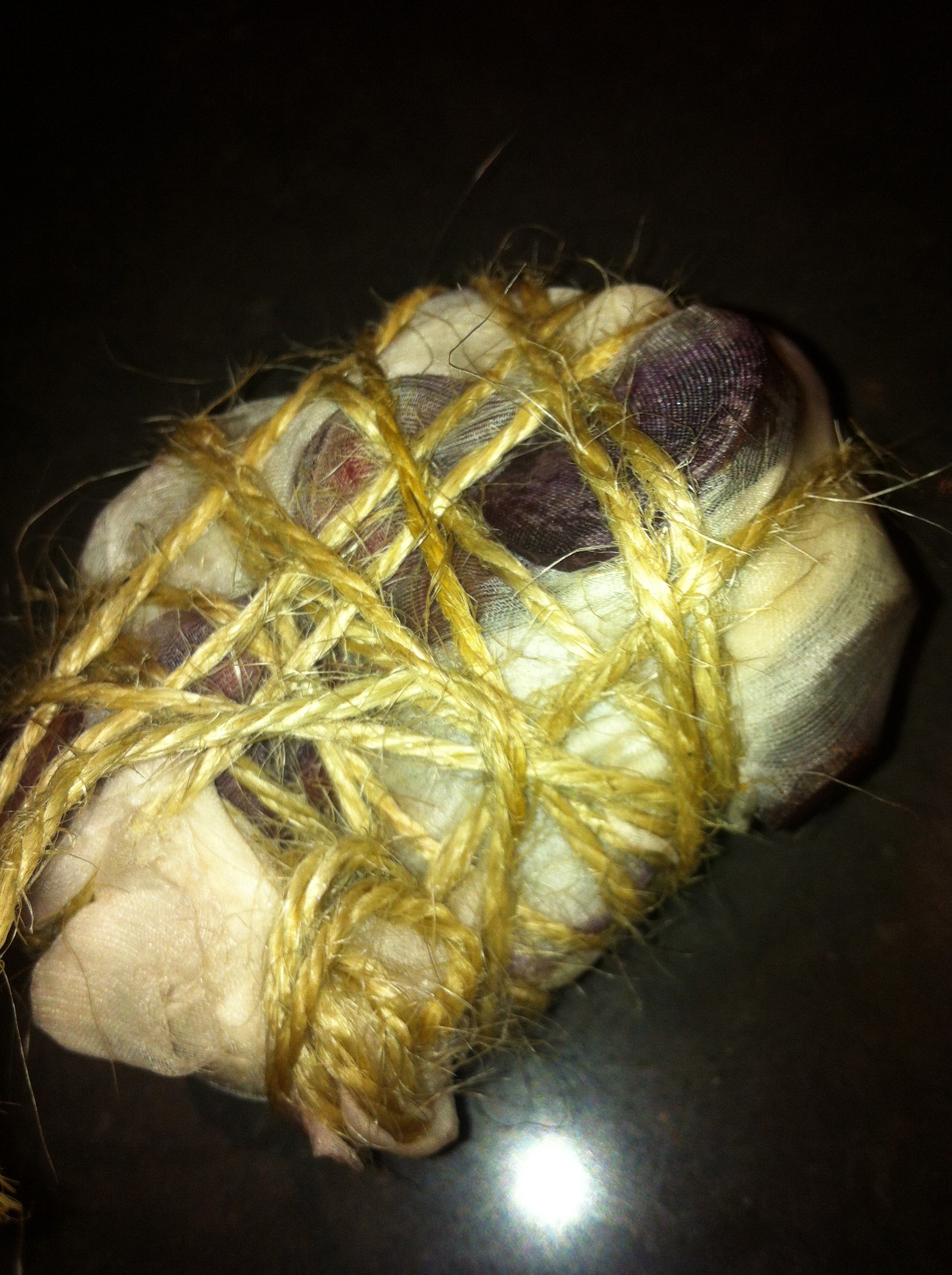
In my first stainless steel pot I put about a cup full of sliced purple carrots into water and brought them to the boil. Taking one strip of dampened silk organza I placed more purple carrot slices on half, folded the rest of the silk over and then rolled the “sandwich” tightly into a tube, securing it with twine. This was dropped into the purple carrot solution.  I called this Bundle 1.

Silk organza wrapped tightly around carrot rings

Silk organza wrapped tightly around carrot rings Bundle 1


In the same pot I put another tightly bound tube of silk but this time the material inside the tube was brown onion skin rather than carrot. This was Bundle 2.

Both bundles were boiled for about fifteen minutes then the heat was turned off and the pot allowed to cool overnight.

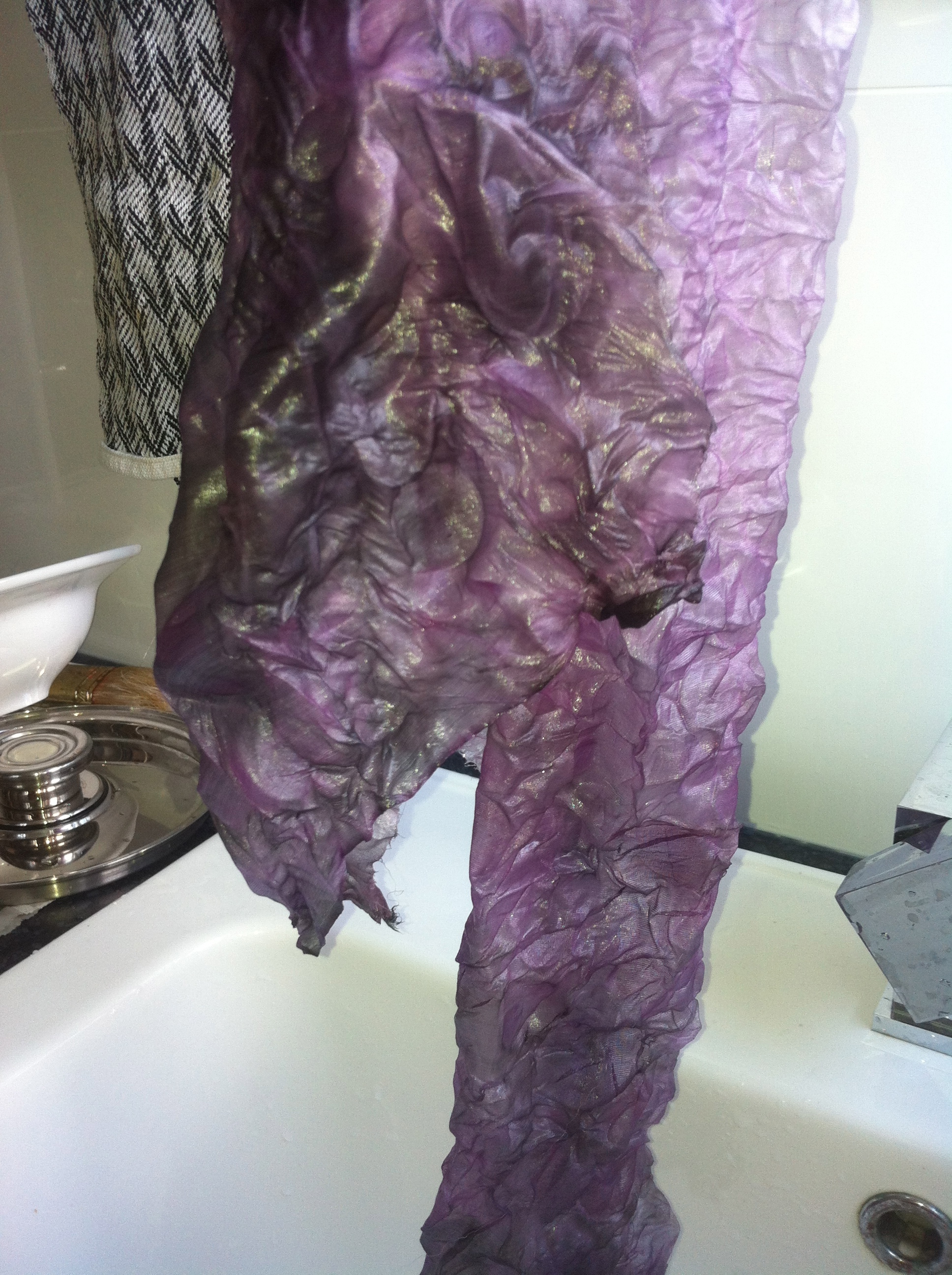
Bundle 1 Carrot in carrot after rinsing

Bundle 1 Carrot in carrot after rinsing

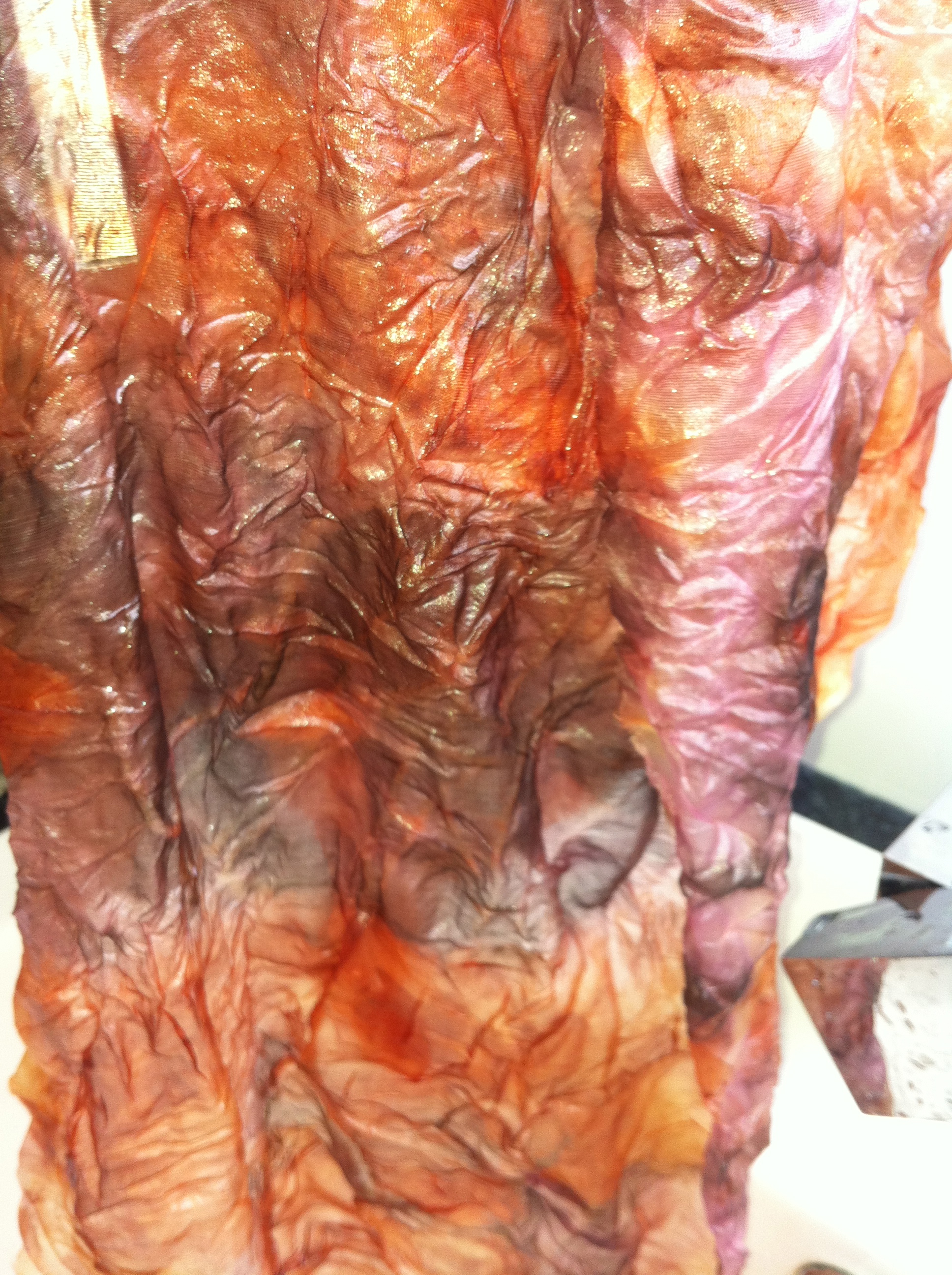
Bundle 2: Onions in carrot after rinsing

Bundle 2: Onions in carrot after rinsing


In a second stainless steel pot I boiled up a couple of cups of chopped avocado skins in water for about fifteen minutes.  Into this I placed Bundle 3, a strip of silk organza wrapped fairly loosely around a solid frozen tube of pomegranate skins, secured at each end with an elastic band.

Bundle 4 also went into this second pot.  It  was a strip of silk organza wrapped tightly with twine around slices of purple carrot. I thought it would be interesting to compare a piece of silk with purple carrot inside boiled in purple carrot solution (Bundle 1) with a similar piece of silk boiled in avocado solution Bundle 4).

Again both bundles 3 and 4 were boiled in the avocado solution for about fifteen minutes then left to cool overnight.

Bundle 3: pomegranate in silk organza boiled in avocado skins

Bundle 3: pomegranate in silk organza boiled in avocado skins


Bundle 4: tightly wrapped carrot boiled in avocado skins.

Bundle 4: tightly wrapped carrot boiled in avocado skins.


Bundle 3 was insipid due to not having been tightly bound. So I rewrapped it with tighter bindings and reboiled it in carrot water.  another story.  OK result but not heroic.

The results of Bundles 1, 2, and 4 are, however, quite pleasing and I can see a bojagi piece forming .

Left: Bundle 1 (Carrot in carrot).  Top: Bundle 2 (Brown onion in carrot). Bottom: Bundle 4 (Carrot in avocado).

Left: Bundle 1 (Carrot in carrot). Top: Bundle 2 (Brown onion in carrot).
Bottom: Bundle 4 (Carrot in avocado).


Posted in Natural dyeing | 4 Comments

Dyeing with Oriental Lilies

I took some dark red lilies to my friend Liz’ place a few weeks ago.  Liz returned them to me once they’d died.  She’d torn them up, complete with their yellow stamens, and wrapped them tightly in a piece of silk.  It looks like a 2ply Cambodian hand woven fat quarter.

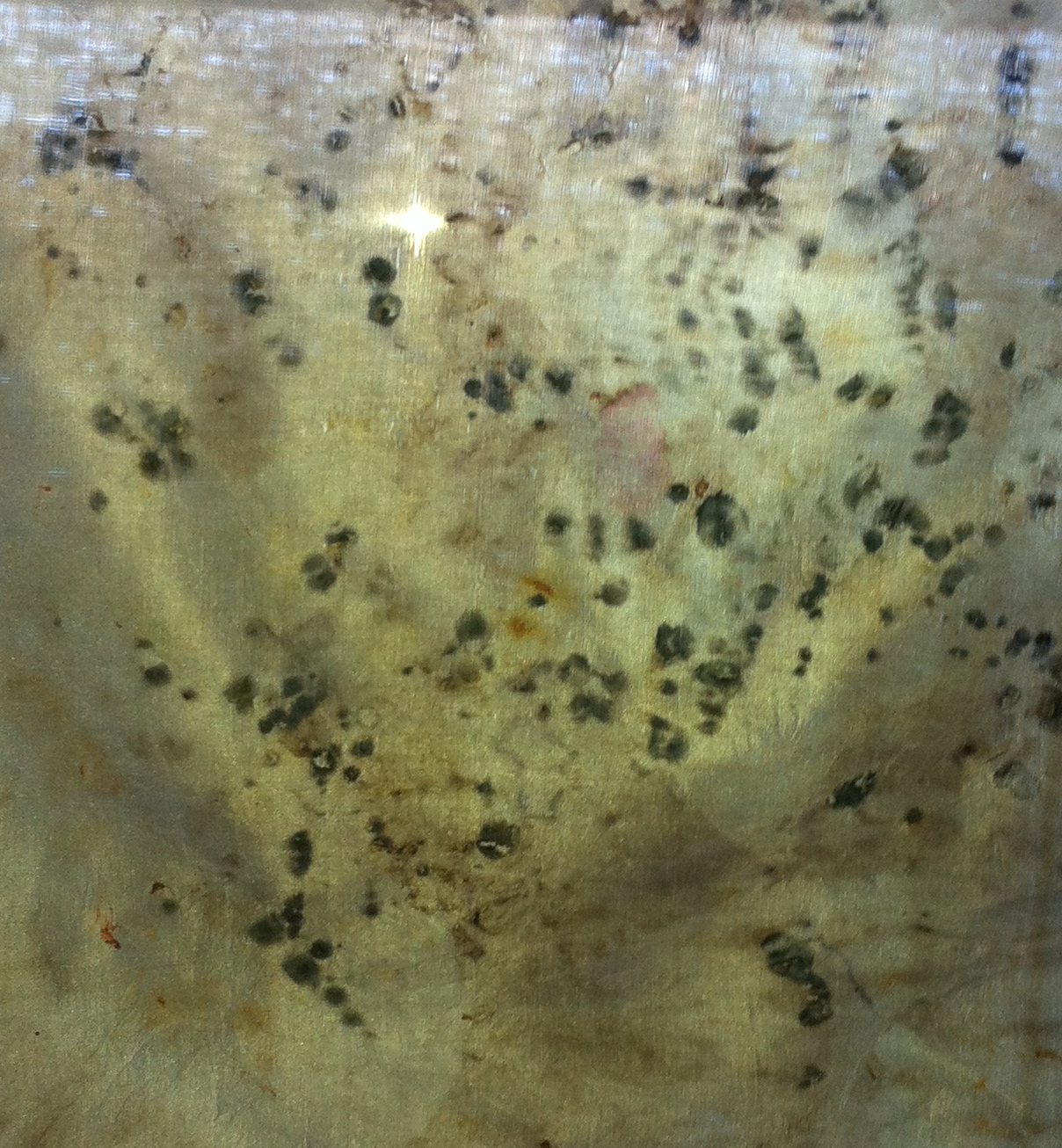
Resisting the temptation to unroll too quickly, I left the damp lump in its plastic bag for a week.  On removing it yesterday I found a rich embellishment of mossy looking mould.

The white is alive.  The brown is the silk and the green is the plastic bag around this ripe parcel!

The white is alive. The brown is the silk and the green is the plastic bag around this ripe parcel!


IMG_2450


It took quite a while to rinse, with a lot of vegetable matter for the compost being rescued from the sink drain!


The crusty roll unwrapped.

The crusty roll unwrapped.

Lots of colour goes down the drain...

Lots of colour goes down the drain…


Drain full of "compost" material. This was a fraction of the total.

Drain full of “compost” material. This was a fraction of the total.


Finally and after much “picking” with finger nails of bits that had adhered tightly to the silk, I was able to wash in pure soap flakes and press.

Washed, rinsed and pressed.  And gorgeous!

Washed, rinsed and pressed. And gorgeous!

The one on the left is pinned to a blanket.  This one is in front of a window to let light in.

The one on the left is pinned to a blanket. This one is in front of a window to let light in.


Thanks Liz!!  Can I use this in another work for the MELD exhibition?

Posted in Natural dyeing | 2 Comments

Wonderful weekend

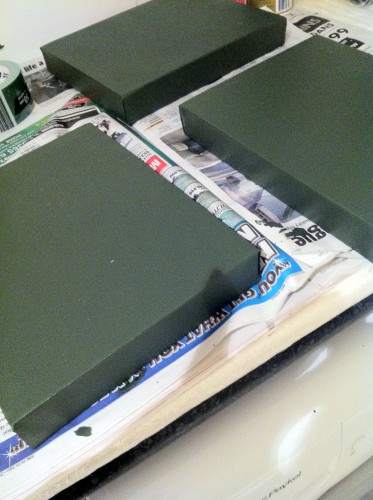
This has been a sunny weekend with warmth and clarity of light so I’ve worked outside on another leaf.  I’ve also been applying successive coats of paint to more small canvases which will bear the “leaves”.

The colour is Dulux Green Spinach which seems appropriate for a frame that will carry a "leaf".

The colour is Dulux Green Spinach which seems appropriate for a frame that will carry a “leaf”.

Why am I making more leaves?  Well…MELD ( http://meldarts.wordpress.com) is at the stage where we are reviewing our work for the exhibition and thinking about how best to present it in the available space at the Showcase Gallery.  This has resulted in my thinking that in the space reserved for my original five “leaves” I could present nine in three rows of three very well.

Since every one is different and created from scratch (or from loop!) there is a great satisfaction for me in designing with my stitch vocabulary and my yarns.  It’s like serving  several quite different meals from the same buffet!

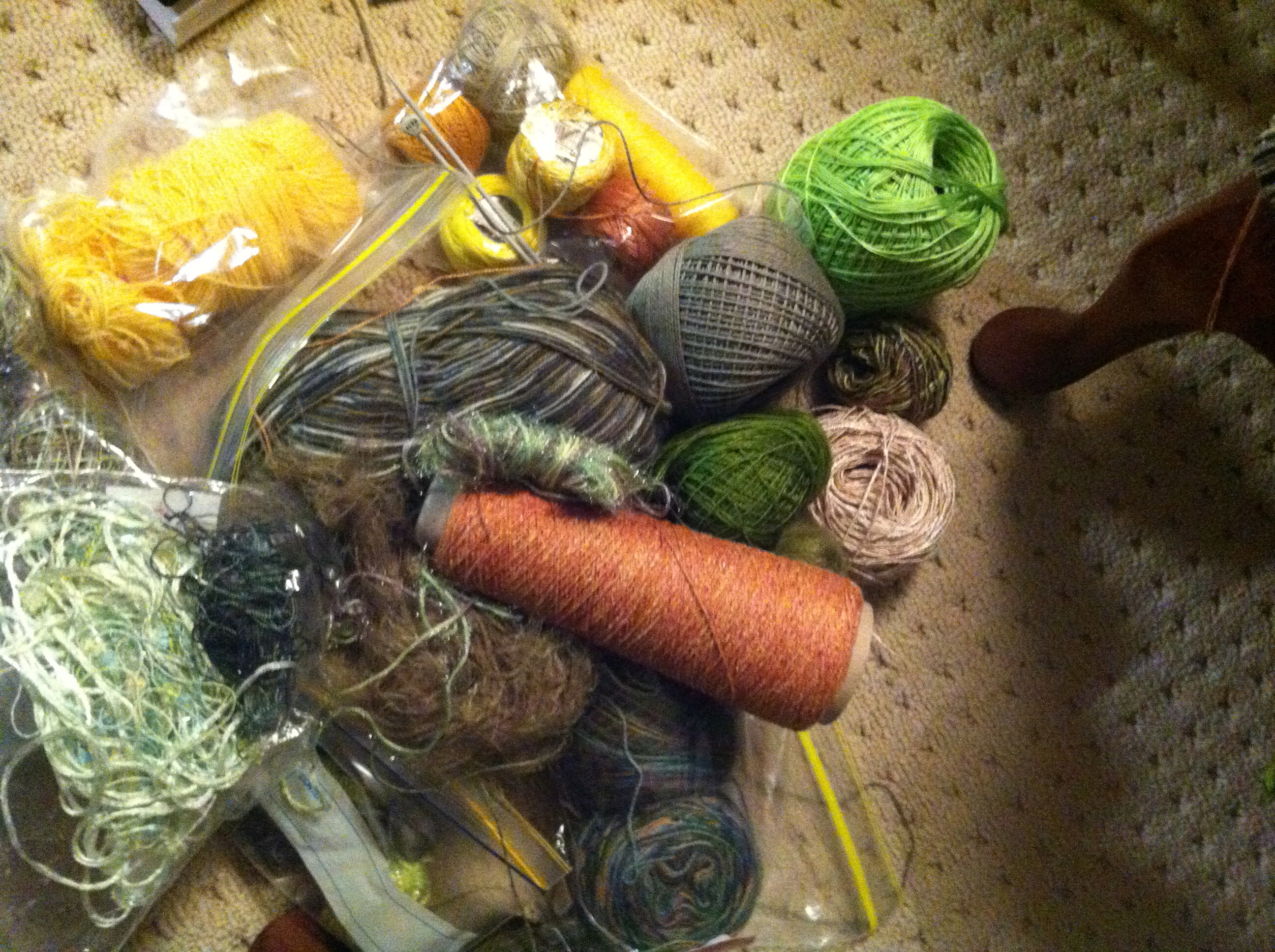
Here’s (some of) the buffet:

Some of the yarns that, like carbon, oxygen, nitrogen and water, form the structure of a leaf.

Some of the yarns that, like carbon, oxygen, nitrogen and water, form the structure of a leaf.

And if you’re wondering how I have so much time in the school holidays, here’s what the grandson and his friend are doing:

IMG_2372 IMG_2373


Posted in Design, freeform crocheting, freeform knitting, paint | Leave a comment

New rust series

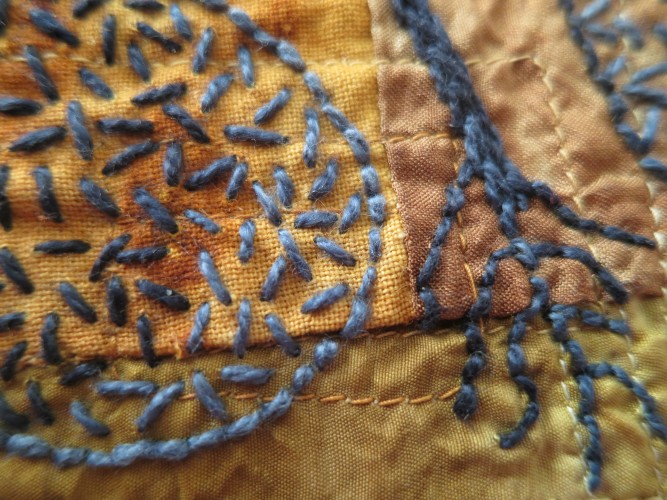
I’ve nearly finished four small pieces which will be wrapped around 30cm canvases for hanging in the MELD exhibition (Hidden Revealed Transformed see http://meldarts.wordpress.com)

Can’t show them here because they’ll need to be kept unpublished but here’s a detail….

Detail on one of four, called Growth

Detail on one of four, called Growth

Posted in Design, Hand embroidery, Machine quilting, Natural dyeing, Uncategorized | Leave a comment

Life imitating art

I went with friend Di Binns to the Artsource open studios in Midland today.  We got there early so looked in on the Farmers’ Market first.

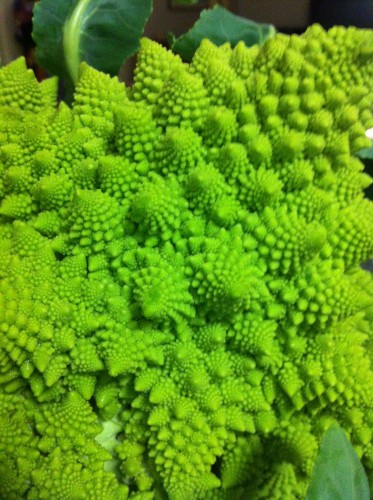
Seeing this vegetable, I couldn’t resist buying it, if only for the photographic opportunity.  I think the vendor said it was a “Cathedral Cabbage”.  It doesn’t look like a cabbage; more like a cauliflower.  I’ve googled both and not got a hit so who knows what it really is?

What colour and texture is in this vegetable!!!

What colour and texture is in this vegetable!!!

"cabbage" detail

“cabbage” detail

Apart from gorgeous.  It’s so much more worthy of a place on this blog than anything else I’ve had anything to do with all week….

Posted in Design | 5 Comments

Displacement activity

My last post was headed “Panic sets in”.  So did you  think that this next post would be a focussed presentation of a work for the MELD exhibition? How naive!

I’m a member of a Perth-based group called Designing Women.  About twenty or so people passionate about textiles.  We are having an exhibition later this year.  So at our last meeting (last Saturday) we considered the idea of having artists’ profiles that were a bit more visible than the usual A4 page paper hidden in a ring bound folder.  Why not have textile statements, we thought?  Would the  gallery owner allow that?  What should be the format?  Can we all just do what we want or should we have a standard format?  The usual group exhibition questions.

I volunteered to do an A4 sized textile artists’ statement .  The idea was that a few others in the group would do the same and we could then have an informed discussion at our next meeting in July.

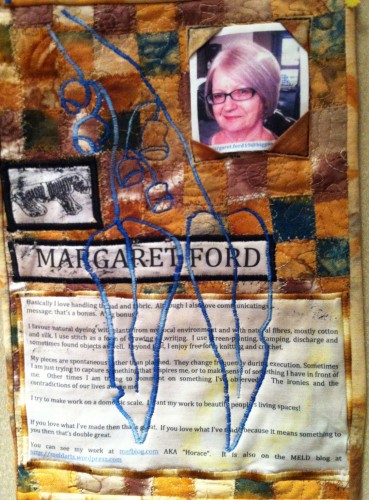
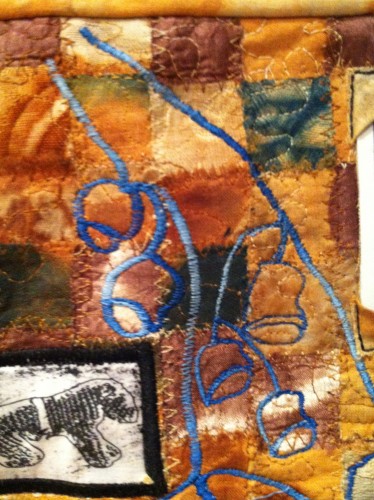
I wanted to use my naturally dyed and rusted fabrics because that’s what my pieces in the exhibition will be made from.  The DW group piece in the centre of the gallery will be themed as “eucalyptus” so I thought I’d include that as well (and because I use eucalyptus leaves a lot). I included my logo (Horace (the horse of course)) and a photo because visitors to the gallery like to be able to identify artists. And of course WORDS.  I love words.  So the draft made itself.  Words, photo, logo, my own fabrics, and gum leaf embroidery.  Easy to the point of banal.

Here is the result:

DRAFT Artist statement for DW exhibition

DRAFT Artist statement for DW exhibition

Draft artist statement for DW exhibition - detail

Draft artist statement for DW exhibition – detail

Draft DW artists' statement showing the insertion of an album type photo

Draft DW artists’ statement showing the insertion of an album type photo


Posted in Uncategorized | 1 Comment

Panic sets in

It’s the end of a long weekend and all my fellow MELD members think I’ve been applying myself to some exhibition pieces.  NOT!

I spend the first two days totally absorbed in the detective problem solving that is on-line genealogy research.  Love it , but it doesn’t get things made.

Was going to apply myself today, honest! But I thought I’d just better spend a bit of time in the horrible overgrown courtyard so the brown lidded bin has something in it for collection tomorrow.  Well, perhaps it was a necessary time investment….. and perhaps it was a displacement activity.  Goodness knows, I’d been keeping the curtains closed when expecting visitors so the tidy up was well overdue.

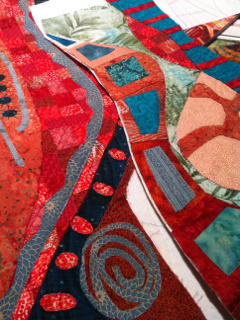
I’m about to fire up the free motion quilting (although the ABC news will be on soon….) but thought I’d post a peace offering to the group:  This is a couple of the elements of a new vessel I’m trying to construct.  It involves some fairly complicated piecing (my fault, got carried away with the curved drawings) and some VERY stiff interfacing, which perhaps accounts for my disinclination to work on it over this weekend!

Two bits of a vessel, as yet unquilted

Two bits of a vessel, as yet unquilted

Posted in Design, fabric collage, Machine quilting, patchwork | 5 Comments