Chain of events forms luck: Invited to exhibit!!

I’ve never really believed it when people said you have to “put yourself out there” to get noticed.  At least, I didn’t think that would work for me. Wrong!

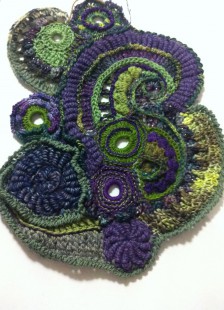
Last year the Designing Women group had an exhibition.  I put in a piece of work called “Leaf Litter”.  I’d made it with hand-dyed silk using purple carrots, avocado and pomegranate skins.  Two of the DW girls wrote up the exhibition and sent the report off to the editors of Textile magazine (published by ArtWear Publications) along with some images, including an image of Leaf Litter”. This is the first strand in a series of incidents that formed my “luck”.

Then a week ago  I posted on Facebook my delight at seeing a piece  of mine in Textile!  Yes, they had published the report sent by DW and included an image of my piece.  Issue No. 117. Second bit of luck.

Finally, somehow the curator of an exhibition (which is opening on Sunday 8 March) saw my post.  She contacted me to invite me to have it in the exhibition! Third bit of luck.

So now I have the short term and totally unexpected happiness of having my “Leaf Litter” in the show at the Forest Heritage Centre in Dwellingup!

This is a copy of the invitation. Click to see it.

https://www.facebook.com/154582818039896/photos/gm.996929943668287/425717577593084/?type=1

Posted in exhibiting, Natural dyeing, patchwork | 5 Comments

Yarn dyeing or what to do while the cricket’s on

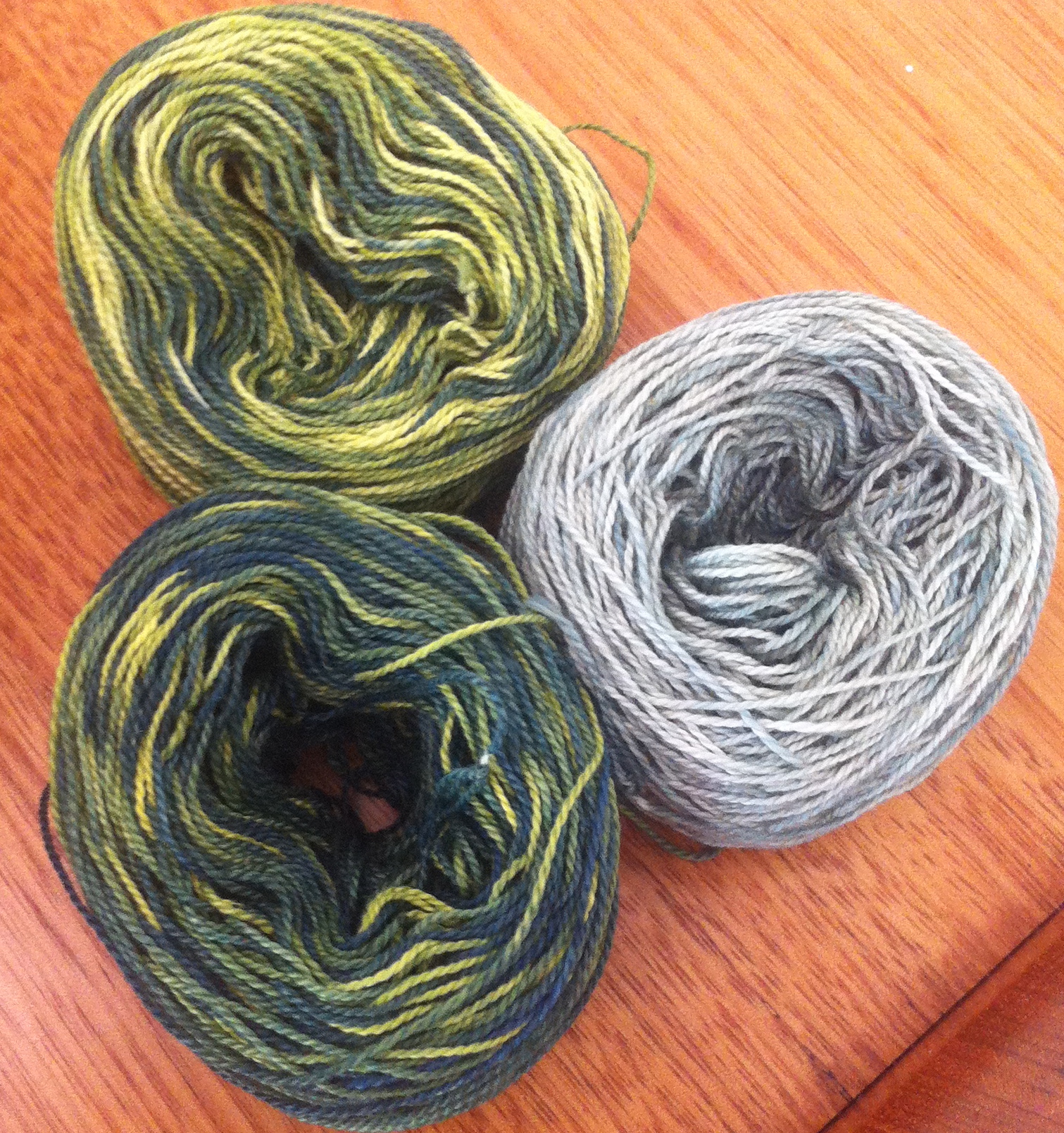
Having a lazy day today watching the Australia vs England one day match on TV so wound off some balls of yarn from small skeins I dyed last Friday.  Fibres include two weights of cotton, baby alpaca, silk in two weights and both a  fine wool and a fine wool boucle.  IMG_2990

Posted in dyeing with fibre reactive (procion) dyes | 2 Comments

Dyeing various natural fibres with E.wandoo

With a large bag of Eucalyptus wandoo bark , fresh from York in WA’s east, I thought to see how it dyes different natural fibres.  I’ve been collecting fine undyed  yarns for while in order to put them into freeform crochet.

IMG_2963

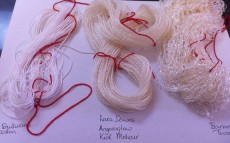
Above, from left to right of the  top row: fine wool; fine 20/2 silk; and fine bouclé wool.  At the bottom, a small hank of perlé No. 8 cotton. The silk and the boucle wool yarns were a lot more cream than the others to begin with.


IMG_2966

Above, from left, thicker crochet cotton (about equivalent to perlé No. 3); kid mohair; and banana twist.

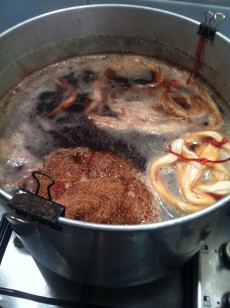
I prepared a wandoo dye bath in a heavy  aluminium pot (from my friend Liz) by simmering the bark in water for about twenty minutes, allowing it to cool, then straining out the bark. I then transferred the dye solution into another aluminium pot, this time one with a lid.

IMG_2964

It was interesting to see how the dye grabbed onto some fibres more quickly than to others.  All were simmered for ten minutes then allowed to cool completely in the bath before removal , rinsing and drying. I did not use a mordant as I wanted to see how the fibres would go without any pre-soaking.  However, the pots would have added some alum ( with a brightening effect) and wandoo bark contains very high amounts of tannin.  In fact, wandoo trees used to be the basis of  a tannin extraction industry.

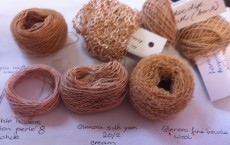
In the end, after washing and drying, there was not much difference between any of the fibres.  However, although difficult to see from the image, the cotton threads were a bit pinker than the wool and the goat mohair. The wool yarns and the silk had the densest colour, but then, as noted above, they were cream rather than white in their undyed state.

IMG_2978

Above: Left to right top row: fine wool; banana twist; No. 3 cotton thread; and kid mohair.

Left to right, bottom row: No. 8 cotton thread; 20/2 silk yarn; fine bouclé wool.

My next exploration will be to use avocado skins on these fibres.


Posted in Natural dyeing | 2 Comments

Back to Work!!

Well, it’s a month since I last posted and still no leaf sketches….but I’ve been on a fantastic holiday in Malaysia with Prudence Mapstone and my interest in freeform crochet as a medium for 3D patterning is rekindled.

I’m intent right now  on seeing how far I can go with very fine threads and working them into a piece in shade order.

No idea yet what the final piece will look like but that’s no affecting my enjoyment of these gorgeous yarns.  Most are commercially sourced and natural fibres, but a few are my own hand-dyed cottons. See thumbnail.

Here’s a taster of the way the darker shades are being incorporated:

Perle 8 balls of white cotton painted with mixtures of navy and yellow.  The one on the right is  a heavy dilution of the dye in the bath

Perle 8 balls of white cotton painted with mixtures of navy and yellow. The one on the right is a heavy dilution of the dye in the bath

Small "swirl".

Small “swirl”.

The enlarged "swirl"

The enlarged “swirl”


Posted in Design, freeform crocheting | 2 Comments

Dyeing with Listerine

First, I know that I should be blogging about my leaf drawing.  It’s just not happening right now.

However, I’ve just done something more interesting.  Last night I was testing a recommendation for a foot bath recipe involving Listerine: white vinegar: warm water in ratios 1:1:2.  It doesn’t work very much better than the much less expensive warm water and soap foot bath.  And it makes your feet blue!

It was the blue feet that got me thinking.  If Listerine and vinegar solution will stain skin then it might well dye a protein fibre.  I just happened to have a small skein of white wool sitting nearby so out came the feet and in went the wool.  It soaked overnight because I forgot about it.

White wool skein in solution of Listerine, vinegar and warm water in ratio of 1:1:2.

White wool skein in solution of Listerine, vinegar and warm water in ratio of 1:1:2.


After removing it this morning I drained it off a bit and wrapped it in plastic wrap.  I then microwaved it for two lots of one minute on high and then two lots of one minute on 50% power.

Post soaking the skein is draining.

Post soaking the skein is draining.

Wrapped in plastic wrap.

Wrapped in plastic wrap.

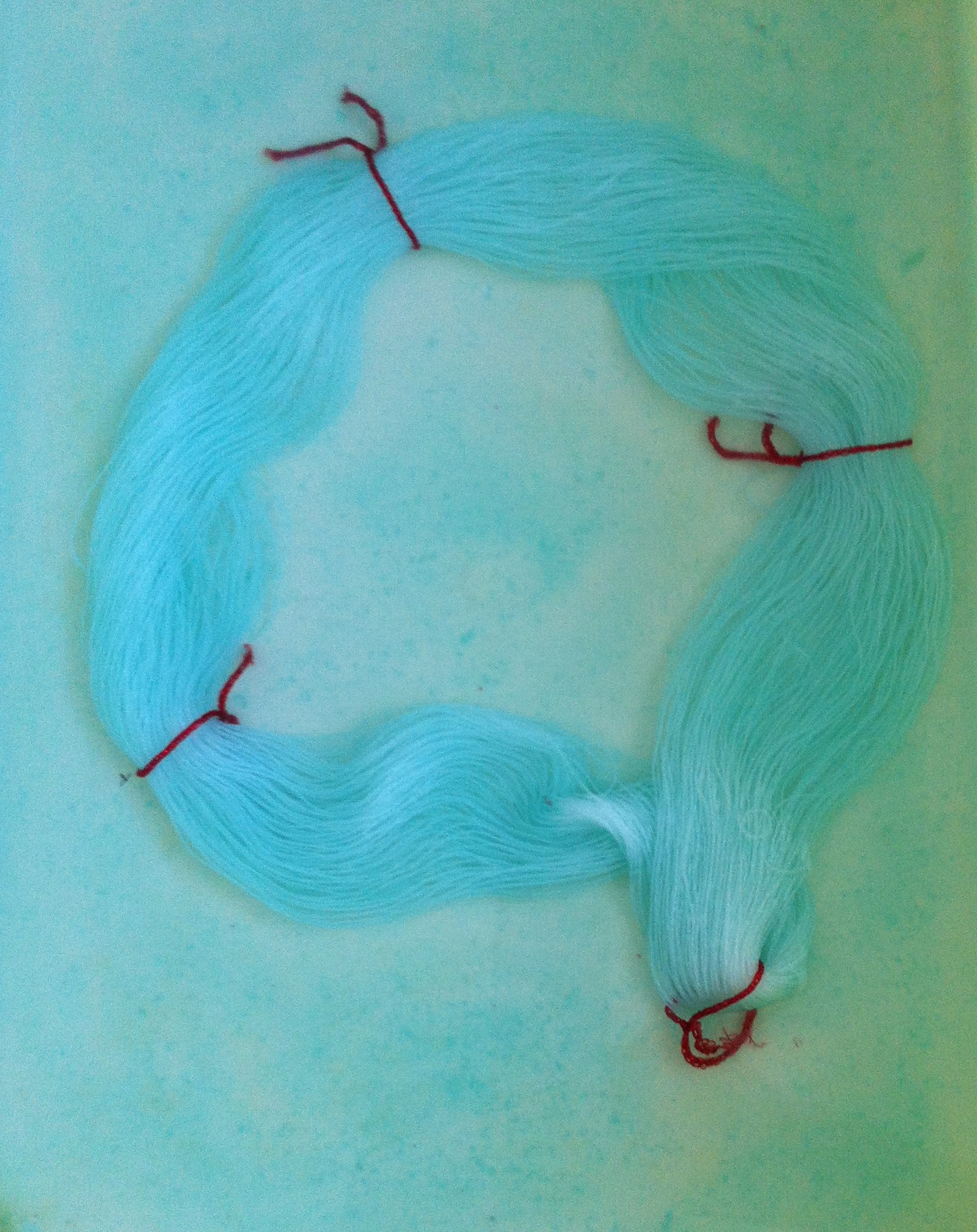
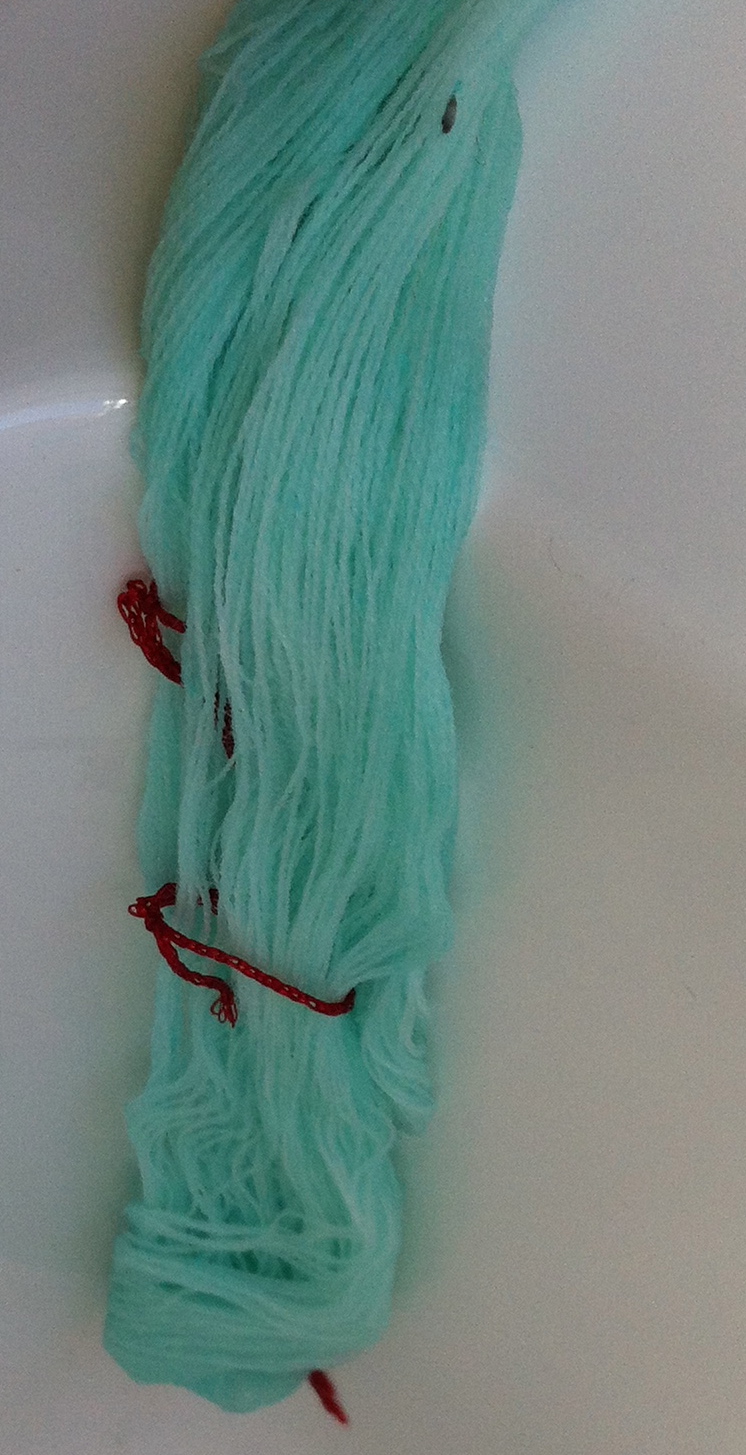
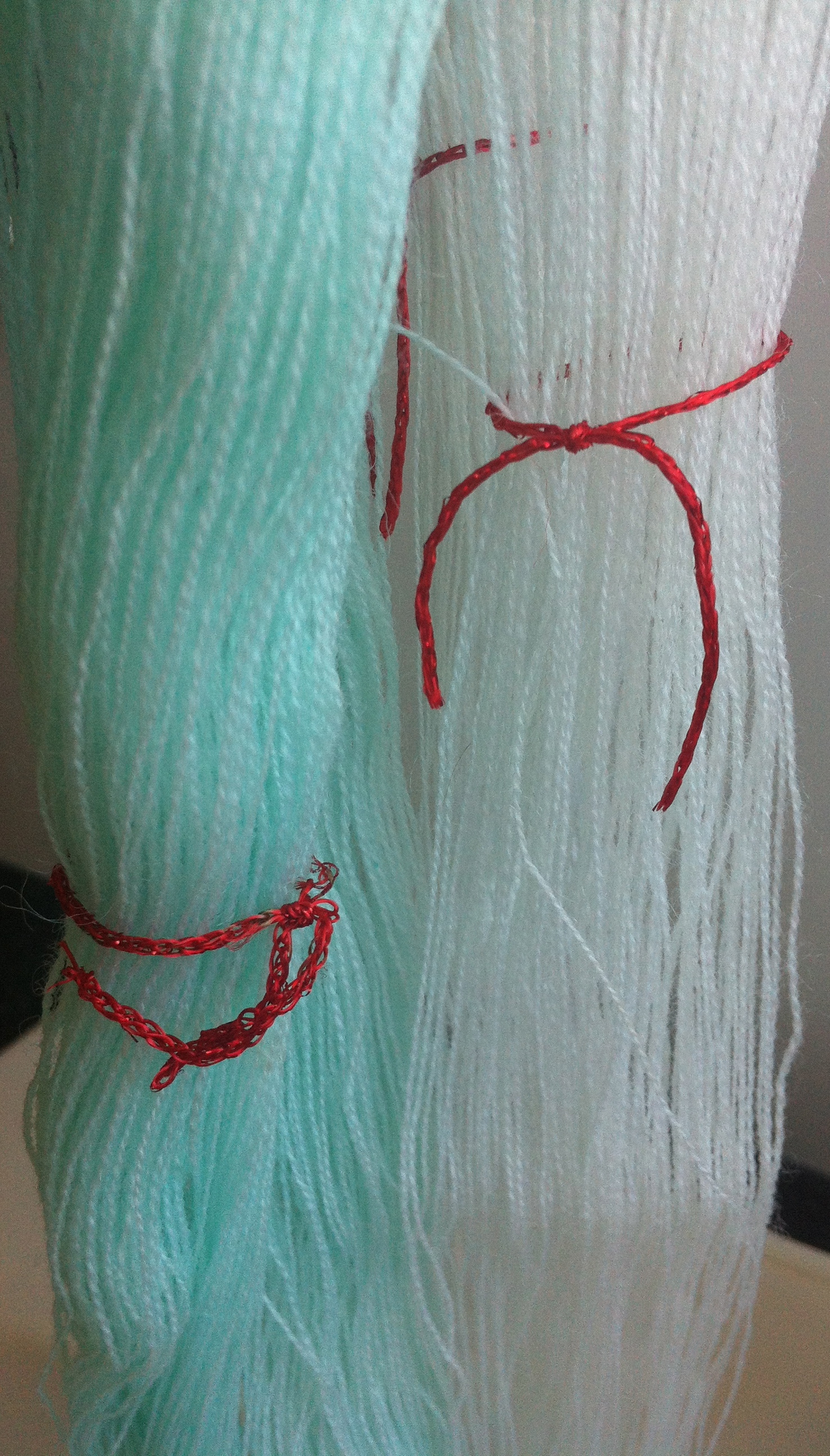
After cooling, rinsing and drying, this is the result.  I’ve photographed it with an undyed skein of the same wool so the difference is clear.  It’s a lovely soft aqua.

Rinsed and dried and alongside undyed original.

Rinsed and dried and alongside undyed original.

I reckon I might try other household products as the opportunity presents!  And I might check if cellulose fibres such as cotton and banana will also dye with Listerine and vinegar.

Posted in Dyeing with household products | 4 Comments

Leaf Drawing: Week 1

Jan's leaf

Jan’s leaf

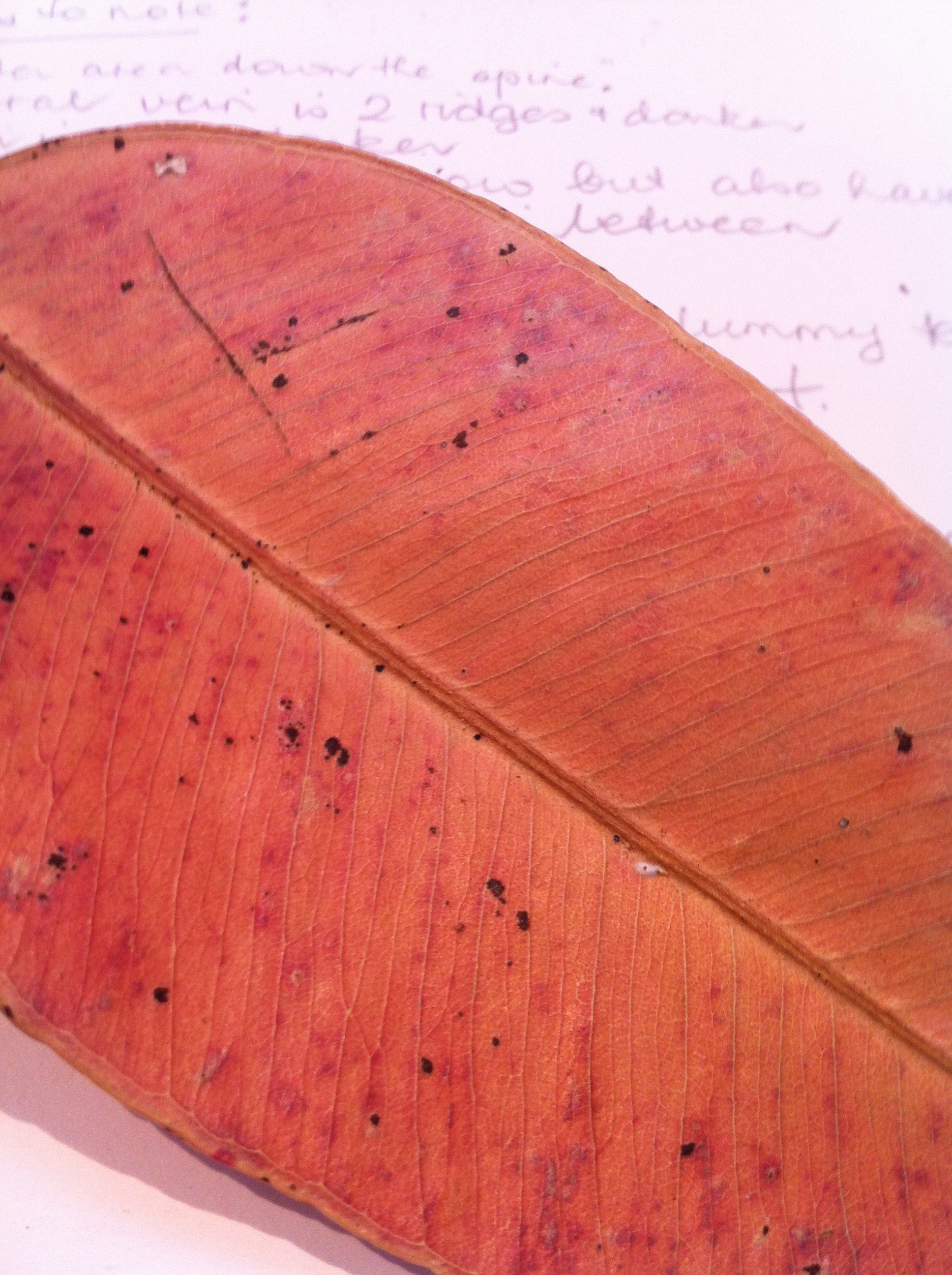
I found the leaf for the first week of my drawing challenge on the doorstep of a friend who’d been ill and unable to sweep her porch.  Lucky me!

I drew it.

My first leaf drawing.  I'll get better (I hope)

My first leaf drawing. I’ll get better (I hope)

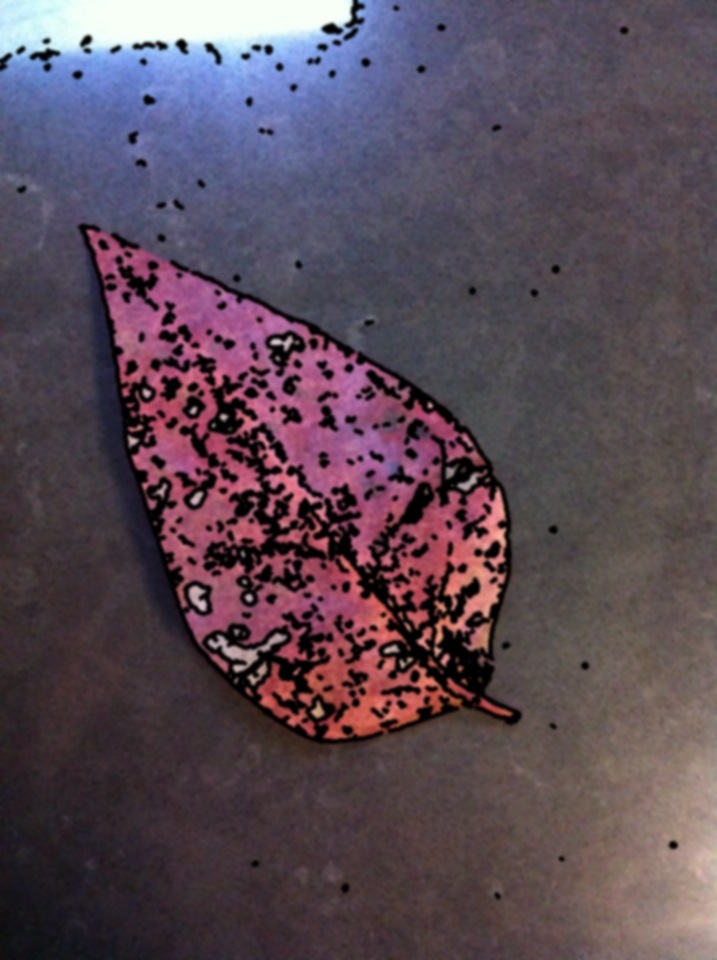
Using an app called C4LA (Camera for Line Art) I made a line drawing:

Line drawing made by C4LA

Line drawing made by C4LA

I’m still thinking about how to bring these all together in textile medium!


Posted in Design, drawing | Leave a comment

A weekend to dye for

My two briefs from Ruth Hadlow’s workshop invoke exploring crochet a bit more.

Armed with skeins of undyed alpaca, alpaca and silk, silk, wool and cotton of different weights, I drove to York (120 km east of Perth) to indulge in a weekend of dyeing with my sister, Prudence Ford.  Prudence is not only an expert at procion dyeing  but it’s also fun to have company while one prepares the yarns and uses the dyes.  Preparation took all of the first day as we turned balls of yarn into skeins and large commercially sourced skeins into balls so we could break them down again into smaller skeins for different dyeing treatment. The protein based fibres (the alpaca and wool, but not the silk) needed to be heat set and we chose to microwave them .

OVERVIEW

I’ve seen people dyeing a whole ball of thread but I’m sceptical about getting the dye right through.  So I prefer to put the ball into a skein first.
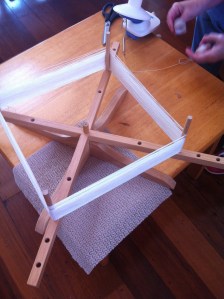
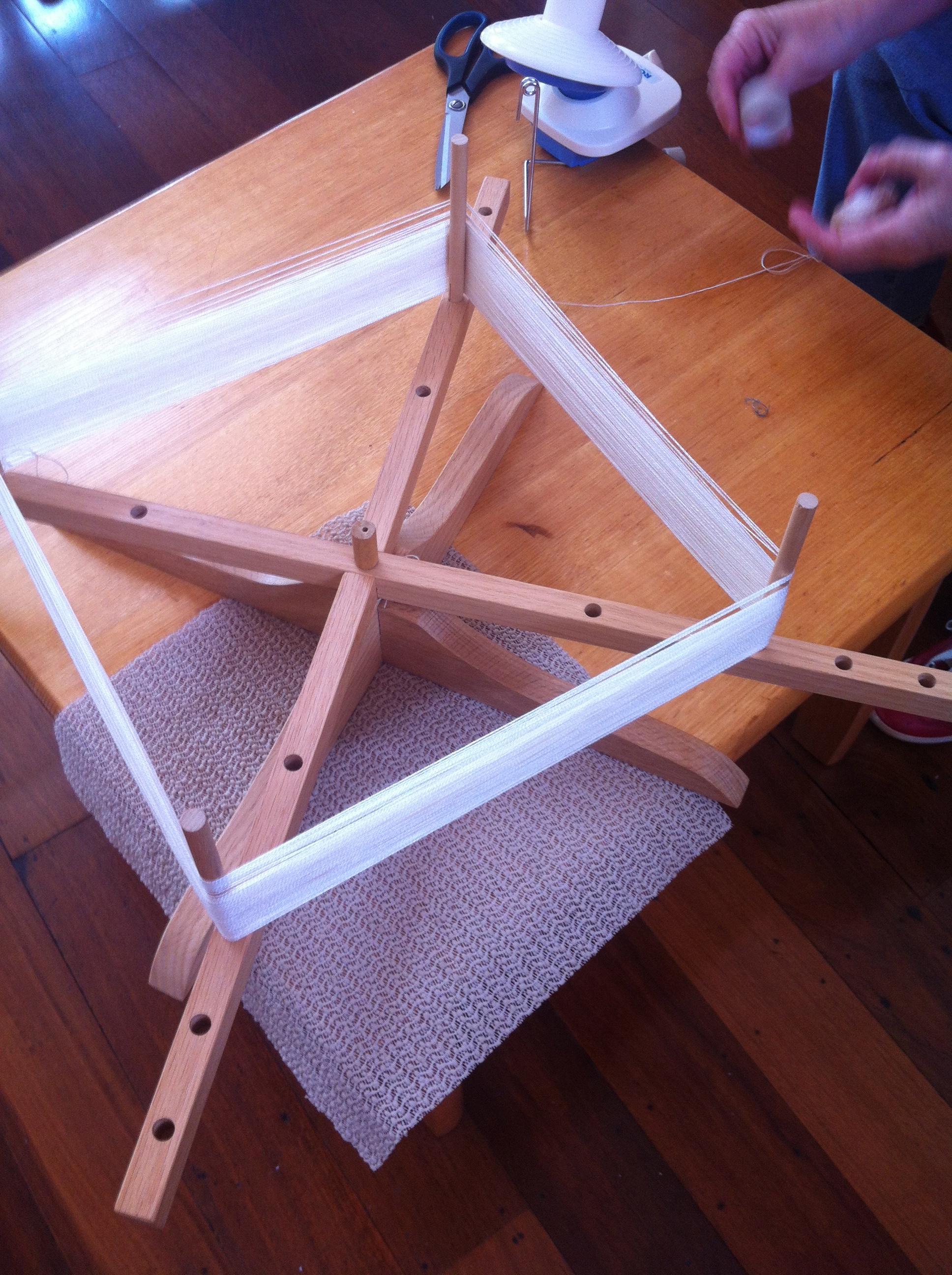
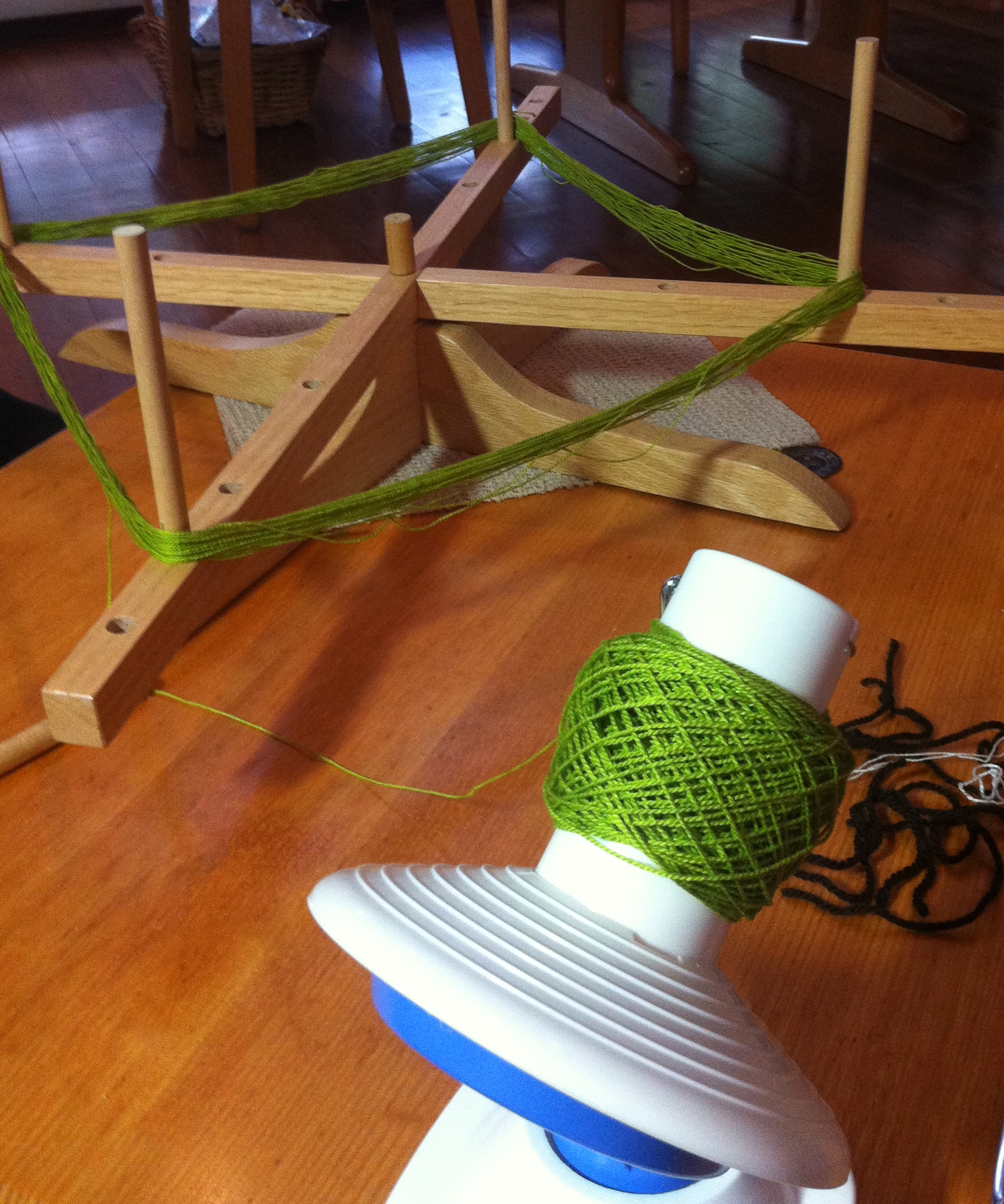
Ball to skein using the swift in reverse.
Ball to skein using the swift in reverse.

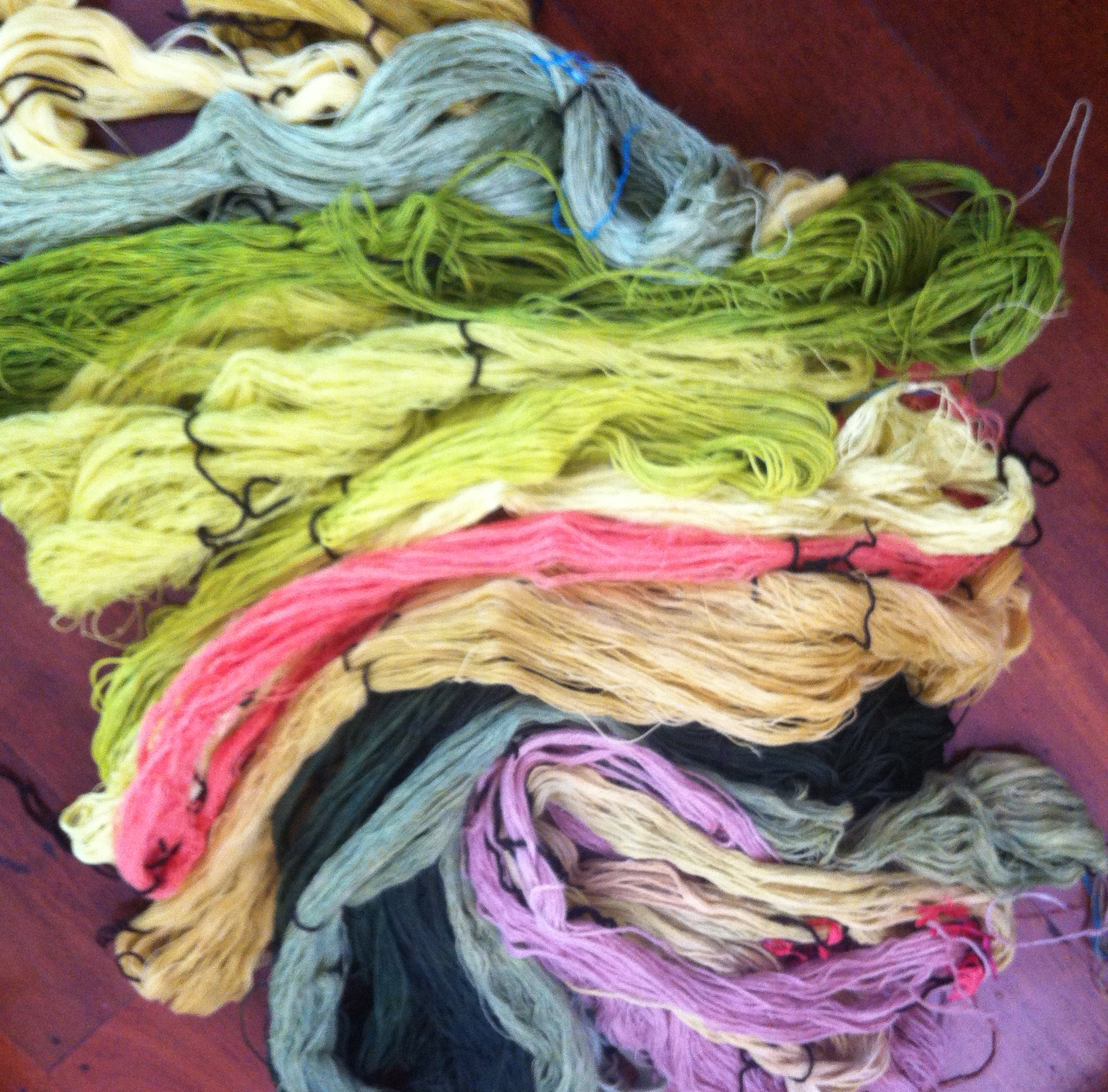
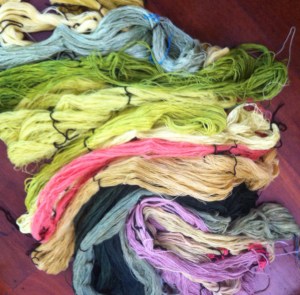
All the dyed, rinsed, heat set where necessary, and dried skeins.

All the dyed, rinsed, heat set where necessary, and dried skeins.

It’s exhilarating to see the accumulated skeins in all their coloured glory.  But that’s only a part of the process.   Each of these skeins then has to be made into a ball of yarn…..

Look closely and you'll see four hands trying to wrestle this skein of dyed silk into a form that will yield a ball!  Hours of work, which seems to be confined to silk!

Look closely and you’ll see four hands trying to wrestle this skein of dyed silk into a form that will yield a ball! Hours of work, which seems to be confined to silk!

Dyed skein to ball using swift and Royal ball maker

Dyed skein to ball using swift and Royal ball maker (this one was easy as it’s cotton).
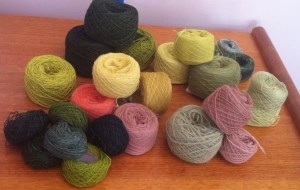
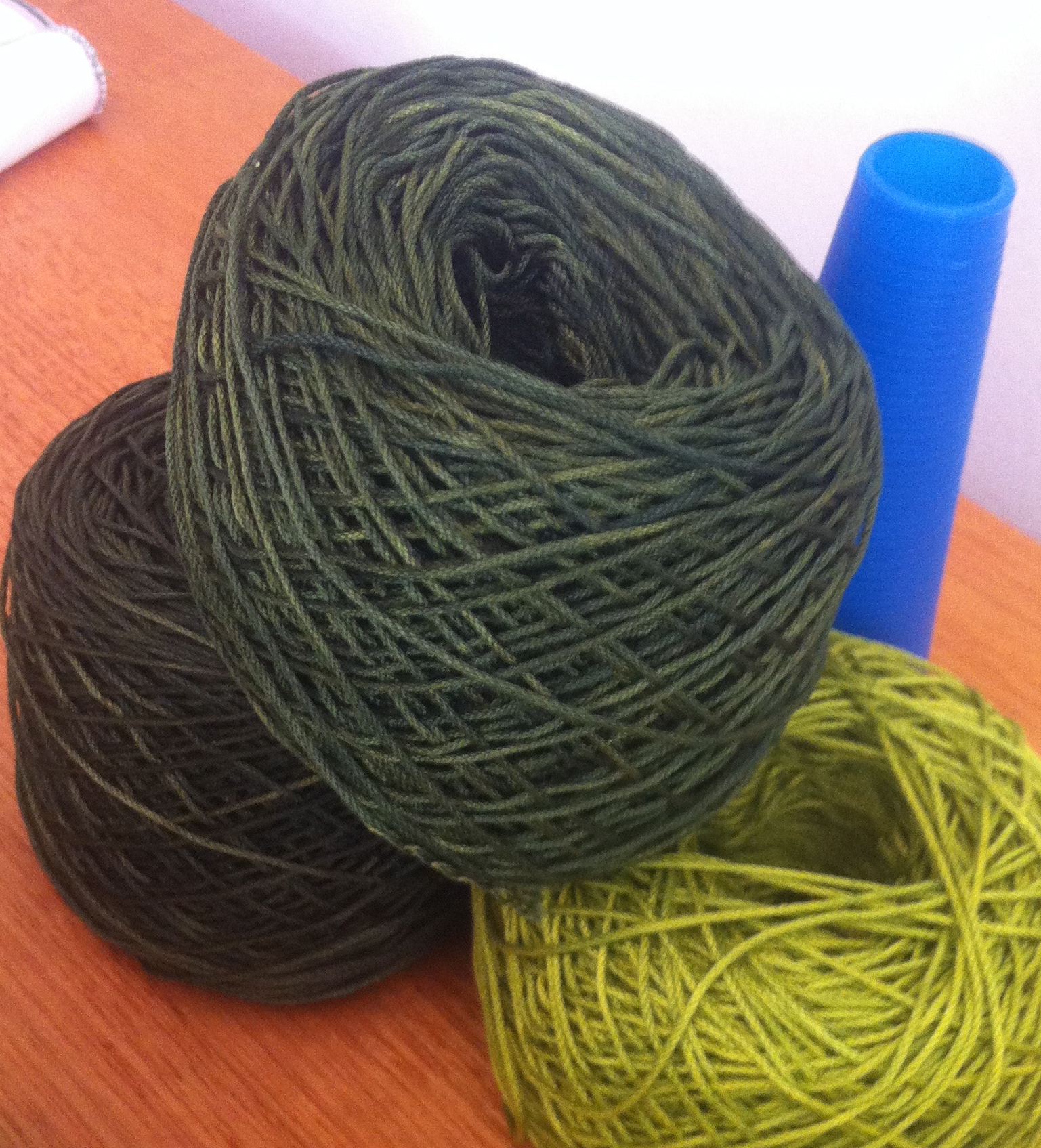
The skeins above after returning them to balls.

The skeins above after returning them to balls. The orange and slightly pink looking balls were produced with an orange mixture and a diluted brown mixture respectively to complement the greens.

BLACKENED YELLOW TO PRODUCE GREEN

Initially I elected to play with the effects of combining yellow (MX8G) with black (MX2RA) for a range of greens. As I added black I painted the results onto white paper.

Chart showing dyes painted onto white paper starting with yellow MX8G and adding black MX2RA in one quarter tsp amounts.


I selected three shades from the chart above to use in dyeing a range of yarns.  A slightly greenish yellow made from 1/4 cup yellow plus 1/2 tsp black; a mid-green made from 1/4 cup yellow plus 4 and 1/2 tsp black and a dark green from 1/4 cup yellow plus 9 tsp black.

Cotton dyed in blackened shades of yellow MX8G: lightest is 1/4 cup yellow plus 1/2 tsp black.  Mid one is 1/4 cup yellow plus 4 and a 1/2 tsp black.  Darkest is 1/4 cup yellow plus 9 tsp black.

Cotton dyed in blackened shades of yellow MX8G:
lightest is 1/4 cup yellow plus 1/2 tsp black. Mid one is 1/4 cup yellow plus 4 and a 1/2 tsp black. Darkest is 1/4 cup yellow plus 9 tsp black.
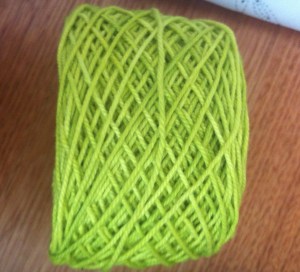
Sullivan's brand white mercerised cotton dyed in 1/4 cup yellow and 1/2 tsp black.

Sullivan’s brand white mercerised cotton dyed in 1/4 cup yellow and 1/2 tsp black.

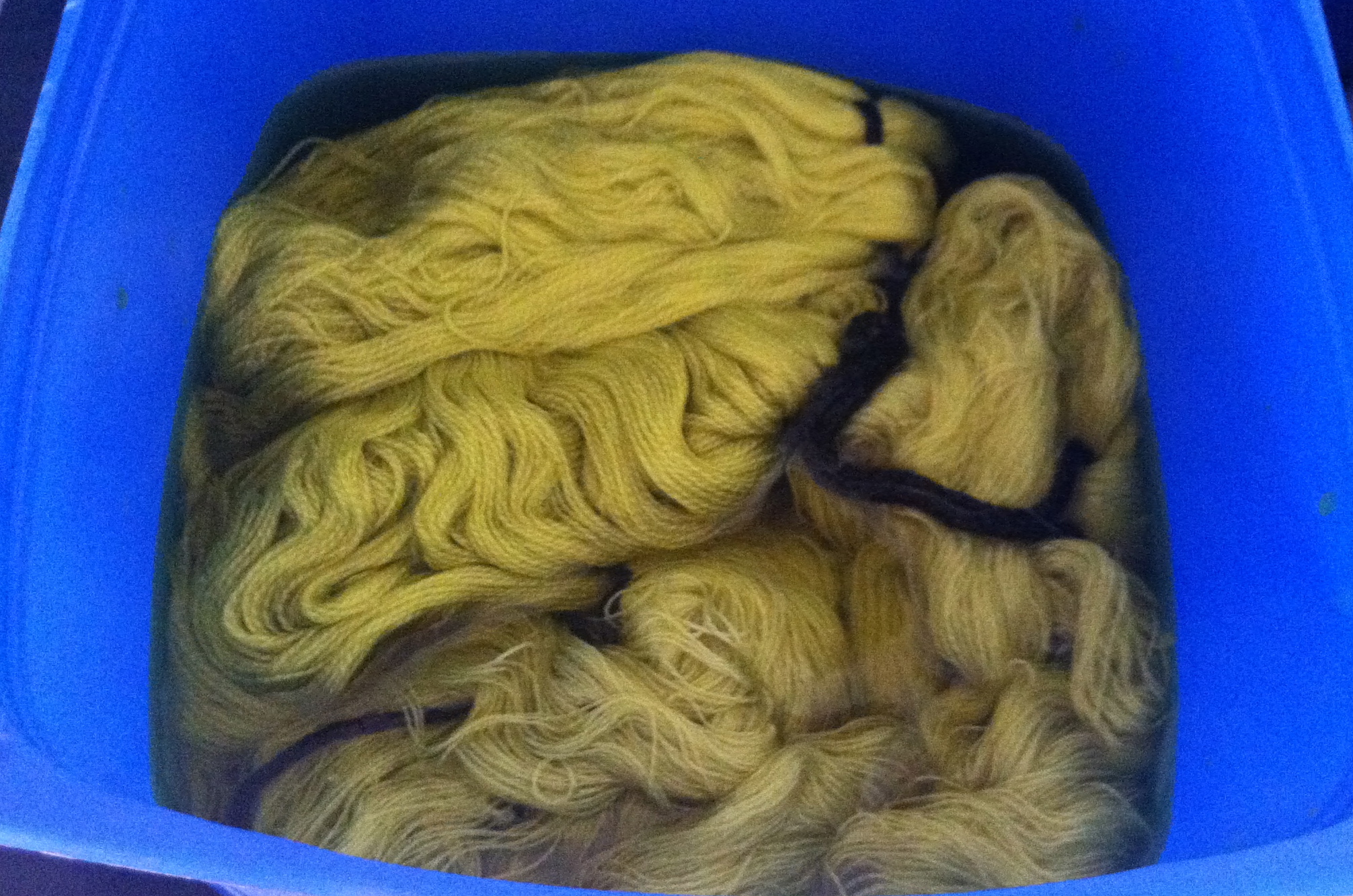
Dye bath with silk and alpaca in it.  The silk takes the colour slightly better

Dye bath with silk (left upper) and alpaca (right lower) in it. The silk takes the colour slightly better and doesn’t need heat fixing.

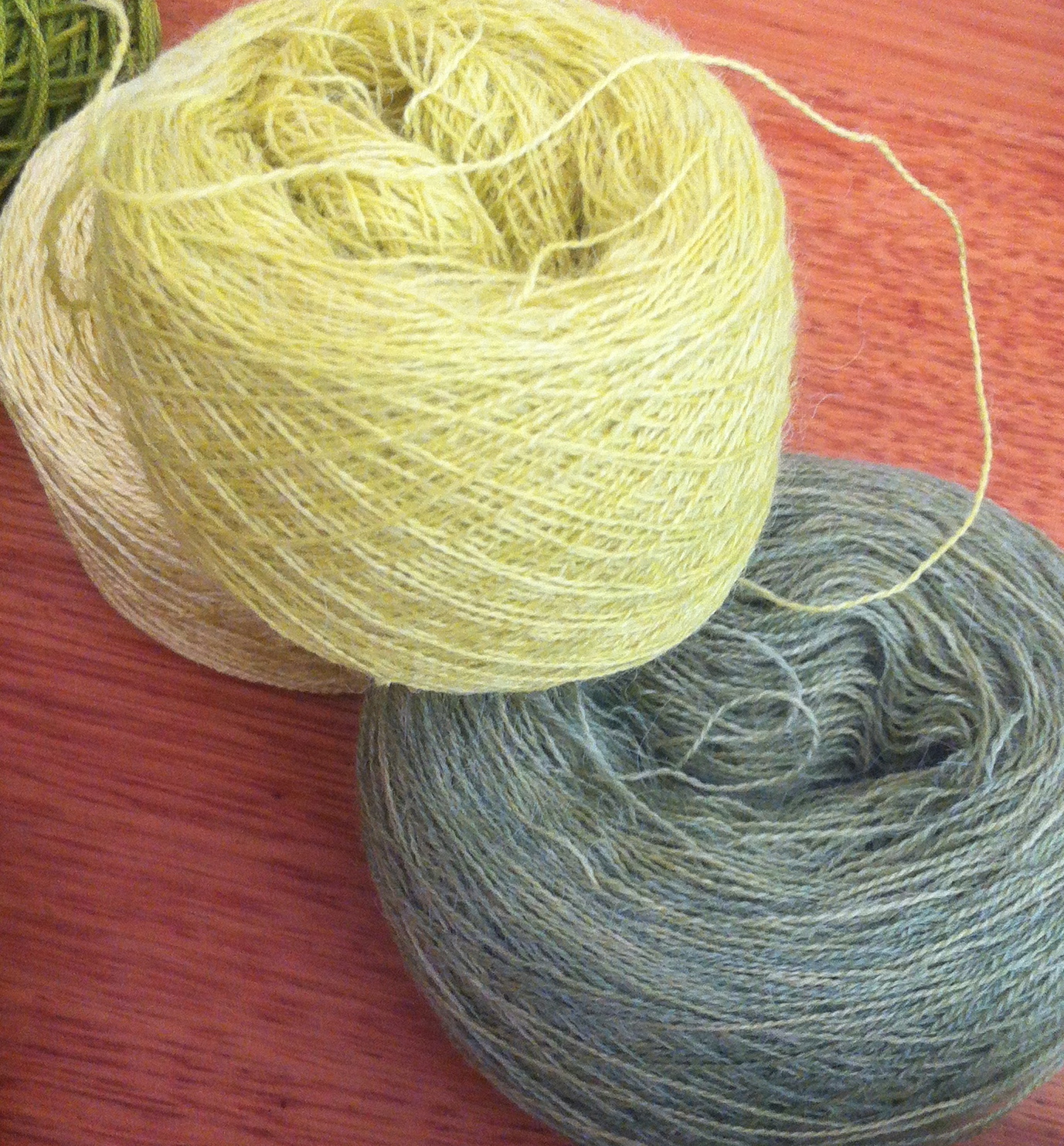
Alpaca and silk dyed in three shades of blackened yellow , each one diluted by the addition of 2 cups of water.

Alpaca and silk dyed in three shades of blackened yellow , each one diluted by the addition of 2 cups of water.

GREENS FROM MIXTURES OF YELLOW AND NAVY

Then I made a series of greens from mixing different amounts of yellow (MX8G made as 1.5 tsp to 1 cup water)) and navy (MX4RD made as 1tsp to 1 cup water).

Five balls of white Perle No. 8 cotton thread were made into skeins and each one inserted into a cup containing a colour progression  of the yellow and the navy. A sixth ball was dyed in a double dilution of a 50:50 mixture of the yellow and the navy.
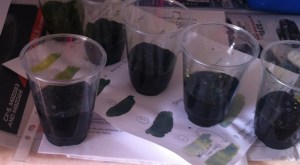
Perle 8 cotton thread skeined and added to one of six dye baths of yellow and navy.

Perle 8 cotton thread skeined and added to one of six dye baths of yellow and navy.

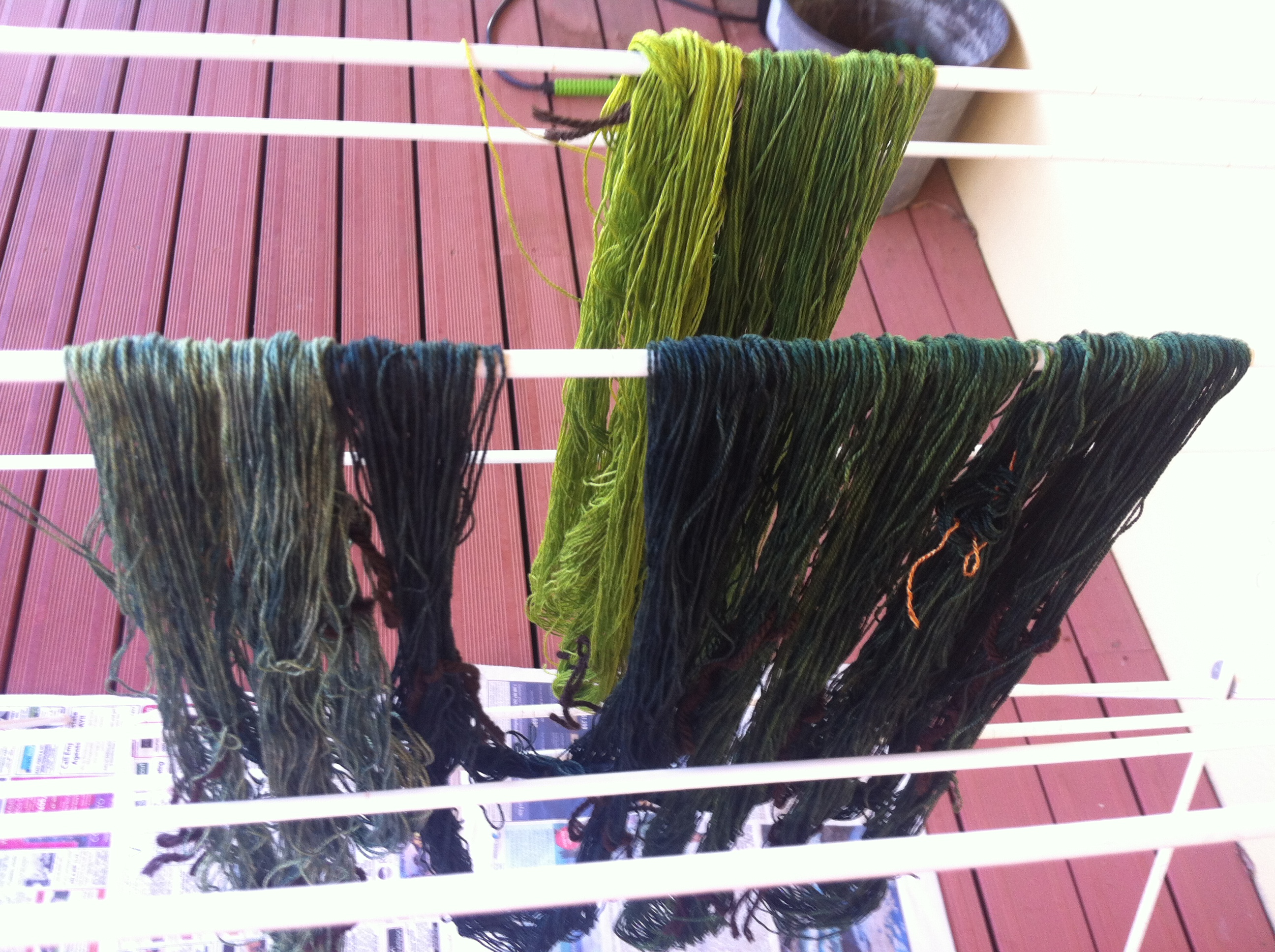
It's always a joy to see dyed skeins hanging to dry!

It’s always a joy to see dyed skeins hanging to dry!

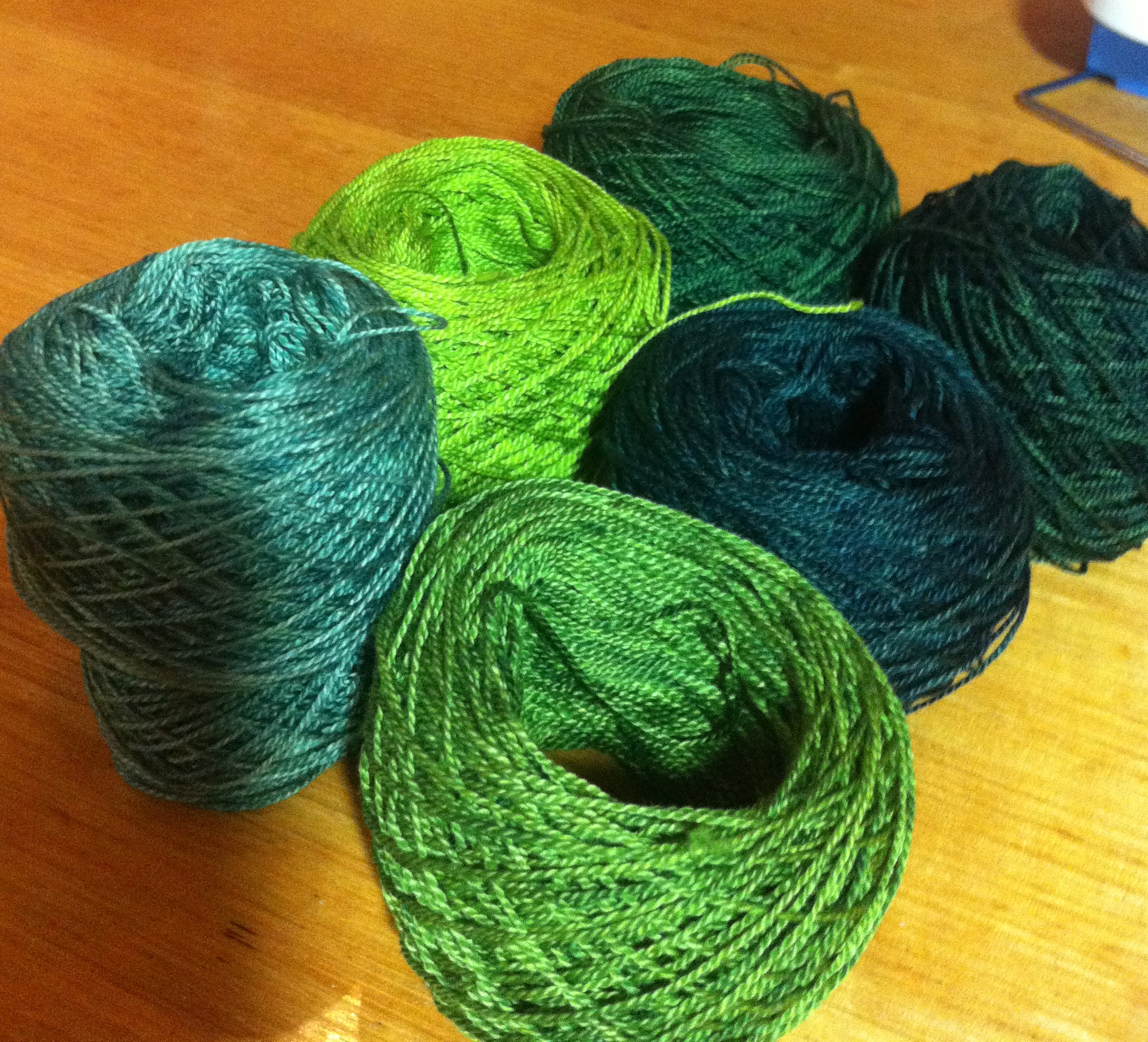
The final skeins turned back into balls again and ready to use.

The final skeins turned back into balls again and ready to use.

A further three balls of the white Perle 8 thread were laid on paper towels in a tray and “painted” with various of the yellow and navy mixtures, including one that was a large dilution .
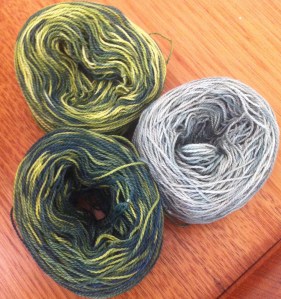
Perle 8 balls of white cotton painted with mixtures of navy and yellow.  The one on the right is  a heavy dilution of the dye in the bath

Perle 8 balls of white cotton painted with mixtures of navy and yellow. The one on the right is a heavy dilution of the dye in the lightest bath; the yellow retreats before the navy does.

All these yarns, and more when my new orders are received, will be used in my briefs on spheres and leaves. See https://mnfblogdotcom1.wordpress.com/wp-admin/post.php?post=504&action=edit
Posted in dyeing with fibre reactive (procion) dyes | Leave a comment

Development Briefs: Ruth Hadlow Workshop

The take down of the Hidden Revealed Transformed exhibition (http://www.meldarts.com/wordpress/) has given me a pause.  A pause to reflect on where to next.

Felicitously, this pause coincided with the opportunity to do a workshop this past weekend which was sponsored by WAFTA* with Ruth Hadlow (http://www.ruthhadlow.net)

I got a lot out of Ruth’s advice.

We were encouraged to develop two or three “briefs” for further action.

I have committed to two briefs, or challenges.

Brief 1: Current practice and its extension possibilities: I am currently exploring crochet forms and their application to 3 D textile works.  How many variations on a theme can I make with a simple sphere if I vary thread, stitch and scale?  My task is to blog each week a sphere in crochet which varies the yarn , the stitch and the embellishment.

Brief 2: Exploration of drawing techniques:  I will explore a lot of ways of drawing a weekly leaf image , which I will select on a walk (in the interests of fitness!), and subsequently render that drawing in a sample of a leaf.

I will post the weekly results in this blog as either “Crochet spheres” or “Leaf drawing”.

*WAFTA = Western Australian Fibre and Textile Association Inc. (wafta.com.au)

Posted in Design, sampling | 3 Comments

Going Live!

Well, we’ve had our opening and it went well.  No need to duplicate here as it’s all on http://www.meldarts.com.au.

Our work is on show right now.  Until Saturday 1 November. We are (or at least, I am) pleasantly surprised at how many visitors we are getting onto the gallery each day.  The opening was crammed.  We were pleased, but also put that down to the many very loyal friends in the textile organisations we all belong to. To get a continuous and knowledgeable stream of visitors into the gallery each day is a different matter.  It makes the “task” of doing duty at the exhibition a pleasure.

Anyway, at last I can put up some images of my recent work. I’ve put them in the Gallery.

Posted in Uncategorized | Leave a comment

Hidden Revealed Transformed: MELD exhibition

The opening of our MELDArts exhibition, Hidden Revealed Transformed, is documented on our website at http://www.meldarts.com/wordpress/

The exhibition is the culmination of months of planning and collaboration and I have learned a great deal not only about organising exhibitions but also about the directions I want to take from now on. The exhibition continues until Saturday 1 November 2014 but in the meantime I’ve added some images of new work onto the gallery page.

Posted in Design, freeform crocheting, freeform knitting, Machine quilting, Natural dyeing, paint, patchwork | Leave a comment