When all else fails….be an arts patron

I went last night to the live auction of the Salvage/Selvedge quilts.  http://stargazey.com/salvagecatalogue/live-auction.html

When I went to the opening of the Salvage/Selvedge exhibition on 16 May I was stunned by how gorgeous they  were.  They were all absolutely exhibition quality .  Moreover, I’ve never seen the Moore’s Building Contemporary Art Gallery in Fremantle put to better use.

When you also know that the makers of these quilts had very restrictive design rules AND were given the boxes of fabric they had to work with (many containing non-traditional quilting fabrics like slippery satins) you really can see how talented these artists  are.

There are many more beautiful quilts still available to bid on in the silent auction.  Use the link above to see them.

That the quilts were all made for charity was just a bonus as far as I’m concerned although it was a delight to meet Di (Aunty Di) Roberts and her granddaughter, whose charity in support of the Ethiopian school concerned was to be the recipient of all the auction receipts.

I am proud to know a lot of the makers and of course, Jan Mullen, who co-ordinated and led the whole enterprise.

What’s all this leading to?  Well, I went intending to try and secure Trish Davis’ quilt “Rubbing Shoulders” and I did!  I also made the successful bid on  a quilt I’d admired at the opening: “Klimpt’s Kiss” by Mignon Mitchell.

These aren’t the official pictures, just shots I took as I left the building a happy arts patron!

Rubbing Shoulders, Trish Davis, 2013

Rubbing Shoulders, Trish Davis, 2013

Klimpt's Kiss, Mignon Mitchell, 2013

Klimpt’s Kiss, Mignon Mitchell, 2013

Posted in Design, Machine quilting, patchwork | 1 Comment

Avocado Dyeing ……and a disaster

Yesterday I decided to do my well overdue “Animal Vegetable and Mineral” challenge for Designing Women (see previous blog).

As is won’t to happen, the day went awry.  In fact it wrote another chapter in my coming of age as a textile person.  As I sorted through my  large plastic box looking for  nice interesting pieces of silk (animal) and cotton (vegetable) dyed with the aid of some iron (mineral) , I started to feel something strange.  Almost granular. The reason?  A totally disintegrated , formerly quite large, fine woollen fabric length that had been steamed in a Trudi Pollard workshop and which was so “good” I could never decide to cut into it. It had lots of gorgeous leaves and flowers in it.

Moth eaten wool

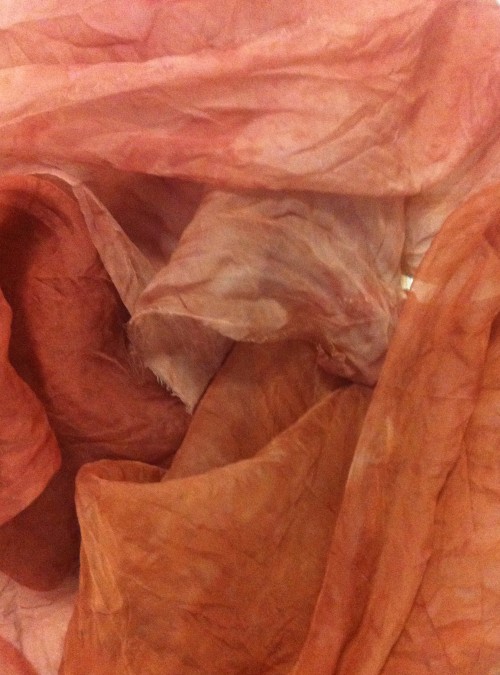
So I had to wash all the unaffected cotton fabric from the box and iron it all again….  I rewarded myself by retrieving a parcel of frozen avocado skins (and one frozen pip) from the freezer and re-dyeing some of the blander cotton pieces.  I resisted them with folding and clamping with what I call bulldog clips.  If this is not what you call them then you’ll see what they look like from the marks on the cloth.  Some have the black of the iron but some are rusty because I re-use my clips.  I’m quite pleased with them. Not that they’ll replace the beautiful length of wool….

Avocado skins and iron (from bulldog clips

Avocado skins and ironAvocado skins and bulldog clips

Posted in Natural dyeing | 4 Comments

Red Cabbage Dyeing

I belong to a group of creative West Australian women called Designing Women. Their blog is http://designing-women-wa.blogspot.com.au

At yesterday’s monthly meeting we had a retrospective of her work from Rae.  It was very absorbing and I was particularly taken with her presentation of work done recently at a natural dyeing workshop in Victoria.

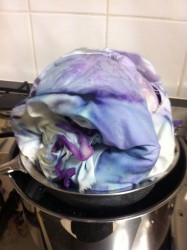
It inspired me to get the last piece of red cabbage out of the crisper and wrap thin slices of it in a piece of washed but otherwise not pre-treated cotton.  I steamed it for about an hour then allowed it to cool overnight with the cabbage still in it.

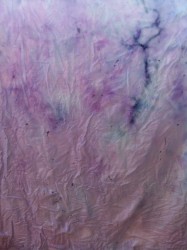
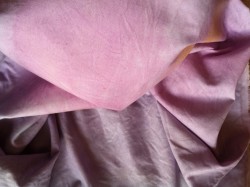
After washing and ironing it is paler and I’m concerned that it will fade even more over the next few days.  but I love the pale lilac colour, which went red/pink in parts as I ironed it dry.  Heat obviously plays a role in colour and I suspect that pH does too but I won’t be experimenting more with it for a while as I have to make some other pieces for a DW challenge!

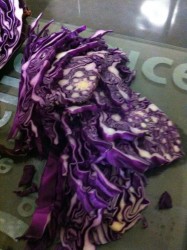
The red cabbage

The red cabbage


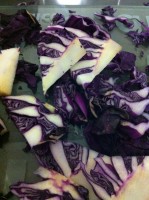
Red cabbage sliced

Red cabbage sliced


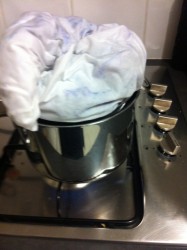
Very loosely piled into a sieve atop a saucepan of water

Very loosely piled into a sieve atop a saucepan of water


Very shortly after the start of steaming the colour started to seep into the fabric

Very shortly after the start of steaming the colour started to seep into the fabric

Lots of colour after about an hour

Lots of colour after about an hour

Resting and cooling overnight

Resting and cooling overnight


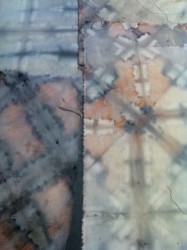
The cooled fabric in the morning

The cooled fabric in the morning

Before rinsing I let the fabric dry, assisting it with an iron.

Before rinsing I let the fabric dry, assisting it with an iron.

I hope it will keep this colour after it is washed but I'm not confident!

I hope it will keep this colour after it
is washed but I’m not confident!


Posted in Natural dyeing | Leave a comment

Mud Cloth Finale

Well, that’s misleading.  It’s not a finale.  I’ll definitely be doing more….

But today was the last day of the two day WAFTA workshop on Mud Cloth with Judy Dominic. (http://www.judydominic.com/mudcloth.html)  Judy taught us a lot.  She also frankly shared what she did not know…the secrets lying in the black mud of the River Niger (running through Mali) that mean we outside of that country can’t even hope to get the same effect; we can only approximate….

The workshop was a revelation on a number of levels.  First, of course, I’d never done mud dyeing before.  I related really well to the natural dyeing concepts involved.

Second, my workshop colleagues were a well-educated bunch of women who focussed not only on the techniques being taught but also on the science underlying it.  So the questions were profound ones.  Followed by energetic pursuit, using i-pads, of the answers. And a lot of informed speculation.

Thirdly, there was a choice available to us in terms of getting an outcome. We could apply a “retention agent” to the reverse of our mud-painted fabric; or we could dry it and put it away for two weeks to 6 months to “cure”. I opted for a mixture.  The immediate gratification of seeing the work after painting it with the retention agent.  And the longer term “rewards” of putting the fabric away for 6 months.  Which means I won’t have an outcome until October 2014!!

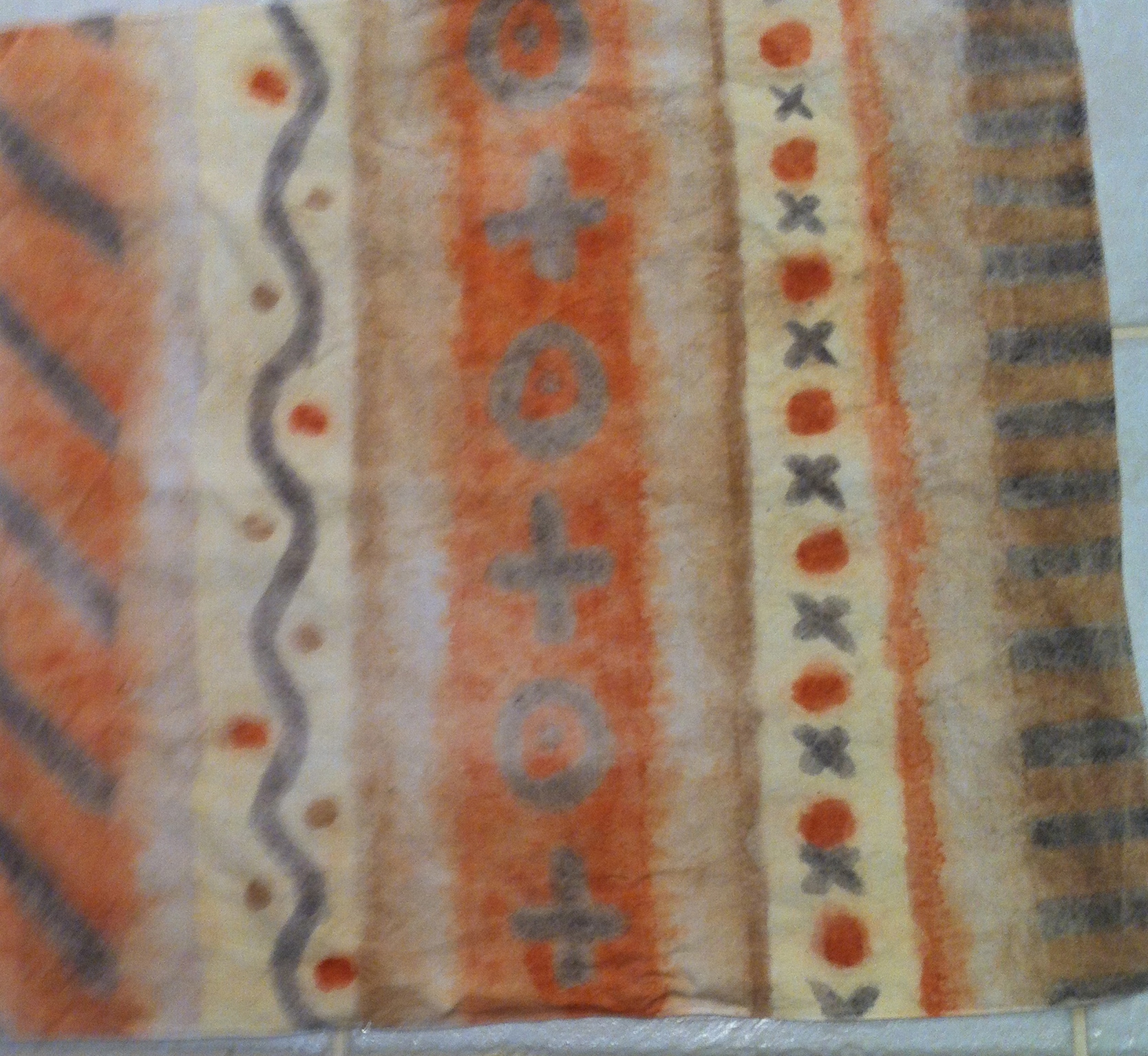
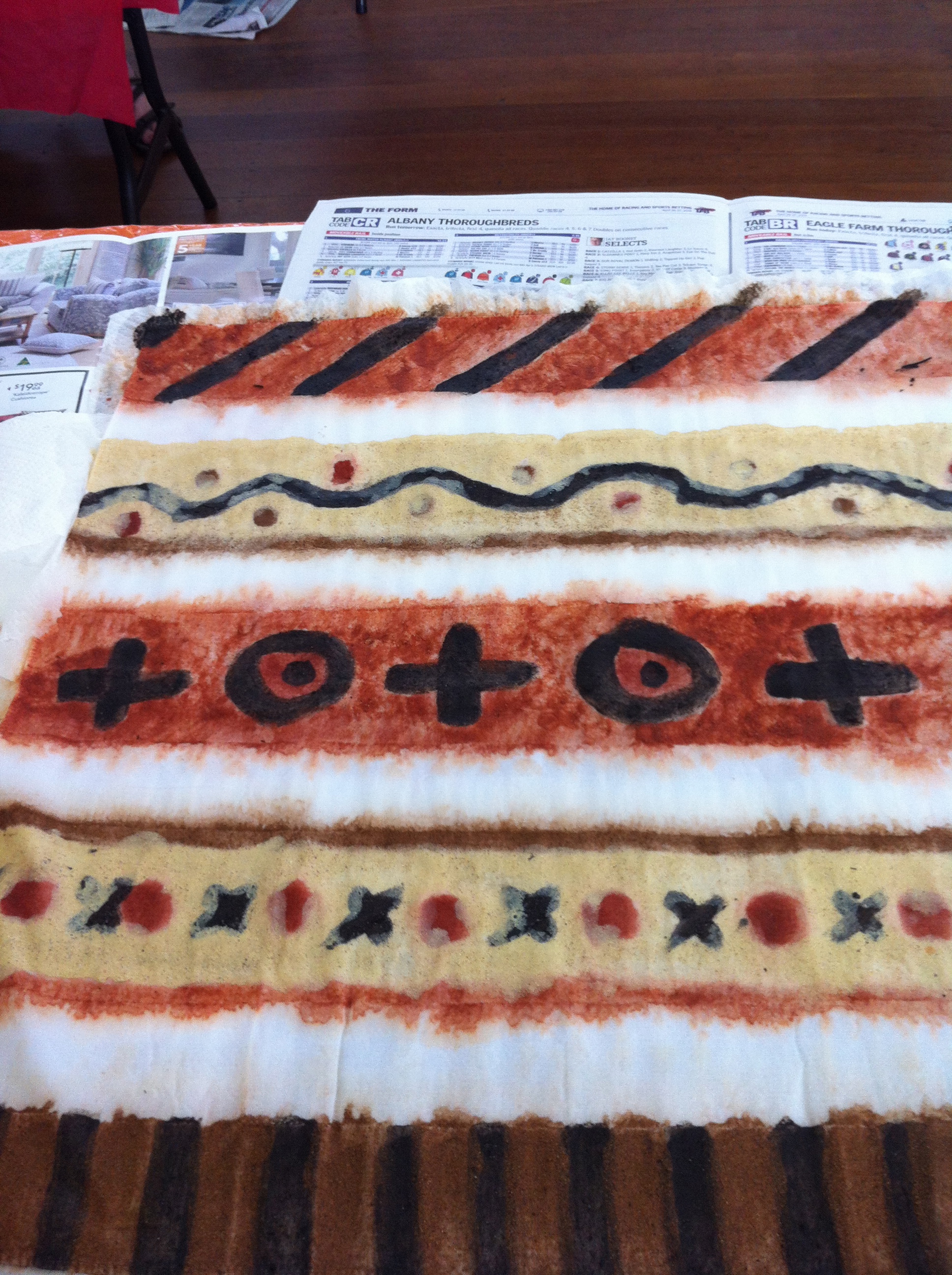
The following are images are of fabric I painted and, after drying, applied retention agent.

After painting with retention agent and then washed

After painting with retention agent and then washed

Washed and pale….but good for stitching

Washed and pale….but good for stitching

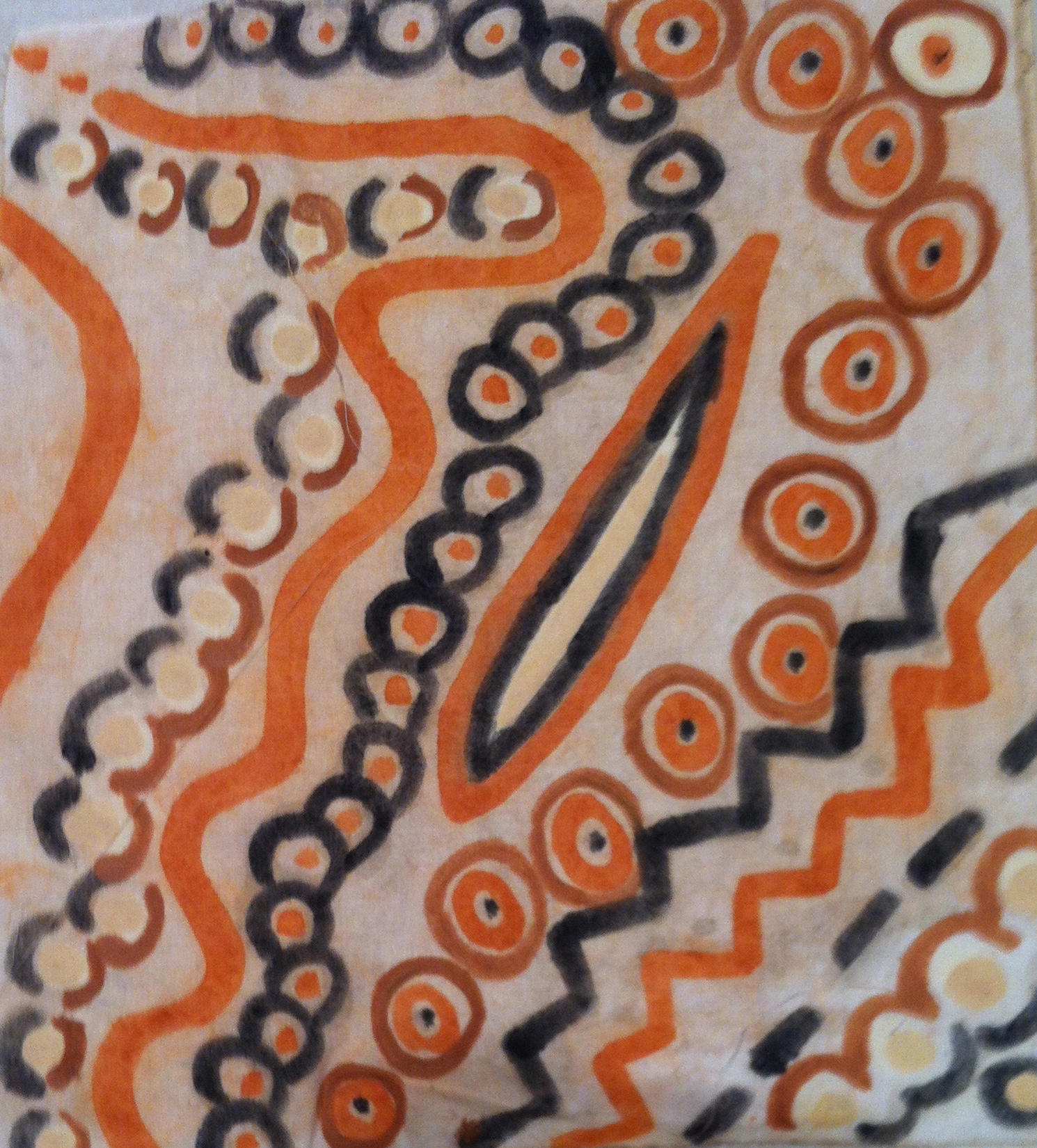
The next images are of fabric that’s been painted with mud but not painted with retention agent.  The objective with these is to put them away for 6 months to ensure maximum dye take up.  Results to be revealed!!

Painted but not washed

Painted but not washed


Painted and not washed

Painted and not washed


Painted and not washed

Painted and not washed

Posted in Natural dyeing | 2 Comments

Mud Cloth

You know I’m interested in natural dyeing and that my favourite textile palette is “neutrals”, much to the distress of relatives who love brighter colour!

Well, today I had the chance to explore another form of “natural” dyeing.  Mud Cloth, and ancient fabric patterning technique practised by women in the West African country of Mali.

Tutor Judy Dominic of Ohio, USA, is in WA for WAFTA and this weekend is giving a sellout class in a modified version of the time-consuming practice.  The class of WAFTA members (and other members who were not in the class but donated mud) contributed soil from as far north as Broome and the Pilbara, as far south as Walpole and as far east as Kalgoorlie.  So we had blacks, greys, reds, oranges and yellows aplenty.

Judy showed us how to make pastes and paints and to add soy milk to help with attachment of the pigments to the fabric. Tomorrow we are going to paint the backs of our now dried samples with a retention agent (used by paper makers I understand) so we can wash them reasonably quickly.  The purist alternative is to wait six months until the pigments have fully attached to the fibres.  Too painful?

As I said to Judy, I’d like to hold out and wait six months , eschewing the ‘unnatural’ intervention to speed things up.  But wouldn’t that be hypocritical since I myself used a Thermomix to render my clay usable?

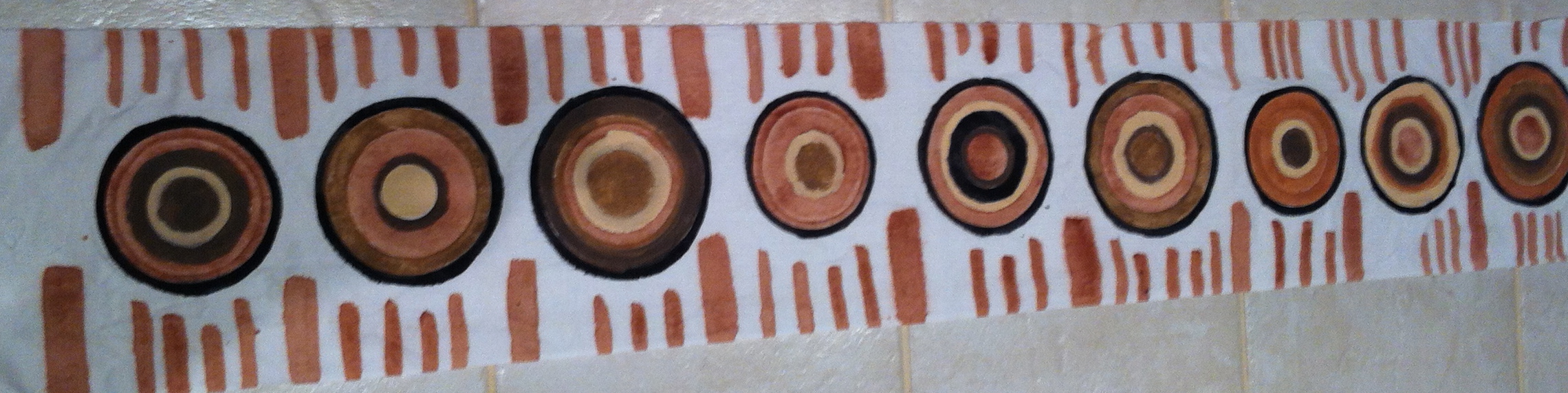
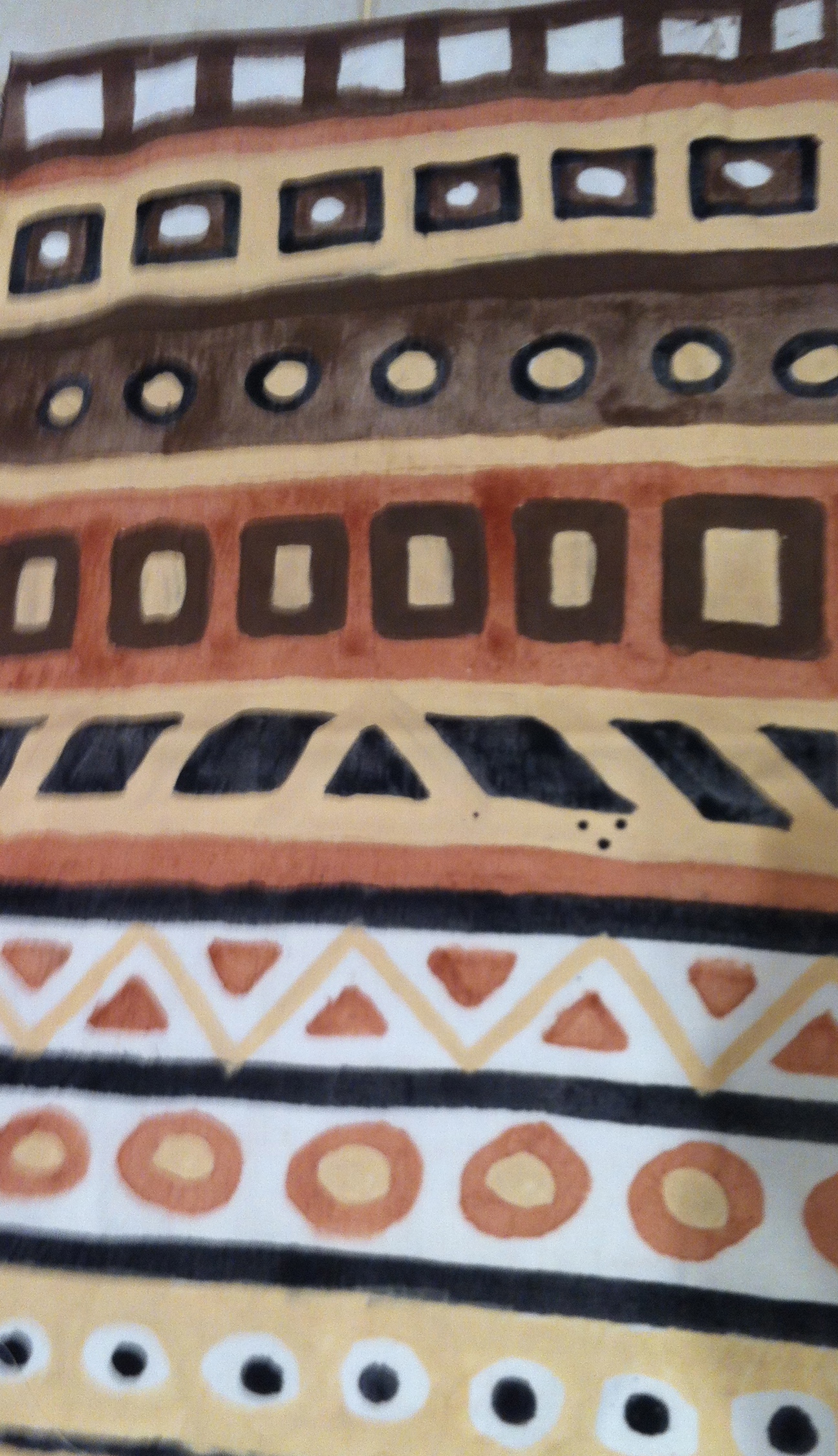
Anyway, I’m enjoying the workshop very much.  Here are some images of work in progress.  The real test is when the fabric is washed out.  If the pigments in the mud have not penetrated the fibres but are just sitting on the top of the fabric, then a very pale image indeed with result.  It may be that the mud covered fabric is now looking as good as it will ever be!

The inter-relationship between the Mud Cloth dyeing and patterning techniques of Malian women and the political upheaval in that country are every bit as fascinating as the cloth itself.  Although I know we are not rendering our cloth in anything other than a superficial parody of the techniques developed since the 1200s in Mali, I sit think I’ll do this again.


I envisage stitching on this and dyeing the background in a neutral, non-white colour.  That's if any of the pigments stay in after washing!

I envisage stitching on this and dyeing the background in a neutral, non-white colour. That’s if any of the pigments stay in after washing!


I’ll add more images to this post after tomorrow….

Posted in Natural dyeing | 2 Comments

Octopus

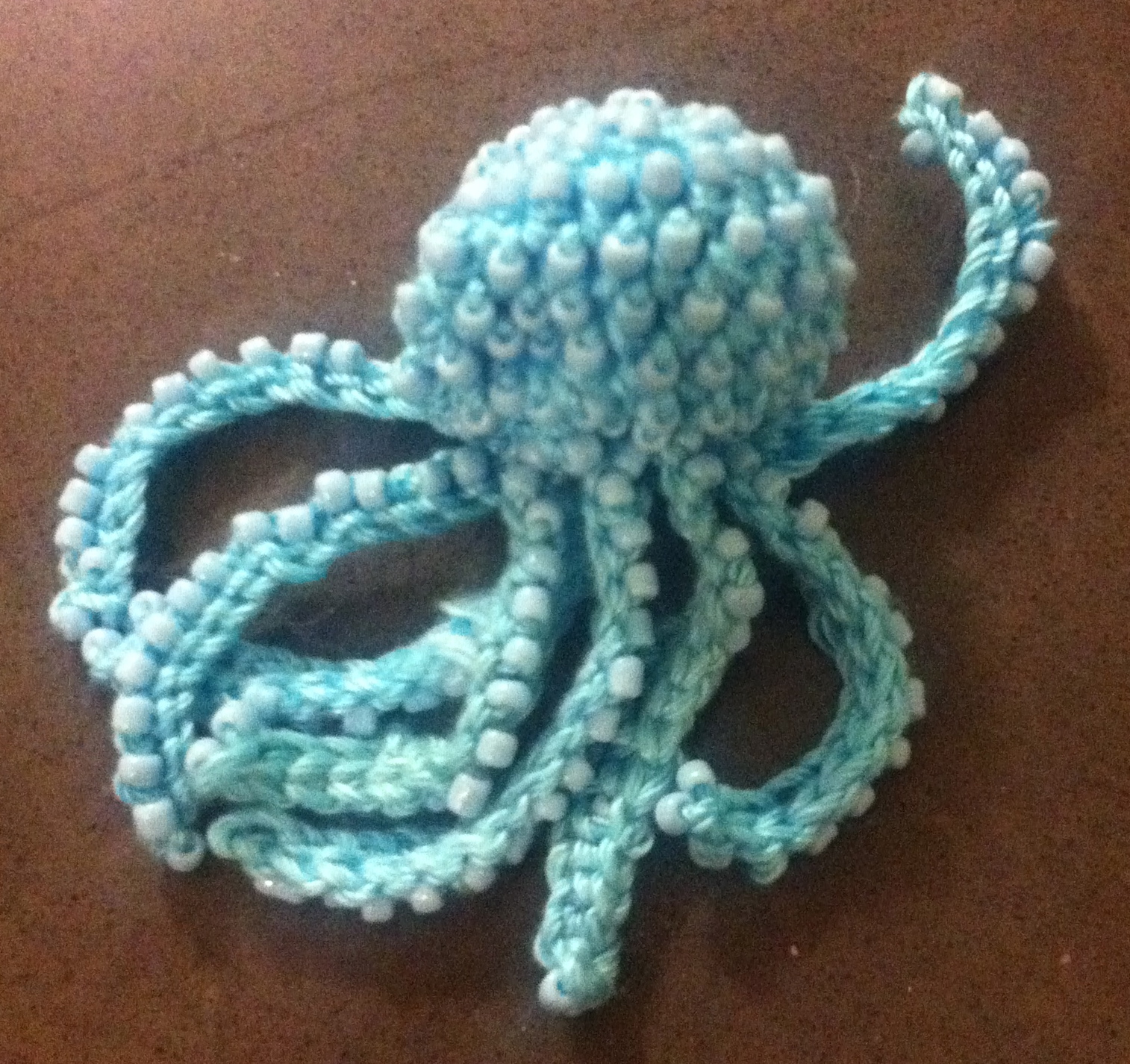
I’ve been making flowers for a particular vessel for the last couple of days .  This started life as a chrysanthemum but along the way I thought it looked as though it had the potential to be a sea creature for another project.  So I adapted a bit and voilà!

Well, it's a stylised octopus!

Well, it’s a stylised octopus!

Posted in Design, freeform crocheting | 2 Comments

In Defence of Crochet

IMG_2118I’ve crocheted all my life.  Well, since I taught myself from a Woman’s Day lift out in 1958 anyway….If you’re figuring, that’s 56 years ago!

I’ve done all sorts of things of course.  Toys and edgings and bags…  Then, in the exciting ’60s, lovely lacy Banlon dresses with chains at the waist.   You had to be there…..

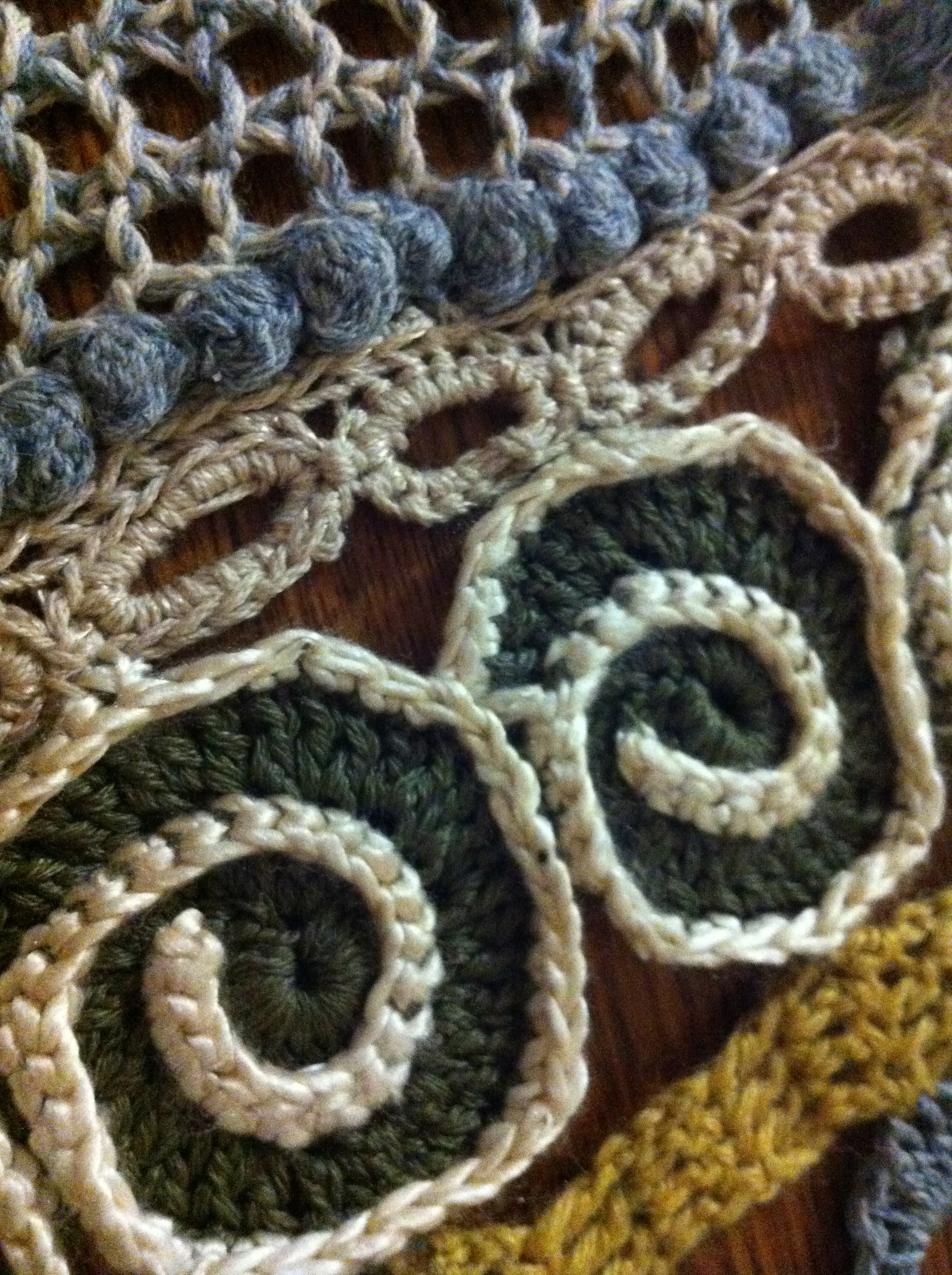
Anyway, I never associated my love of crocheting with art.  Even recently, when I began preparing work for the MELD exhibition (see http://meldarts.wordpress.com ) I didn’t consider doing anything in crochet. I have done several workshops with Prudence Mapstone just for the joy of using a wonderful array of yarns creatively but still I didn’t think of actually making EXHIBITION work out of crochet!

However, when the MELD group decided that each of us should include some 3D pieces in the exhibition at the end of this year, I began playing with the idea of some vessels in crochet with wire and wood.

My experiments with that idea has led me to research crochet a bit more.  Which in turn led me to buy “The Fine Art of Crochet” by Gwen Blakley Kinsler. Basically, Kinsler is a long time champion of crochet.  She sets out to demonstrate the contemporary artistic relevance of this medium by showcasing the work of twenty artists.

I found the book incredibly affirming.  Of course , I was sensitised to it by my work, which I was constructing against a background feeling that it wasn’t really going to cut it in the art world because it was “just crochet”.

The first affirmation came when on page 4,  in the Introduction, I found a reference to my heroine Prudence Mapstone.  Then immediately after that, still in the Introduction, I read of the work of Janet de Boer and TAFTA. Remember, this book was published in America; not a country renowned for its awareness of anyone or anything outside of its borders.

Affirmation squared, if you like, came via Kinsley’s selection of artists.  All of them are using crochet as a very considered, even purposeful, medium for their message.

Each of them acknowledges (and uses) the cultural content of crochet while adding contemporary messages with it.  The resultant work is redolent with meaning; layers of meaning.  Yet , if you don’t want to bother with all that symbolism, you can just enjoy the beauty (for the most part; they are not all , IMHO, attractive!) of the pieces of work.

Anyway, I am now approaching the design and execution of my vessels with renewed confidence as a result of Kinsler’s book.  It may sound pathetic to be claiming to now be a bit more independent in one’s choice of medium.  OK, I’m pathetic. I have been apologetic and doubtful about the validity of using crochet to say something.  Just now, I’m not.

Hopefully, this feeling  will last!


Posted in Design, freeform crocheting, freeform knitting | 1 Comment

Avocado skin dye thickened for painting

In my quest for a non-toxic way of making more marks on my avocado pip dyed silk, I made a dye bath from the many neatly sliced avocado skins given to me by my fellow MELD member Liz.  They’d also been frozen for months!

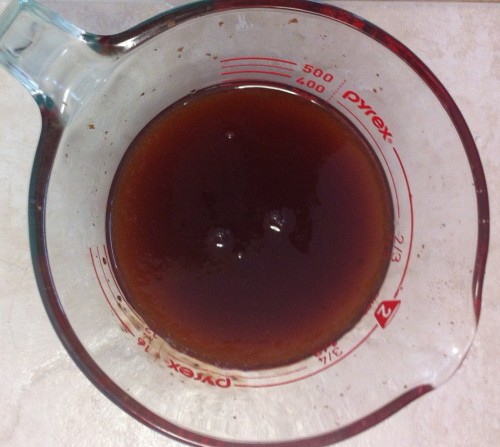
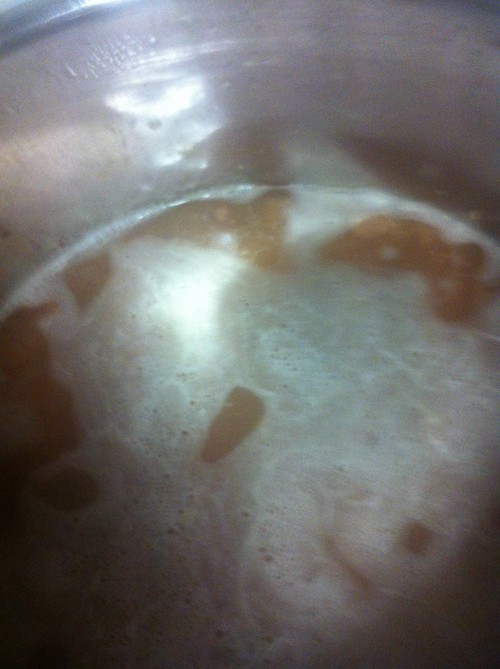
It’s quite a dark brown already and will possible get darker with more heating and resting.

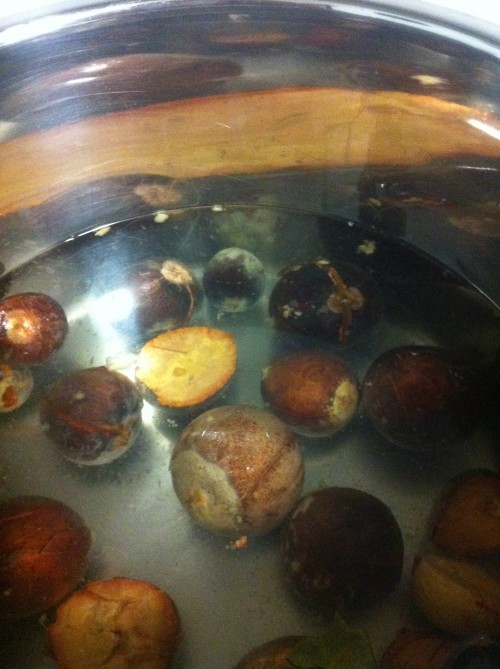
Avocado skins after simmering in water and standing

Avocado skins after simmering in water and standing

I mixed a heaped dessertspoon of Manutex RS with a splash of methylated spirits until it resembled damp sand, as per the instructions.  Then I mixed the “sand” with 450 mls of the avocado skin dye in which I’d already dissolved 50g of urea.  There may be way too much Manutex (or way too little dye solution) as it  thickened a lot immediately and will no doubt be even thicker later after it’s had its little sit.

Avocado skin dye thickened

Avocado skin dye thickened

Before I go further I should acknowledge that in all the workshops I’ve done on making print paste I’ve never used a natural dye solution so I don’t know if this will work.  Moreover, the recipes I’ve been given for thickening have all been for fibre reactive dyes like Procion MX ones.  They’ve also involved use of resist salt (sodium meta nitrobenzene sulphinate). Now, my research (in particular on a wonderfully comprehensive site maintained by Paula Birch: http://www.pburch.net/dyeing.shtml) tells me that the purpose of the resist salt is to retard the reduction of the dye solution.  I’m thinking that this is more relevant to the Procion MX type dye solutions than to my solution of avocado skins.  Also, apparently at room temperatures the chemical reduction activity is much slower.  As I’m not going to be steaming my silk or microwaving it, I decided to omit the resist salt.  I have plenty, however, and will use it next time if the result isn’t satisfactory.

The use of urea is also a moot point.  It’s supposed to aid solubility (and I’m not dissolving dye powders so that’s not relevant) and to act as a humectant i.e. stopping the thickened dye from drying out before it’s been batched long enough.   Since I will be painting on my silk and then batching it rolled in plastic this may well also not be relevant. However, I put some in anyway. Basically I followed the usual recipes for thickening dye except that I substituted my avocado skin dye for water and omitted the resist salt.

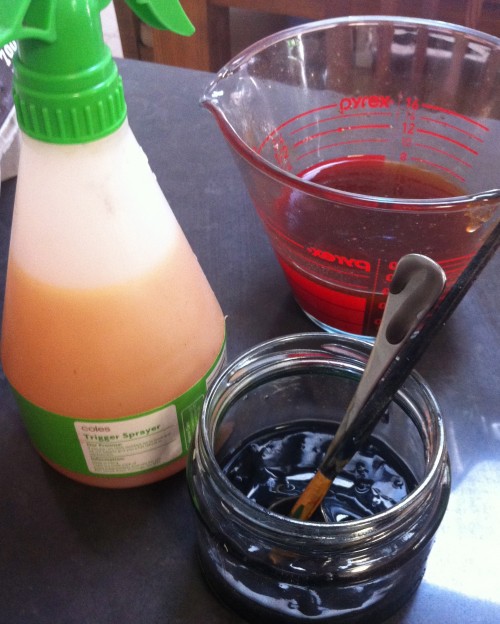
Back to the fabric. I wanted to paint some circles onto one (#1) of the pieces dyed with avocado pips.  My thickened avocado skin dye looks too close in colour to the pip dyed fabric and, what’s more, it’s too thick.  I (think) I solved both problems by stirring some old iron water (made from dissolving ferrous sulphate into water) into a quarter cup of the paste.  The water is so old it’s gone orange.

Avocado skin thickened solution in the measuring jug, old iron water in the spray bottle and darkened paste in the foreground jar.

Avocado skin thickened solution in the measuring jug, old iron water in the spray bottle and darkened paste in the foreground jar.

Silk dyed with avocado pips taped to flat surface and painted with darkened avocado skin dye paste.

Silk dyed with avocado pips taped to flat surface and painted with darkened avocado skin dye paste.


Close up of the painted silk

Close up of the painted silk

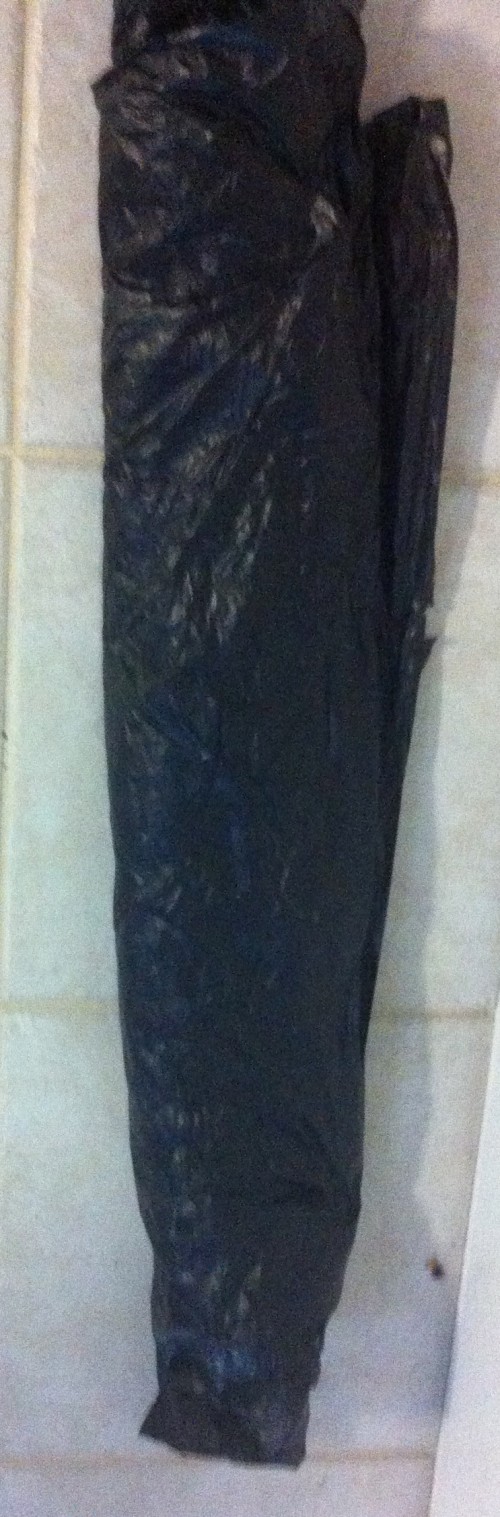
Piece #1 wrapped in plastic for batching.

Piece #1 wrapped in plastic for batching.

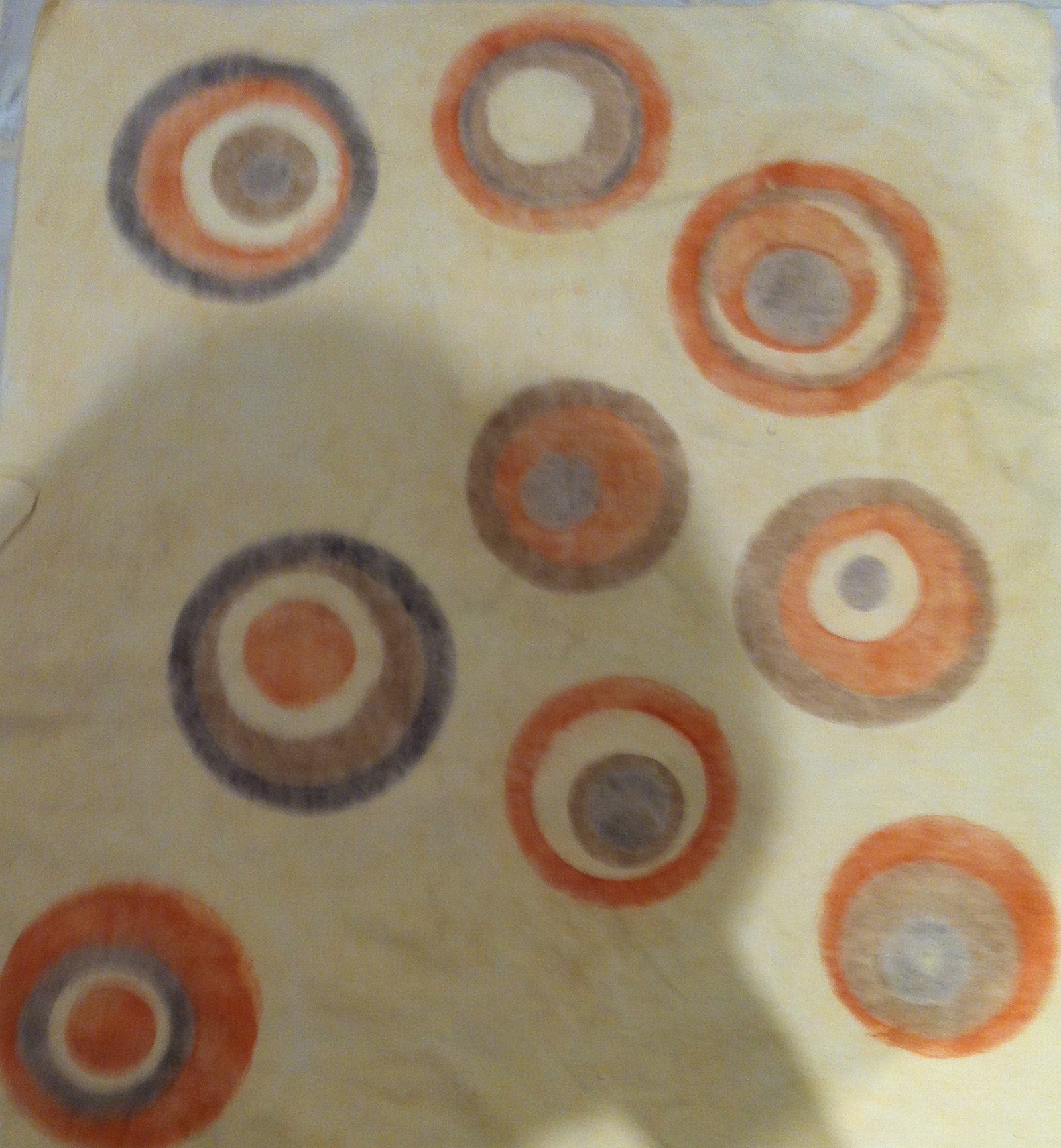
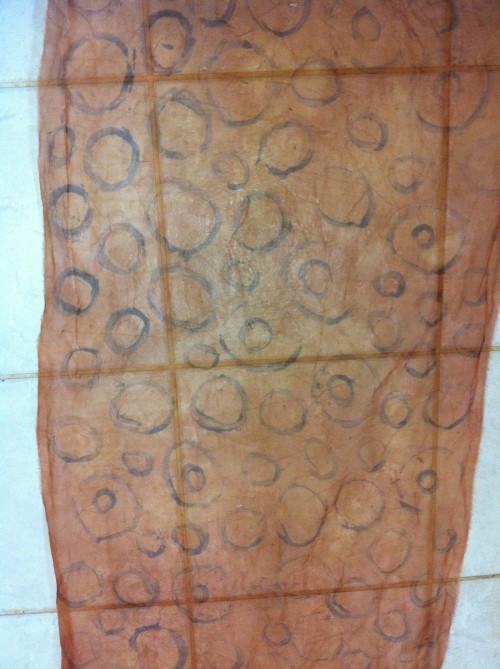
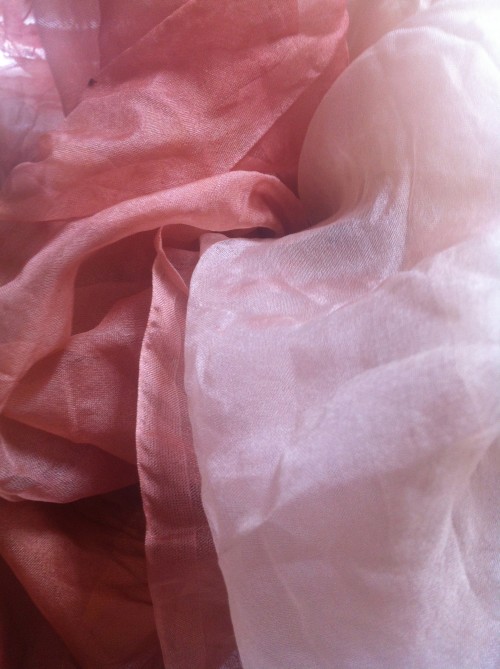
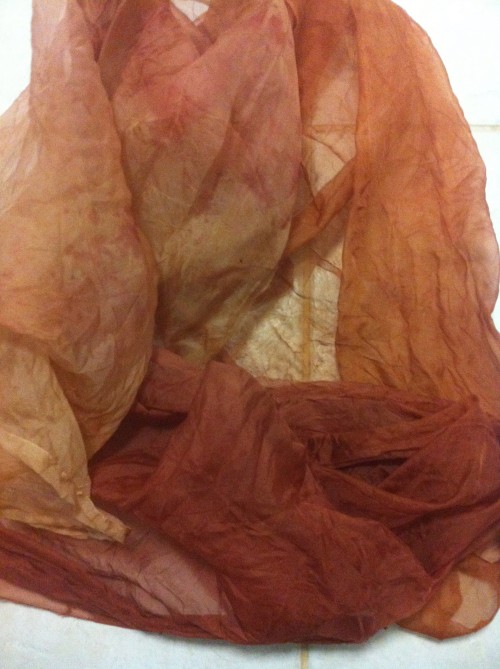
The painted transparent silk after washing drying and ironing on the kitchen floor

The painted transparent silk after washing drying and ironing on the kitchen floor


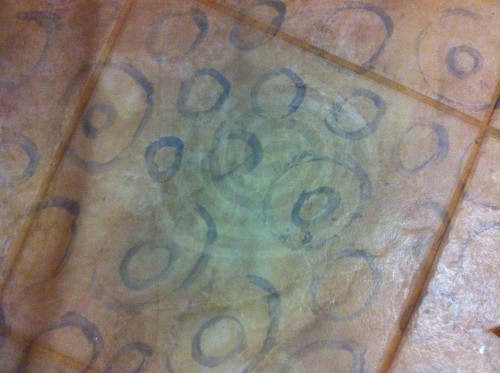
Next I used a stick on wall decal set given to me by Liz and some plain Decolorant to change the scale a bit. It made some difference but not much so I’ll be looking to print something else on with paint next.


Stick on decals used as a resist for Decolorant

Stick on decals used as a resist for Decolorant

The Decolorant gave a VERY subtle effect.

The Decolorant gave a VERY subtle effect.
Posted in Design, Natural dyeing | 5 Comments